
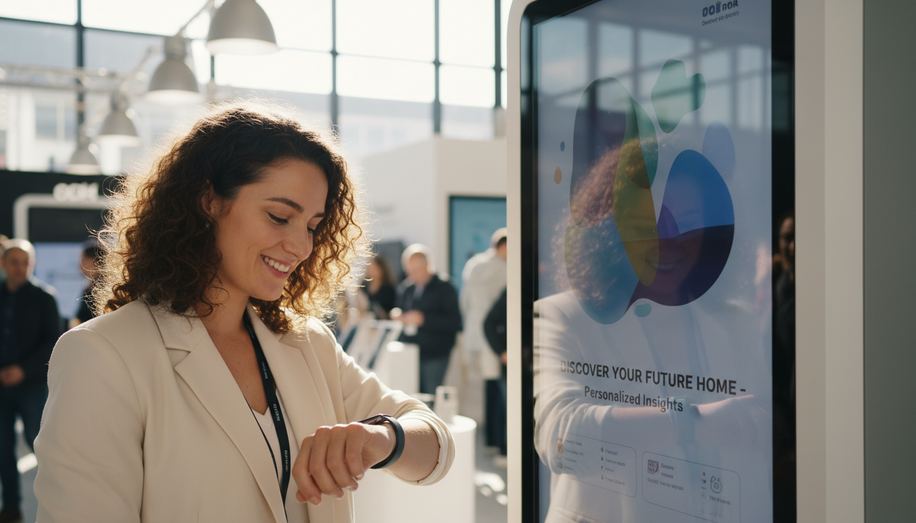

In the bustling streets of modern cities, where towering billboards and digital screens vie for fleeting glances, a quiet revolution is underway. Wearable technology—smartwatches, fitness trackers, and augmented reality glasses—is poised to transform out-of-home (OOH) advertising from passive spectacle to intimate, interactive dialogue. By syncing with these always-on devices, OOH campaigns can deliver hyper-personalized experiences, turning a commuter’s hurried walk into a tailored brand encounter.
Imagine a runner passing a digital billboard promoting athletic gear. Her smartwatch detects elevated heart rate and GPS data indicating a workout, triggering the screen to display a real-time offer: a discount on waterproof shoes, customized to the rainy weather forecast. This seamless integration of wearable data with OOH infrastructure elevates advertising beyond static visuals, fostering genuine consumer engagement. Brands like those leveraging AI-driven platforms already experiment with such dynamics, where billboards adapt messaging based on aggregated wearable insights, weather patterns, and mobility data.
The mechanics are straightforward yet profound. Wearables collect streams of personal data—location, activity levels, even biometric cues like heart rate—while OOH displays, equipped with sensors or connected to smart city networks, respond in kind. Proximity triggers activate content: a fitness tracker near a gym-ad billboard might unlock a gamified challenge, rewarding steps toward a nearby store with exclusive perks. This creates what experts call “wearable marketing,” where devices bridge physical ads and digital ecosystems for contextual relevance. Unlike traditional OOH, which boasts broad reach and 24/7 visibility, wearables add layers of precision, boosting recall through interactivity that static formats can’t match.
Augmented reality (AR) amplifies this potential. Scan a billboard with AR-enabled smart glasses, and virtual elements overlay the real world—a 3D product model spins before your eyes, tailored to your profile. Early adopters report engagement times skyrocketing from 6-8 seconds for conventional billboards to 45-75 seconds with AR, a sevenfold increase that deepens brand impressions. Mixed reality (MR), the next evolution, eliminates phone dependency. Hands-free smart glasses merge digital holograms with urban landscapes, allowing passersby to interact with dynamic ads without breaking stride. For instance, a coffee chain’s OOH display could project a virtual barista offering a personalized brew recommendation based on your wearable-tracked caffeine habits.
Real-world pilots hint at broader applications. Audi’s AR billboards near rival dealerships let users visualize cars in situ via mobile AR, driving a 24% uptick in visits; imagine scaling this to wearables for instant, location-aware trials. Health brands pair fitness trackers with OOH screens for personalized wellness challenges, using heart rate data to gamify promotions and nurture loyalty. Mobile billboards, powered by AI like Movia’s Mobilytics, already track audience density via Bluetooth signals, optimizing routes—wearables could refine this further by signaling individual interests in real time.
Personalization is the holy grail. Wearables enable dynamic content shifts: time-of-day greetings for night owls, event-tied promotions during festivals, or demographic tweaks via anonymized data. Machine learning sharpens this edge, predicting behaviors from wearable patterns to preemptively customize ads—sunny days spur outdoor gear pitches, while stress indicators prompt calming retail suggestions. Social amplification follows: users share AR interactions from glasses or watches, extending OOH reach virally and cost-effectively.
Yet challenges loom. Privacy concerns demand rigorous compliance; wearable data integration must anonymize inputs and secure consent to avoid backlash. Not everyone owns compatible devices—adoption hovers below universal levels, though experts forecast wearables eclipsing smartphones in scale, propelled by advertisers. Production costs for AR/MR content remain steep, requiring specialized tech, and seamless experiences hinge on robust connectivity in high-traffic zones. Device compatibility and user familiarity add hurdles, but falling hardware prices and intuitive interfaces are eroding them.
Forward-thinking brands are undeterred. Platforms like Flam pioneer AI-driven MR for scalable OOH, while others fuse wearables with programmatic buying for precise targeting. Picture holographic storefronts at transit hubs, where smart glasses overlay virtual try-ons linked to your fitness goals, or billboards that pulse with live event tie-ins detected via wearables. Smart city infrastructure will accelerate this: integrated sensors feeding data to OOH networks for ecosystem-wide personalization.
As 2026 unfolds, the fusion of wearables and OOH signals a paradigm shift. Advertising evolves from interruption to invitation, where consumers opt into relevant dialogues via wrist-bound tech. Brands embracing this—balancing innovation with ethics—stand to forge deeper loyalty, measurable in engagement metrics, conversions, and shared stories. Traditional OOH’s mass appeal endures, but wearables infuse it with the intimacy of digital, redefining public spaces as personalized canvases. The future isn’t just visible; it’s wearable.
To translate the promise of wearable-driven OOH into tangible results, brands require sophisticated tools for execution and measurement. Blindspot provides the programmatic DOOH campaign management and advanced audience analytics necessary to deploy hyper-personalized, data-informed campaigns, ensuring precise targeting and clear ROI attribution in this evolving landscape. Learn more at https://seeblindspot.com/