
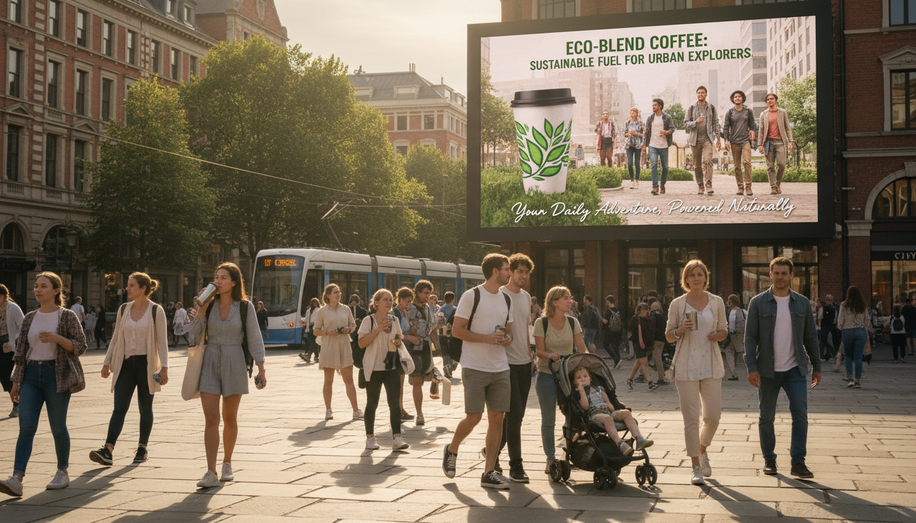

In the evolving landscape of out-of-home (OOH) advertising, behavioral targeting stands out as a game-changer, harnessing real-time data on audience movements, weather patterns, and local behaviors to deliver hyper-personalized messages that drive measurable results. Once dismissed as static and untrackable, OOH is now dynamic, with digital billboards shifting content based on who is nearby, when they are there, and what conditions surround them. This data-driven precision transforms billboards from broad blasts into tailored conversations, boosting engagement, foot traffic, and sales in ways traditional media could only dream of.
At its core, behavioral targeting in OOH relies on anonymized data streams like mobile signals, traffic sensors, environmental monitors, and point-of-sale insights to profile audiences without compromising privacy. Platforms analyze foot traffic dwell times, vehicle speeds, and demographic patterns in specific zones, enabling ads to adapt instantaneously. A billboard in a bustling urban corridor might switch from morning commuter promotions to evening entertainment lures, or tweak messaging for rainy afternoons versus sunny ones. This real-time responsiveness ensures relevance, a key factor in capturing fleeting attention amid the daily commute. Compliance with privacy laws is paramount, as data remains aggregated and non-identifiable, allowing advertisers to personalize without intrusion.
The proof lies in high-profile campaigns that have redefined OOH effectiveness. Take Burger King’s audacious 2019 “Whopper Detour,” which weaponized location data against rival McDonald’s. Geofences encircled 14,000 McDonald’s sites nationwide, triggering digital billboards to display a 1-cent Whopper offer via the BK app only when users neared the competition. This proximity-based personalization not only spiked app downloads and restaurant visits but also clinched a Grand Prix at Cannes Lions, proving behavioral targeting’s power to convert contextual rivalry into foot traffic windfalls. Fernando Machado, then Burger King’s global CMO, hailed it as a demonstration of how location tech elevates OOH from awareness tool to conversion engine.
Guinness took a subtler tack with its weather-triggered winter campaign across major U.S. cities. Digital billboards synced to local temperature data, swapping generic stout pitches for cozy, pub-inviting creatives on frigid days. The result? Surging pub visits, brand engagement, and sales lifts, underscoring how environmental behavioral cues—far beyond demographics—forge emotional connections in real time. Similarly, Betterment targeted urban professionals in high-traffic financial districts, yielding outsized brand recognition, new account sign-ups, and app interactions. One prime billboard crushed campaign averages, prompting extensions and highlighting how movement-pattern data pinpoints high-value audiences.
Even travelers aren’t immune. Expedia’s airport QR code experiment beamed location-specific vacation deals via digital OOH, scanning traveler behaviors through engagement metrics. High interaction rates and rollout expansions followed, revealing how behavioral insights into transit habits unlock impulse bookings. These cases span retail, finance, travel, and beverages, with common threads: dynamic creative optimization, precise geofencing, and post-campaign attribution via impression tracking and lift studies.
The mechanics powering this shift are as sophisticated as they are scalable. DOOH platforms integrate mobile geolocation for audience mapping, weather APIs for contextual tweaks, and traffic cams for timing precision. Retailers, for instance, study shopper flows to pulse ads near stores during peak hours, drawing crowds with behavior-matched promotions. Tourism boards adjust for events or seasons, while entertainment promoters sync with local buzz to fill seats. Blip Billboards exemplifies this with its marketplace, letting advertisers bid on spots via impressions and CPM data tied to behavioral patterns, democratizing access for smaller players.
Yet effectiveness hinges on subtlety and receptivity. While 30 percent of consumers warm to personalized ads and 60 percent remain neutral, overt targeting can backfire if it feels invasive. OOH’s physical, unskippable nature amplifies this psychology: frequent, subconscious exposures build familiarity, but behavioral relevance seals persuasion. New measurement tools from groups like the Out-of-Home Advertising Association further validate ROI through clean-room data and attribution models, linking OOH views to downstream actions like app opens or purchases.
Challenges persist, including data silos and verification lags—Nike’s marathon geofencing campaign, for example, awaits full metrics on runner engagement and sales impact. Privacy regulations demand vigilant anonymization, and rural areas lag in sensor density. Still, as DOOH inventory grows, behavioral targeting promises cost efficiencies: smarter budgets mean premium reach without premium prices.
Looking ahead, hybrid models blending behavioral data with geotagged social media topics or AI-driven predictions will refine OOH further. Brands that master this—turning billboards into empathetic, predictive companions—will dominate public spaces. In an era of ad fatigue, personalization isn’t just effective; it’s essential, proving OOH’s enduring vitality through behavioral smarts.