
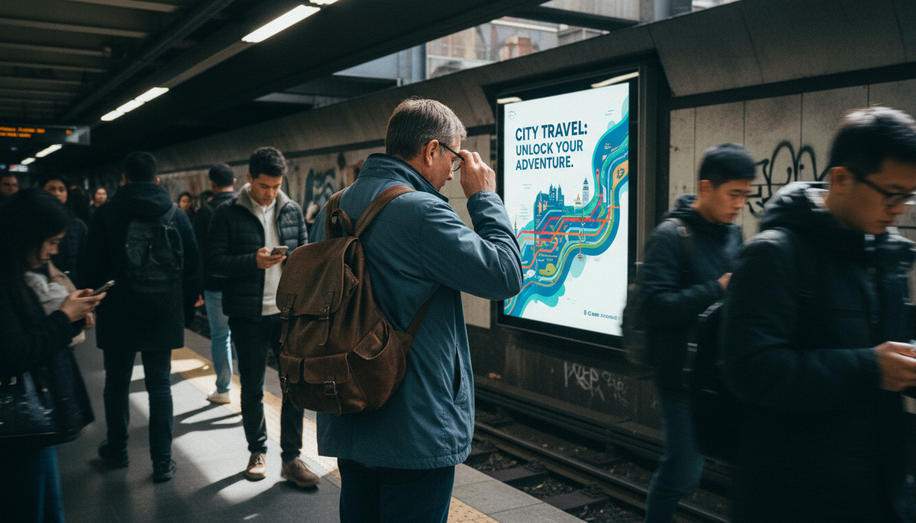

In the rhythmic hum of a morning subway car or the steady crawl of a city bus through rush-hour traffic, advertisers find one of their most reliable assets: a captive audience locked into daily routines. Public transit systems—buses, trains, subways—deliver passengers who spend 25 to 60 minutes or more per trip with little else to do but absorb their surroundings, generating billions of daily trips across urban centers. This isn’t fleeting exposure; it’s repeated, high-impact contact, with riders reporting they look at transit ads frequently or almost always at rates of 71 percent, far outpacing the skippable nature of digital banners or social feeds. Nearly 90 percent of Americans notice out-of-home advertising like this within a typical month, underscoring transit’s quiet dominance in a cluttered media landscape.
What sets transit advertising apart is its unyielding presence amid commuter predictability. Unlike online ads battling algorithms and ad blockers, transit placements command attention through sheer inescapability. A bus wrap glides past pedestrians and drivers 24/7, rain or shine, while interior posters or digital screens inside trains ensure 3 to 10 exposures per rider weekly. This constant visibility translates to broad demographic reach, capturing everyone from young professionals to families across income levels and lifestyles in dense urban and suburban hubs. Public transit’s network spans high-frequency routes, enabling hyperlocal targeting—ads on shelters or benches zeroed in on specific zip codes or neighborhoods, perfect for restaurants luring nearby diners or apps courting business-district commuters.
Cost-effectiveness amplifies the appeal. Transit consistently boasts some of the lowest cost-per-thousand impressions (CPMs) in out-of-home media, making it more affordable than radio, TV, or print for the exposure it delivers. Scalability adds flexibility: a single bus ad might suit a neighborhood push, while fleet-wide wraps scale to regional impact without ballooning budgets. In 2026, as the outdoor advertising market surges toward $27.7 billion globally—with transit as its largest, fastest-growing segment—brands are leaning in, fueled by proven returns. Measuring success isn’t guesswork; impressions stem from traffic counts and visibility studies, brand lift from pre- and post-campaign surveys, and direct responses via QR codes or vanity URLs that track redemptions and sales spikes.
Crafting campaigns that resonate demands understanding this routine-driven crowd—their minds half-occupied by podcasts or daydreams, yet primed for distraction. Simplicity reigns: bold visuals and minimal text cut through the sway of a moving vehicle, where reading long copy invites motion sickness. Creative, memorable designs boost recall, as studies show moving media like bus wraps lingers longer in memory than static billboards. Tie messaging to the commute’s rhythm—promote coffee for morning rides, evening entertainment for the trip home, or quick-service meals for midday breaks. Netflix has mastered this with station takeovers and wraps generating buzz via trailer views and social chatter; Mentos saw unaided brand awareness jump 62 percent from a four-week bus wrap blitz in Cincinnati.
Digital transit advertising elevates engagement further. Programmatic delivery and AI-driven planning allow real-time updates, daypart targeting, and location-based tweaks, extending reach beyond riders to passersby. Static wraps build constant brand awareness with high visibility, while dynamic screens rotate messages for freshness—though they command premium pricing. Both formats foster top-of-funnel credibility, with 46 percent of consumers searching a brand online after spotting an outdoor ad, often driving assisted conversions that digital channels amplify.
Sustainability sweetens the pitch. Fully loaded buses achieve fuel efficiency six times that of single-occupancy cars, aligning transit ads with eco-conscious brands while delivering extensive reach across diverse routes. Real-world wins abound: Fisher and Associates’ campaign on Minnesota transit lines spiked website traffic by 25 to 30 visitors weekly, even prompting a direct service inquiry within a month. These outcomes affirm transit’s ROI edge—mass scale without digital fatigue.
For marketers eyeing 2026’s crowded adscape, transit advertising demands precision: research audiences deeply, incorporate trackable calls-to-action, and commit to scale for frequency. Avoid thin budgets or generic creatives that fade into the background. Done right, it transforms the daily grind into golden opportunity, turning passive riders into active engagers and proving that in a world of swipe-away content, sometimes the best ad is the one you can’t ignore.