
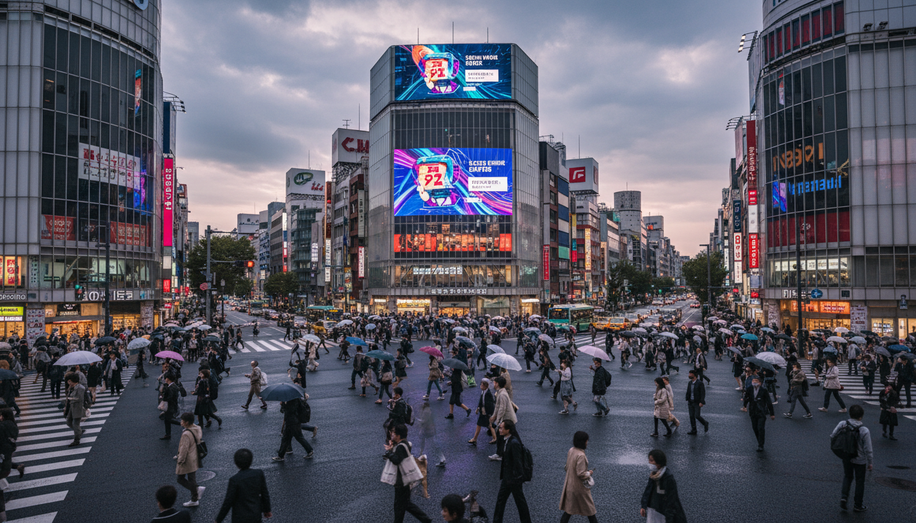

The out-of-home advertising industry is undergoing a fundamental transformation. Dynamic Creative Optimization (DCO) is revolutionizing how brands connect with audiences on public screens by replacing static, one-size-fits-all messaging with hyper-personalized content that adapts in real-time to environmental conditions, audience demographics, and behavioral triggers.
Unlike traditional static ads that remain unchanged regardless of context, dynamic DOOH campaigns leverage real-time data feeds to automatically adjust creative elements as conditions shift. This shift represents a significant departure from conventional outdoor advertising. A screen displaying hot beverage promotions can instantly pivot to cold drink messaging when temperatures rise above 22°C, ensuring messaging always aligns with viewer needs and environmental context. This contextual relevance is not merely a nice-to-have feature—it’s becoming essential for capturing attention in an increasingly cluttered media landscape where consumers demand personalization.
The technological foundation enabling this transformation combines multiple data layers. Campaigns integrate first-party and third-party data with local offline information such as time of day, day of week, and geographic location. Weather data, local events, traffic patterns, sports scores, and real-time sales figures all feed into sophisticated algorithms that determine which creative variations appear on screens at any given moment. For instance, Microsoft’s Cortana activation demonstrated this capability by deploying 10,000 hyper-localized content variations across 240 creative templates daily, with messaging aligned to weather, transportation data, time, and sports scores to reflect consumers’ daily behavior and interests.
Machine learning and artificial intelligence amplify these capabilities further. By simulating programmatic advertising models from the digital display world, DOOH networks can now layer data science and AI algorithms to create ads that react to both environment and audience in real-time. This technological sophistication enables screens to adjust messaging based on the presence or predominance of particular audience demographics, transforming passive outdoor placements into responsive marketing touchpoints.
The business impact of this approach has proven substantial. Research indicates that dynamic campaigns can boost sales and advertisement recall by up to 80%, while full-motion DOOH campaigns deliver impact 2.5 times greater than static displays. Retail applications have proven particularly effective, with some campaigns generating 10 percent or greater sales lifts for high-ticket products through contextual triggers. These results underscore why forward-thinking brands are increasingly prioritizing dynamic creative as a cornerstone of location-marketing strategies.
Implementation of dynamic DOOH requires new operational approaches. Successful campaigns demand real-time data integration from external feeds to trigger content changes, as well as robust performance analytics capabilities to monitor engagement metrics and adjust strategies in real-time. Brands maintain consistent core brand elements while customizing messaging for specific locations, demographics, and times of day, ensuring coherent brand experiences across multiple touchpoints.
The convergence of retail environments with dynamic screens represents particularly promising territory. Convenience retailers and specialty markets are now equipped with screens fully capable of running dynamic programmatic campaigns triggered by real-time conditions, delivering relevant, localized messages at the precise moment of purchase consideration. This point-of-sale integration bridges the gap between contextual relevance and immediate consumer action.
As the OOH advertising landscape continues evolving toward real-time optimization and data-driven decision-making, personalized dynamic content has transitioned from experimental innovation to industry standard. Screens that fail to adapt to their environment and audience increasingly represent missed opportunities. The advertisers recognizing this shift—and investing in the data infrastructure, creative capabilities, and technology platforms required to deliver truly dynamic experiences—are positioned to capture growing shares of consumer attention in an increasingly competitive media environment.
To thrive in this complex, data-driven environment, platforms like Blindspot are indispensable. Through programmatic DOOH campaign management, real-time performance tracking, and granular audience measurement, Blindspot empowers brands to seamlessly deploy contextually relevant dynamic content, optimize strategies instantly, and precisely attribute ROI. This comprehensive suite of capabilities ensures OOH investments deliver adaptable, impactful, and measurable results. https://seeblindspot.com/