
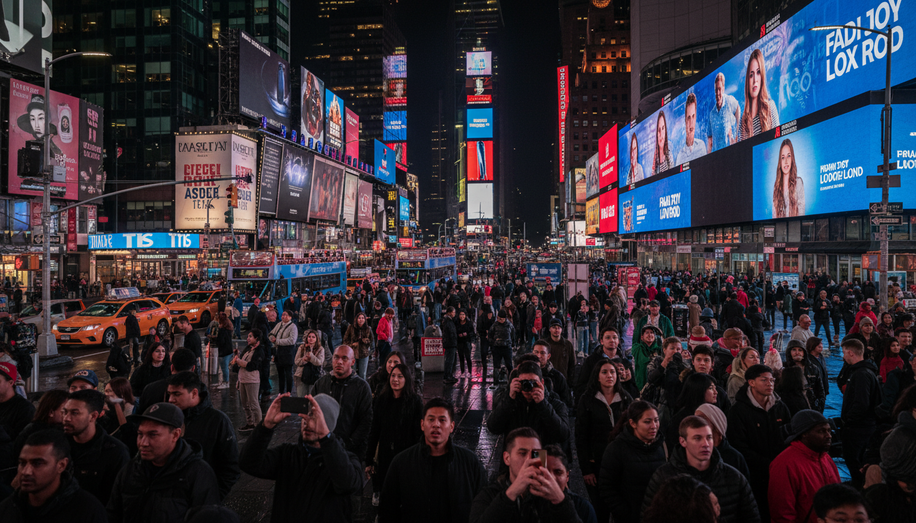

Influencers Step Into the Street: How Creator Partnerships Are Supercharging DOOH Campaigns
Meta description: Influencer partnerships are transforming digital out-of-home, boosting attention, trust and real‑world action as social content jumps from phones to public screens.
Digital out-of-home has spent the past decade proving it can do what many digital formats no longer can: command undivided attention in the real world. Now it is borrowing one of social media’s most potent assets – influencers – to turn that attention into action.
Across major markets, brands are discovering that putting creator content on public screens is not just a creative flourish; it is a measurable performance driver. A Harris Poll study for the Out of Home Advertising Association found that 67% of consumers say influencer endorsements in OOH would drive them to take action, from searching a brand to scanning a QR code. Another analysis cited by Screenverse reports that 47% of adults notice influencer content in OOH ads and 81% believe influencer endorsements benefit all types of products. Those numbers are reshaping how media owners, agencies and creators think about the DOOH canvas.
What influencers bring to DOOH is not only reach but pre‑built trust. People follow creators because they feel accessible and authentic, a sharp contrast to the polished anonymity of most brand ads. When that familiar face appears on a large-format urban panel or transit screen, the recommendation feels like it has been promoted from a private feed to a public endorsement. OneScreen.ai describes this as a “halo of trust and relatability,” noting that two‑thirds of consumers say they are likely to act based on influencer endorsements in OOH.
For Gen Z and younger millennials, this combination is particularly potent. These audiences have perfected the art of ad avoidance online, skipping pre-roll and swiping past branded posts. Yet they are significantly more receptive to OOH and DOOH in public spaces, where ads feel less intrusive and more like part of the urban environment. Research from Harris Poll and OAAA indicates that Gen Z and millennials are not only more engaged with OOH than older cohorts but 67% are more likely to make a purchase after seeing an influencer-endorsed product in an out-of-home ad. Place-based media studies similarly show that Gen Z both notices and acts on OOH at higher rates than average.
The impact is not just self‑reported. Comscore’s digital activation work, referenced in recent OOH–influencer research, found that combining influencer endorsements with iconic OOH locations lifted website visitation by up to 19 points, product purchases by 13 points, social sharing by 12 points and branded search by 7 points versus baseline campaigns. Outfront reports that more than 80% of surveyed consumers believe any product or service can benefit from influencer endorsements, suggesting the tactic is far from niche.
Strategically, influencer partnerships answer a core DOOH challenge: how to connect a fleeting real‑world impression to a broader narrative. Increasingly, campaigns are conceived as social‑first stories that spill into physical space, then bounce back online. Clear Channel Outdoor notes that OOH paired with social media fuels “shareable moments” that extend campaign impact well beyond the initial impression. When a well-known creator appears on a digital billboard, their followers often photograph and reshare the moment, adding a layer of organic distribution the media plan did not have to pay for.
The mechanics are becoming simpler, too. Much creator content is natively formatted for vertical video; the standard 1080×1920 assets designed for TikTok and Instagram Reels align neatly with many digital urban panels and transit screens. That allows brands to repurpose influencer content across mobile and DOOH with minimal adaptation, creating a consistent creative thread from phone to street. For media owners, that compatibility lowers production friction and opens the door to more dynamic, regularly refreshed DOOH schedules built around ongoing creator output rather than static flights.
The creative approaches are evolving fast. Some campaigns use influencers as on‑screen talent in DOOH spots, delivering direct endorsements or quick product demos that feel like familiar social clips transplanted into public space. Others lean into user‑generated Q&A or confession formats, turning influencer answers or community moments into copy for digital murals and billboards, as seen in Gen Z dating and lifestyle campaigns. In both cases, the creator’s voice gives brands permission to use more candid language than traditional OOH copy, while the DOOH context lends a sense of scale and legitimacy that social alone cannot match.
Measurement is also catching up. QR codes, short vanity URLs and search‑driven calls to action are now standard features of DOOH creative, making it easier to link influencer‑fronted screens to site visits or app installs. The near‑parity some studies are seeing between ad notice and follow‑up actions such as scanning or searching suggests that once attention is captured, consumers are willing to bridge the gap from screen to smartphone. Combining DOOH exposure data with influencer campaign analytics is giving brands a more holistic view of how creator partnerships perform across channels, from awareness to conversion.
For an industry grappling with cookie deprecation and signal loss, there is also a targeting story. Influencers supply contextual relevance, bringing niche communities – from gamers to beauty obsessives – into broad-reach DOOH environments. Location-based DOOH targeting, in turn, ensures that creator‑led messages appear where those communities are likely to be: near campuses, nightlife districts, gyms or commuter hubs. That interplay between audience and venue is pushing DOOH planning closer to the granular audience strategies long used in social.
The net result is that influencer partnerships are helping reposition DOOH from a “nice‑to‑have awareness layer” to a central pillar of omnichannel brand storytelling. For advertisers, the opportunity is to design campaigns where creators are not merely featured on big screens but are integrated into the full path to purchase – teasing DOOH moments to their followers, driving them to specific locations, and then re‑amplifying the real‑world creative back online. For OOH media owners, the imperative is to make it as easy to activate influencer content on their networks as it is to upload a TikTok.
As social credibility meets public‑space scale, digital out-of-home is starting to look less like a passive backdrop and more like a live stage for the creator economy.