
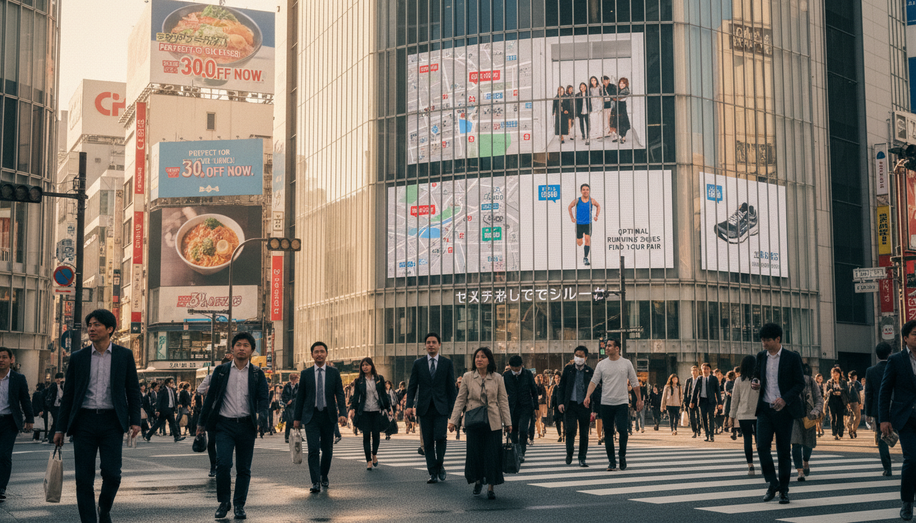

The Rise of Contextual Advertising in OOH: Market Trends and Strategies
Out-of-home (OOH) advertising is undergoing a profound transformation as contextual relevance emerges as a cornerstone strategy, leveraging real-time environmental cues, audience behaviors, and data-driven insights to deliver hyper-targeted messages that boost engagement and ROI. This shift, accelerated by the post-COVID digital boom and privacy regulations, positions digital OOH (DOOH) as a leader in blending physical presence with digital precision, with programmatic OOH spending projected to surpass $1 billion by 2025.
At the heart of this evolution is the ability of DOOH to adapt content dynamically to its surroundings. Digital screens in high-traffic areas like Times Square or urban malls now incorporate weather-responsive messaging, time-of-day adjustments, and location-specific triggers, making ads feel less intrusive and more intuitive. For instance, platforms like Outfront’s XPress enable advertisers to swap creatives in real time, extending campaign freshness and increasing dwell time, awareness, and sales lift, as validated by neuro-insight studies from QMS and Opinium. This contextual approach mirrors digital advertising’s success: analyses show contextually aligned ads achieve 50% higher click-through rates and 30% better conversions compared to generic ones, a metric increasingly applicable to OOH as screens gain AI smarts.
Market trends underscore the momentum. Post-COVID recovery has fueled a digital OOH surge, with digital formats now comprising over a quarter of outdoor spending and expanding rapidly in airports, transit hubs, and retail spaces. The fade of third-party cookies has amplified contextual targeting’s appeal, offering a privacy-safe alternative in a cookieless era—global contextual ad markets are forecasted to hit $376 billion by 2027, with double-digit growth driven by real-time relevance over outdated behavioral data. In OOH, this manifests through AI and machine learning analyzing demographics, foot traffic, and even social buzz in real time. Brands are deploying 1-meter geofencing for precise attribution, achieving over 90% confidence in foot traffic lift studies, while cross-channel tools link physical impressions to digital conversions.
Programmatic buying further democratizes access, enabling flexible, short-term deals that respond to demand spikes—prices dipped during lockdowns but rebounded with higher premiums for premium spots amid surging digital inventory. Sustainability adds another layer: OOH, consuming just 3.3% of UK ad power, now features solar-powered displays from innovators like Soofa Signs and unified carbon metrics, appealing to eco-conscious planners. Meanwhile, augmented reality (AR) murals turn static billboards into interactive portals, with AR OOH engagement rates soaring 300% higher than static campaigns, often tying into contextual events like seasonal changes or local happenings.
Strategies for brands hinge on integration and creativity. Contextual OOH thrives when fused with multichannel tactics—think QR codes prompting mobile interactions or influencer tie-ins at iconic locations to spark viral sharing, where entertainment and offers drive social amplification per Harris Poll data. Coca-Cola’s interactive DOOH activations, for example, let passersby reshape digital canvases via apps, fostering a sense of control and personalization that boosts recall. Transit and street furniture ads capitalize on repeated exposure in context-rich environments like bus shelters, reinforcing nostalgia or pop culture nods for emotional pull.
Experiential elements elevate effectiveness: pop-up installations with AI-driven personalization create memorable encounters, while nano-influencers localize content for niche communities. Measurement has matured too, with reliable impression metrics and control-group studies proving OOH’s impact—far beyond billboards, now encompassing AR clouds for persistent engagement.
Challenges persist, including inventory scalability and data silos, but the trajectory is clear. As 5G and AI converge, contextual OOH bridges digital accountability with tangible presence, outpacing traditional formats. Advertisers ignoring this risk commoditization; those embracing it—like those using real-time decisioning for immediate relevance—unlock higher engagement without privacy pitfalls.
In 2025, contextual advertising isn’t a gimmick; it’s the gold standard reshaping OOH from passive signage to proactive storytelling. Brands that master environmental syncing, programmatic agility, and sustainable tech will dominate urban landscapes, turning every glance into a conversion opportunity. The medium’s adaptability ensures it remains a vital channel in fragmented media diets, proving that relevance, not reach alone, drives tomorrow’s successes.