
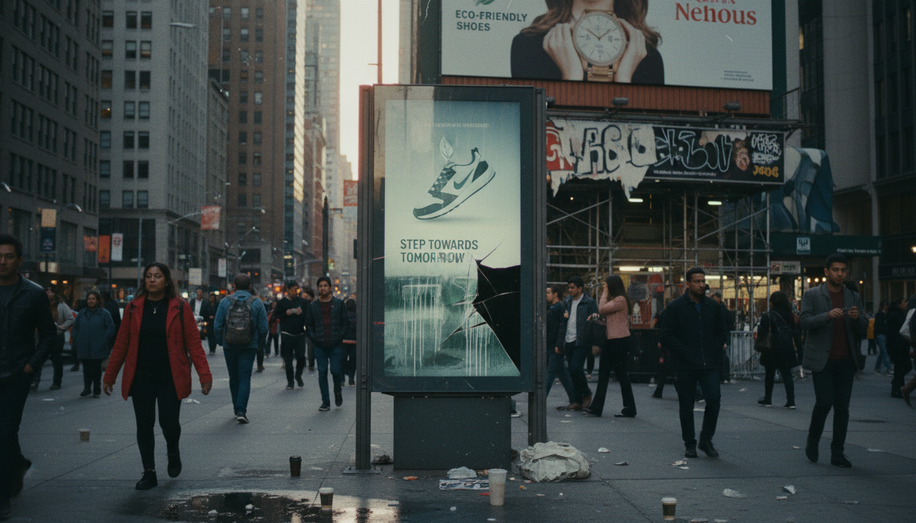

In the bustling chaos of a city street, where horns blare and footsteps echo, an out-of-home (OOH) advertisement doesn’t just hang in the air—it infiltrates the viewer’s psyche, leveraging the raw power of their surroundings to etch a message into memory. Unlike the fleeting scrolls of digital feeds, OOH thrives in the physical world, where environmental cues like pedestrian density, urban sprawl, and even the time of day dictate how deeply an ad penetrates cognition and emotion. Neuroscience reveals why: the brain’s attention system is wired to prioritize unexpected sensory inputs, such as a flashing digital billboard amid traffic, hijacking focus in ways static online banners never could.
Pedestrian flow plays a pivotal role in this dynamic. High-traffic zones force prolonged exposure—dwell time that digital ads lack—turning passive glances into subconscious processing. Research from Ocean NeuroScience indicates consumers are 2.5 times more aware of OOH than digital media, with 83% attention capture in PML Group’s IMPACT study, precisely because crowds create natural bottlenecks, like subway platforms or crosswalks, where eyes have nowhere else to wander. In these moments, the urban environment amplifies recall: Nielsen data shows OOH achieving 47% brand recall versus 35% for digital, bolstered by contextual anchoring. Viewers don’t just see the ad; they link it to the grit of the sidewalk, the rush of commuters, or the glow of dusk, forging stronger neural pathways than isolated screen interactions.
Mood, that ephemeral undercurrent of human experience, further tilts the scales. When people navigate cities in states of anticipation—rushing to work, shopping, or unwinding after a long day—OOH intercepts at peak receptivity. A Clear Channel and Kantar five-year study found OOH matching linear TV in driving favorability and purchase intent, attributing this to its timing: consumers encounter it en route to real-world actions, less distracted than during multitasking online sessions. Positive moods enhance this; an OAAA study reports 88% of adults noticing OOH in the past month, with 78% engaging afterward, including 51% searching online or 43% making purchases—rates spiking among younger demographics in upbeat, mobile contexts. Conversely, stress from heavy pedestrian flow can heighten alertness, making bold visuals a dopamine trigger that demands examination, as unexpected cues in crowded spaces provoke the brain’s reward system.
The cognitive machinery at work here is priming, a psychological phenomenon where environmental exposure subtly shapes subsequent thoughts and behaviors. Oceans Neuro-Insights research demonstrates that digital OOH priming boosts online engagement with the same brand by 87%, as the ad’s physical imprint lingers, influencing decisions blocks away. Urban grit adds emotional layers: stark contrasts of neon against rainy streets evoke urgency, while serene park benches invite reflection. Color psychology intensifies this indoors or out; hues influence 90% of initial impressions and 85% of purchase decisions, with bold palettes cutting through visual noise in fast-moving flows. Tailored messaging seals the deal—57% of adults notice OOH more when aligned to needs, 54% when location-specific, per OAAA findings, turning a directional billboard into an immediate catalyst for 43% of viewers visiting a business within 30 minutes, 78% of whom buy.
Yet environment isn’t always an ally. Fleeting interactions in DOOH face distractions like weather or crowds, demanding brevity: Australia’s Outdoor Media Association notes digital signs deliver 63% more impact than static ones in one- or two-second glimpses. Pedestrian mood swings—frustration in snarls, euphoria post-event—can backfire if ads clash, underscoring the need for emotional resonance. Subconscious repetition, OOH’s secret weapon, builds familiarity through frequent urban exposures, subtly swaying preferences without overt persuasion.
Emotional impact elevates OOH beyond metrics. Ads that tug heartstrings amid daily commutes—perhaps evoking nostalgia in a familiar neighborhood—reshape brand sentiment, as McKinsey studies link personalized, context-rich experiences to 20% higher satisfaction and 10-15% sales lifts. In high-flow areas, this fosters community ties; directional cues prompt swift action, especially among 18-34-year-olds (46% visit rate), blending cognition with impulse.
Ultimately, OOH’s psychology hinges on harmony with the environment: syncing bold creativity to flow, mood, and locale maximizes retention and action. As digital fatigue mounts—viewers preferring OOH over social feeds—marketers who master this alchemy command not just eyes, but minds, proving physical presence trumps pixels in the battle for lasting impression. In an attention economy starved for authenticity, the street itself becomes the ultimate canvas for persuasion.
Mastering this delicate alchemy of environmental harmony, where ads sync with pedestrian flow, mood, and locale, demands advanced insight. Platforms like Blindspot equip marketers with precise location intelligence and audience analytics to identify optimal sites and dynamically tailor messages that deeply resonate with specific urban contexts. This ensures OOH campaigns are not merely seen, but strategically woven into the city’s pulse for unparalleled recall and action. Learn more at https://seeblindspot.com/