
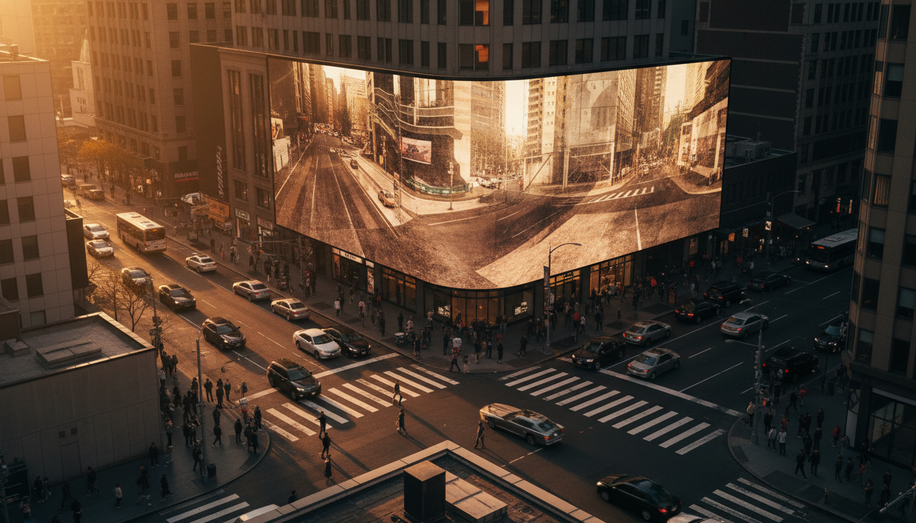

In the bustling chaos of a city commute, a billboard doesn’t just flash by— it embeds itself in the viewer’s spatial memory, transforming a mundane intersection into a trigger for brand recall. This phenomenon, rooted in environmental context encoding, explains why out-of-home (OOH) advertising thrives on more than prime real estate; it harnesses cognitive load, urban psychology, and subtle environmental cues to shape perception and amplify impact. Psychologists Godden and Baddeley laid the groundwork in 1975, showing that memories formed in specific contexts—like underwater or on land—are best retrieved in matching environments. Apply this to OOH: a repeated ad at your daily bus stop weaves the brand into your route’s mental map, cueing recall later without conscious effort.
Cognitive load plays a pivotal role in this process, dictating how much an ad penetrates a distracted mind. Urban dwellers navigate high-stimulation environments—honking traffic, pedestrian swarms, smartphone notifications—where the brain filters out all but the most salient stimuli. OOH excels here because its massive scale and dynamic elements, like digital screens that shift unexpectedly, hijack the attention system via the brain’s dopamine pathways. These “alerting responses” kick in for novel cues requiring interpretation, far outpacing static online ads that blend into digital noise. Yet, overload cuts both ways: in low-dwell zones like highways at 70 mph, peripheral processing dominates via the Elaboration Likelihood Model (ELM). Viewers skim visuals, colors, and logos rather than dissecting arguments, making bold, simplistic designs essential for low-elaboration persuasion.
Urban psychology adds layers, as cityscapes themselves prime emotional states that color ad reception. A chilled coffee billboard near a sun-drenched park evokes refreshment more potently than the same creative amid factory smokestacks, aligning product imagery with the ambient mood. Premium spots like Times Square supercharge this: visitors linger an average of 81 minutes amid high emotional buzz and 89% social media shares, layering sensory, geographic, and social encodings for durable associations. Repetition in these contexts strengthens the bond—your tenth glimpse at that corner doesn’t just build familiarity; it indexes the brand geographically, prompting unplanned purchases as the environment nudges decisions in stores. Studies confirm 68% of consumers act impulsively post-billboard exposure, driven by this implicit environmental priming rather than explicit recall.
Environmental factors extend beyond location to sensory interplay, influencing subconscious trust and engagement. Natural urban pockets—riverside paths or green plazas—lower cognitive load, fostering openness to peripheral cues like nature imagery or calming tones, which boost perceived authenticity. Conversely, harsh industrial zones heighten skepticism, demanding ads that contrast sharply, such as vibrant colors piercing gray concrete to trigger dopamine-fueled attention breaks. Dwell time emerges as a quiet powerhouse: traffic jams or transit waits force prolonged exposure, turning passive glances into absorbed impressions where the brain has “little choice but to engage.” Research on environmental messaging underscores size’s outsized role—larger OOH formats garner over eight times the engagement of smaller ones, leveraging peripheral visuals to shift attitudes despite fleeting views.
This interplay peaks when placements exploit psychological distance, bridging abstract ideas to immediate realities. Climate ads falter if threats feel remote—not here, not now, not me—but localize them, like pollution choking a familiar park, and motivation surges via concrete cues. OOH’s physicality closes that gap uniquely: a massive screen depicting local air quality’s toll on city kids, amid actual urban grit, activates conformity, altruism, or self-interest without demanding deep analysis. Creative boldness amplifies it—innovative installations or motion exploit our bias toward novelty, embedding brands deeper than skippable digital formats.
Ultimately, masterful OOH placement anticipates the urban psyche’s rhythms, balancing cognitive demands with contextual harmony. Agencies chasing relevance alone miss this: impact surges when ads sync with environmental psychology, turning public spaces into memory forges. In high-traffic hives, strategic sizing, repetition, and sensory alignment don’t just capture eyes—they rewire habits, proving OOH’s enduring edge in a fragmented media world. As cities evolve, so must placements, prioritizing not footfall counts but the invisible threads of mind and milieu that make ads unforgettable.