

The Power of Storytelling in Out-of-Home Advertising
Meta description: How brands can use storytelling in OOH to turn fleeting glances into emotional connections, driving memorability, engagement and long-term brand lift.
Out-of-home advertising has always traded on impact: big formats, bold visuals, unmissable locations. But as audiences grow more ad-blind and attention fragments across screens, impact alone is no longer enough. To cut through, OOH is quietly rediscovering one of the oldest tools in the communications arsenal: storytelling.
Unlike a 30-second TV spot or a three-minute online film, an OOH execution typically has just a few seconds to hook someone on the move. That constraint has pushed brands to distil narratives down to their most potent elements: character, emotion and moment. A single powerful image, a sharply crafted line and a clear tension-to-resolution arc can hint at a much bigger story in an instant. When done well, the passer-by fills in the gaps—and that act of mental participation is precisely what makes the ad stick.
The emotional advantage of story-driven OOH is now well documented. People are far more likely to remember stories than product features or statistics, and emotional advertising is more likely to influence long-term brand preference. Outdoor executions that frame the viewer—or someone like them—as the hero, show a relatable problem and position the brand as the catalyst for change tap into that bias. Nike’s long-running “Just Do It” work is an oft-cited example: even on a static billboard, the brand isn’t listing performance specs; it’s inviting you into a narrative of struggle and achievement.
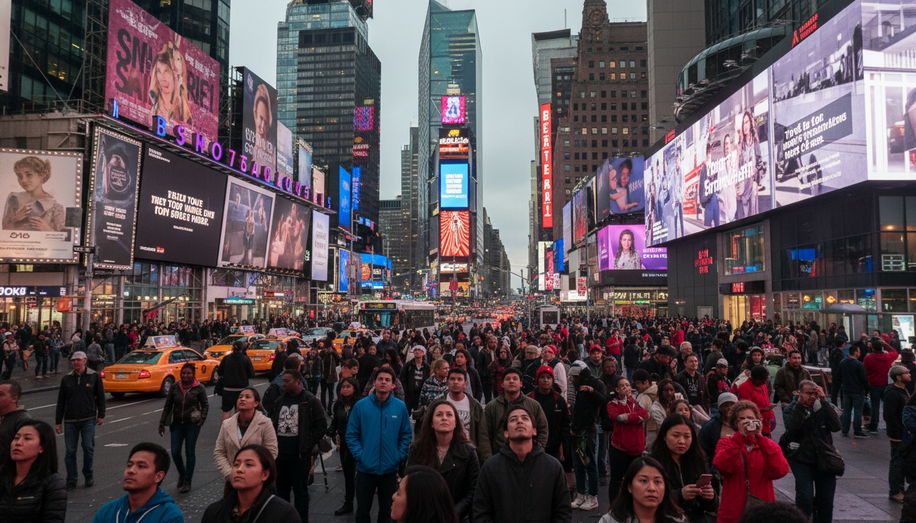
The physical nature of OOH gives storytellers a distinct canvas. Location is not just media planning; it can be part of the narrative itself. Brands that align creative with specific venues, neighbourhoods or travel moments can tell what some planners now call “precision stories”—messages that feel responsive to context rather than interruptive. A line tailored to sports fans outside a stadium or commuters at a transit hub does more than personalise; it signals that the brand understands the viewer’s current mindset and setting, which in turn makes any emotional appeal feel more authentic.
Digital and interactive formats are stretching what an OOH story can be. With DOOH, narratives can evolve in real time, reflecting live data such as weather, traffic or sports scores. Campaigns can unfold over hours or days on the same screen, revealing new “chapters” that reward repeated exposure—a natural fit for environments such as airports or city centres where frequency is high. QR codes, hashtags and augmented reality bridges then extend the plot onto mobile, where audiences can unlock the next part of the experience or take action.
For creative teams, the craft challenge is to balance narrative richness with ruthless simplicity. Limited space and dwell time mean complex plots are non-starters; the story has to be understood in a heartbeat. The most effective campaigns therefore start with a single, sharply defined message—one thing you want people to feel and remember—and build a visual metaphor around it. A lone image that encapsulates conflict and resolution will usually work harder outdoors than a busy collage, however beautiful.
Character is another underused lever. In many sectors, outdoor remains dominated by product shots and slogans, yet audiences connect more deeply with human figures and faces. Whether it is a real customer, a fictional protagonist or a celebrity, positioning a character at the centre of the creative gives the narrative an anchor. The trick is to make that character’s situation instantly legible: a missed train, a soaked shirt in the rain, the nervous energy of game day. Within that split second of recognition lies the opportunity for empathy.
Humour, surprise and even mild shock also play an important supporting role in OOH storytelling. An unexpected twist in an image or line not only earns attention but can create a mini “plot twist” that people share with others, driving valuable word of mouth. But the payoff has to connect back cleanly to the brand and its promise; otherwise, the execution risks being remembered as a clever stunt with no strategic residue.
The rise of data-driven planning is making these narrative bets more accountable. Location and audience analytics now allow marketers to understand not just who is likely to see an OOH story, but what they are likely to be doing and feeling at that moment. That insight feeds back into creative: a family-focused narrative for weekend shoppers, a productivity-themed story for weekday office districts, a lighter, escapist tone on commuter routes where stress levels run high. In each case, the story is tuned to a real-world context rather than an abstract demographic.
Ultimately, what sets storytelling-led OOH apart is its ability to transform a fleeting contact into the beginning of a relationship. A commuter who repeatedly passes a billboard that reflects their daily struggle or aspirations starts to internalise that narrative as part of the brand’s identity. Over time, that familiarity and emotional resonance can be far more valuable than any single click or immediate conversion.
For brands, the implication is clear: treat outdoor not as a backdrop for product, but as a stage for story. Define the emotion you want to evoke, use place and time as narrative ingredients, and let imagery do as much of the heavy lifting as words. In a landscape where audiences can skip or scroll past almost everything else, a well-told story in the physical world still has the power to stop people in theirs.