
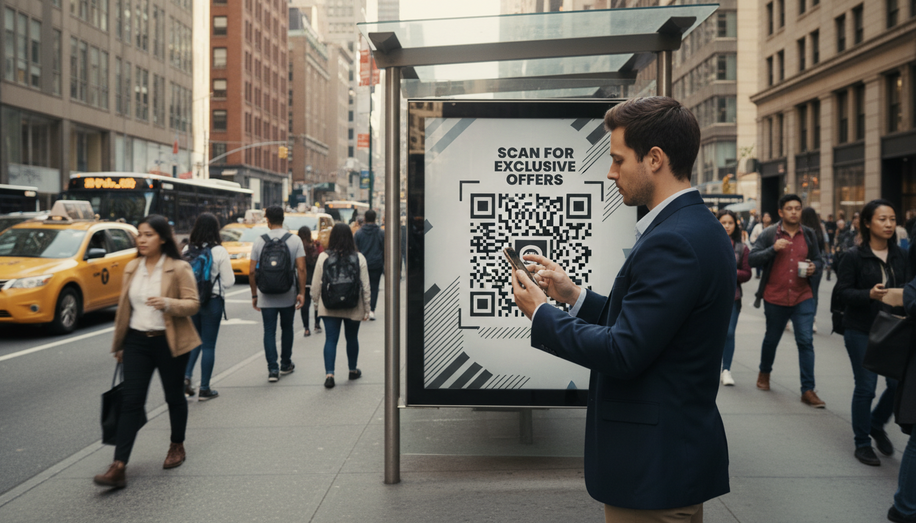

For years, QR codes were the punchline of marketing conferences—an earnest technology that never quite matched the hype. Then the smartphone camera caught up, the pandemic rewired consumer behavior, and suddenly those awkward little squares became one of the most powerful connectors between the physical world and the digital one. Nowhere is that more evident than in out-of-home advertising, where QR codes are quietly transforming static impressions into interactive, measurable brand experiences.
The core shift is simple but profound: OOH is no longer just about being seen; it is about being scanned. Traditional billboards and posters have always been strong at building awareness, but notoriously weak at driving and proving action. By embedding QR codes into creative, brands can turn a fleeting glance on a street corner into an app download, a product trial, a newsletter signup, or a purchase on the spot. A passerby goes from “I’ve seen that brand” to “I’ve engaged with that brand” in the time it takes to open a phone camera.
This ability to make OOH “actionable” is reshaping how advertisers think about the medium. Scan data provides a direct line of attribution between location, creative, and response—something planners have long struggled to quantify. A digital billboard on a commuter route can drive traffic to a unique landing page via QR code, allowing brands to attribute web visits, signups, and conversions to a specific site and time window. The QR code becomes a conversion mechanic: a trigger that not only invites interaction but also records it in a way that fits neatly into performance dashboards and attribution models.
The resurgence is also being fueled by how QR codes dovetail with broader trends in digital and mobile behavior. Consumers are now accustomed to scanning codes to pay, check in, or access menus—there is far less friction and far more curiosity than a decade ago. That makes QR-enhanced OOH an ideal bridge in omnichannel campaigns. A single outdoor execution can hand off seamlessly to a mobile-optimized experience: a coupon stored in a wallet, an AR filter on social, a video explainer, or a personalized product recommendation engine. For marketers under pressure to integrate channels, QR codes provide a simple connective tissue between the analog cityscape and the digital stack.
The most sophisticated brands are using that bridge to design genuinely interactive experiences, not just link to generic homepages. Transit environments are a natural test bed: riders waiting on platforms or sitting on buses have time to engage, and QR codes on panels or interior cards can unlock longer-form stories, playlists, games, or utility-based tools such as journey planners and live updates. Street furniture—bus shelters, kiosks, benches—offers comfortable scanning distance and dwell time, ideal for quick promotions, instant signups, or time-limited offers triggered by a scan. In digital out-of-home (DOOH) environments, animated creatives can spotlight the QR code at key moments, pairing the emotional punch of video with a clear call to action.
Beyond pure engagement, the data layer is where QR-enabled OOH really starts to look like a digital channel. Each code can be unique to a location, creative variant, or time slot, allowing granular A/B testing in the wild. Advertisers can compare scan-through rates by neighborhood, refine messages based on performance, and iterate creative mid-flight in DOOH placements. Combined with mobile location and footfall data, scan metrics can help build a more complete picture of how exposure leads to store visits or online behavior. The result is a feedback loop that makes OOH planning more data-driven and accountable, without losing the scale and spectacle that made the medium attractive in the first place.
As with any technology bolted onto a legacy medium, execution matters. The most effective campaigns treat QR codes as a central design and strategic element, not an afterthought in the corner. Codes need to be large and high-contrast enough to be scanned at realistic distances and angles; they must be placed where people can safely stop, not in high-speed roadside formats where scanning is impractical or dangerous. The payoff behind the scan must be clear and compelling within the creative itself—“scan for 20% off today” or “unlock the AR experience here” will outperform vague invitations. And the landing experience must be mobile-first, fast, and aligned with context: a commuter at 8:30 a.m. has different needs than a leisure shopper on Saturday afternoon.
There is also a creative opportunity in using QR codes as more than just functional gateways. Some brands are integrating the code itself into the visual concept, making it a design motif or game mechanic. Others are pairing QR scans with real-time content—dynamic offers based on time of day, local events, or inventory levels—taking advantage of DOOH’s flexibility. In cultural and public spaces, QR codes are being used to augment the physical environment, turning posters, murals, and installations into entry points for deeper stories, educational content, or AR layers. In these cases, the code is not just a tool; it is part of the narrative.
Looking ahead, QR codes are likely to become even more tightly woven into the fabric of data-driven OOH. As smart city infrastructure and programmatic buying mature, creative and placement decisions will increasingly be informed by real-time signals. QR interactions will feed those systems with high-intent data, helping brands refine audience segments and sequence messaging across channels. Elements like unique URLs and QR codes, once treated as novelties on a poster, are quickly becoming standard levers for turning passive views into measurable digital outcomes.
For an industry that has long been judged by reach and recall, this shift toward interaction and attribution is significant. QR codes alone will not make a weak idea strong, but they give strong ideas a way to live beyond the frame, on the device that matters most to consumers. In doing so, they are helping OOH finally deliver on a long-held promise: to not only dominate the skyline, but also drive the next click.