
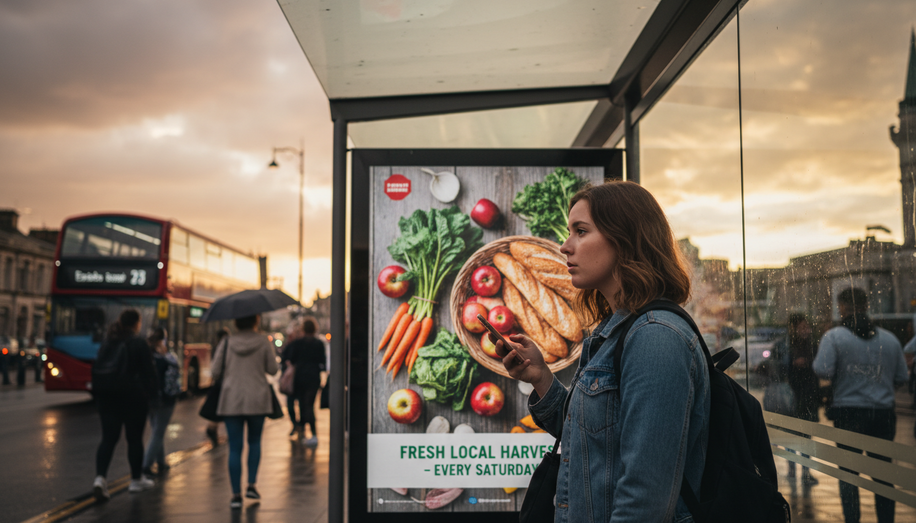

Out-of-home advertising has returned to its roots in the modern digital age, but with a precision that earlier marketers could only imagine. Hyper-local OOH campaigns have emerged as one of the most powerful tools for brands seeking to forge genuine connections with consumers at the neighborhood level, transforming billboards and transit ads from broad-stroke messages into personalized conversations with specific communities.
The fundamental shift in OOH advertising reflects a larger truth about consumer behavior: people increasingly want brands that understand their immediate world. When individuals encounter advertisements that speak to their local culture, events, and values, they don’t simply notice them—they engage with them, share them, and remember them. This heightened relevance translates into measurable business outcomes. Hyper-local campaigns generate higher engagement and conversion rates compared to broader advertising approaches because the messaging resonates authentically with the specific audiences receiving it.
What makes hyper-local OOH particularly effective is the strategic combination of precision targeting and localized creativity. Geo-fencing technology allows advertisers to establish virtual boundaries—typically ranging from 1,000 to 1,500 feet—around high-traffic retail locations, ensuring ads trigger only within specific neighborhoods. Meanwhile, digital billboards have revolutionized the medium by enabling real-time updates that reflect current events, weather conditions, or local news, making advertisements far more timely and relevant than static predecessors. A hardware store chain, for instance, could use geo-targeted advertising to promote spring lawn care products with different messaging based on each neighborhood’s typical lawn types and environmental challenges.
The economic advantages of this approach extend beyond engagement metrics. By focusing resources on high-impact areas rather than broad geographic spreads, businesses can maximize their return on investment while minimizing wasteful spending on impressions unlikely to convert. This cost-efficiency particularly benefits smaller businesses and local retailers that may have limited marketing budgets. The ability to scale campaigns up or down based on budget constraints provides unprecedented flexibility and control over advertising spend.
Location strategy remains paramount in hyper-local OOH success. Identifying high-traffic zones such as shopping districts, business hubs, and popular dining and entertainment spots provides natural concentration points for audience reach. Equally important is proximity awareness—placing billboards near competitor locations or specific points of interest like schools, landmarks, and event venues ensures ads reach consumers when they’re most receptive. This situational targeting transforms location from a mere demographic consideration into an actionable competitive advantage.
The creative dimension of hyper-local campaigns demands equal attention to strategic placement. Effective messaging incorporates local landmarks, cultural references, and community events that make advertisements feel familiar and timely rather than generic. Clear calls to action drive immediate responses, whether encouraging store visits, event attendance, or redemption of location-specific offers. When audiences see ads that reflect their community’s character and values, brand trust and loyalty deepen measurably.
Mobile integration represents another frontier in hyper-local OOH effectiveness. SMS marketing, with its remarkable 98% open rate compared to email’s 20%, pairs powerfully with location-based advertising to drive foot traffic and sales. As “near me” searches among consumers have increased nearly 130% over the past decade, brands that optimize for local discovery across both OOH and digital channels capture audiences at precisely the moment purchase intent peaks.
The ultimate promise of hyper-local OOH advertising lies in its ability to transform physical advertising spaces into community conversation partners. Rather than broadcasting messages to anonymous masses, brands can now address specific neighborhoods with deep relevance, creating genuine engagement that drives both immediate conversions and lasting brand affinity. In an era of information overload, this hyper-personalized approach to out-of-home advertising represents not a return to the past, but an evolution toward the future of truly connected marketing.