
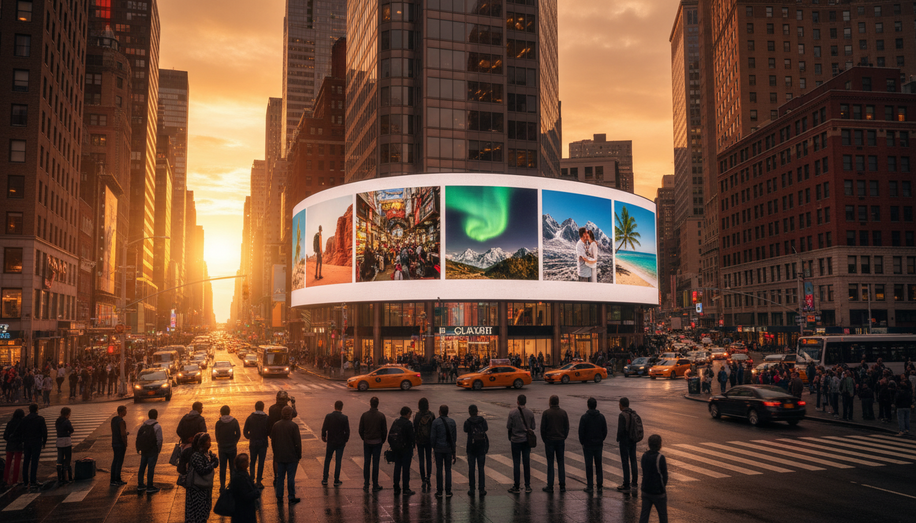

In the relentless stream of urban life, where commuters rush past billboards and pedestrians glance at bus shelters amid daily distractions, out-of-home (OOH) advertising faces a unique challenge: capturing fleeting attention and forging lasting connections. Storytelling emerges as the masterstroke in this arena, transforming static displays into dynamic narratives that elevate brand messaging from mere promotion to memorable experiences. By weaving emotional threads into oversized visuals or digital screens, brands not only stand out but also embed themselves in the collective memory of audiences navigating high-traffic environments.
The power of narrative in OOH lies in its ability to evoke emotion where other media falter. Unlike digital ads that can be scrolled past or muted, OOH meets people in real-world moments—during commutes, shopping trips, or airport layovers—tapping into varied emotional states throughout the day. A compelling story triggers nostalgia, humor, inspiration, or even tension, making the message resonate far beyond the initial glance. Research underscores this: emotional advertising is more memorable than fact-heavy pitches, as people recall stories 22 times better than statistics. Consider Nike’s enduring “Just Do It” campaign, which distills tales of grit and triumph into a single, heroic slogan. Billboards depicting athletes conquering obstacles don’t just sell shoes; they position the brand as the enabler of personal victory, urging viewers to envision themselves in the narrative.
This emotional pull is amplified by OOH’s inherent constraints—size, location, and brevity—which savvy creators reframe as opportunities. With mere seconds to engage a driver at 60 miles per hour or a shopper in motion, simplicity reigns supreme. Narratives must distill complex ideas into bold visuals and punchy phrases, relying on imagery over text to stimulate imagination and invite viewers to fill in the gaps. Chick-fil-A’s iconic cow billboards exemplify this: three-dimensional bovines misspelling “Eat Mor Chikin” inject humor and surprise, turning a fast-food pitch into a playful saga of rebellion against the ordinary. The result? Awareness builds rapidly, as intrigue compels double-takes and shares.
Crafting such stories demands precision. First, advertisers must intimately know their audience—their values, pain points, and daily rhythms—to tailor tales that feel authentic. A campaign for business travelers might leverage airport screens for escapist narratives during weary waits, while urban retail zones call for quick-hit stories of aspiration. Positioning the brand as the hero or helpful ally resolves inherent conflicts, like a Crest ad transforming a mundane smile into a triumphant grin through vivid, before-and-after visuals. Visuals, in particular, carry the load: a single evocative image can convey volumes, aligning seamlessly with the plot to evoke laughter, as in Yahoo’s vintage motel sign recreations, or drama, like the Chicago Field Museum’s pirate-ship bus shelter that immerses passersby in adventure.
Digital out-of-home (DOOH) expands these possibilities, blending storytelling with technology for even greater impact. Programmatic DOOH allows real-time swaps of creatives based on audience behavior or time of day, enabling serialized narratives that unfold across a journey—perhaps a morning coffee ad evolving into an evening unwind tale on the same mall screen. Coca-Cola’s “Share a Coke” campaign mastered this personalization at scale, plastering names on bottles via OOH to spark stories of connection and sharing, fostering a sense of communal narrative that transcended the medium. Apple’s “Shot on iPhone” series took it further, showcasing user-generated photos on billboards to democratize creativity, inviting audiences to see their own stories captured through the brand’s lens.
Yet, success hinges on more than creativity; it requires strategic continuity. OOH thrives in networks spanning roadside, transit, and pedestrian hubs, allowing stories to repeat and build frequency without fatigue. A conflict-driven arc—problem, tension, resolution—keeps viewers hooked: present the everyday hassle, introduce the brand as savior, and cap it with a clear call to action, like an SMS code for BBC World’s provocative voting prompts. Humor and universal themes, from family bonds to heroic quests, further universalize appeal, drawing on familiar concepts like home or triumph to comfort rather than intimidate.
Challenges persist, of course. Overly complex plots clutter the canvas, and inauthentic tales ring hollow in diverse locales. But when executed well, storytelling in OOH doesn’t just advertise—it shapes brand identity and drives action. As urban landscapes evolve with smarter screens and bolder installations, the narrative edge will define winners. Brands that master this art turn passive viewers into active participants, proving that in the vast outdoors, the best messages aren’t shouted; they’re told. Blindspot empowers advertisers to master this by offering the precise audience analytics and location intelligence needed to craft authentic, emotionally resonant stories, coupled with programmatic DOOH management to deliver dynamic narratives that engage audiences across their real-world journeys. Through these capabilities, Blindspot transforms OOH from mere ad space into a strategic, data-driven storytelling medium. Learn more at https://seeblindspot.com/