

The Integration of QR Codes in OOH: Bridging the Gap to Digital Engagement
Meta description: QR codes are transforming static OOH ads into interactive gateways, driving measurable engagement and connecting physical placements to digital experiences.
Out-of-home advertising has long been the domain of bold visuals and concise messaging, designed to capture attention in seconds. But in an era where consumers expect seamless digital experiences, the static nature of traditional OOH can feel limiting. Enter the QR code: a simple, low-friction tool that’s quietly revolutionizing how brands connect physical placements to digital engagement.
Once dismissed as a novelty, QR codes have matured into a strategic component of modern OOH campaigns. Their resurgence is no accident. With smartphone penetration near saturation and scanning functionality built into most camera apps, QR codes now offer a frictionless bridge between the physical and digital worlds. For OOH, that means turning a billboard, bus shelter, or digital screen into an interactive touchpoint that drives traffic, captures data, and deepens brand interaction.
The power of QR codes in OOH lies in their ability to transform passive viewing into active participation. A compelling visual on a roadside billboard can intrigue, but a QR code invites action. Scan it, and the viewer is instantly transported to a landing page, video, an app download, or exclusive offer. This shift from “see” to “do” is critical in an attention economy where brands must compete not just for eyeballs, but for engagement.
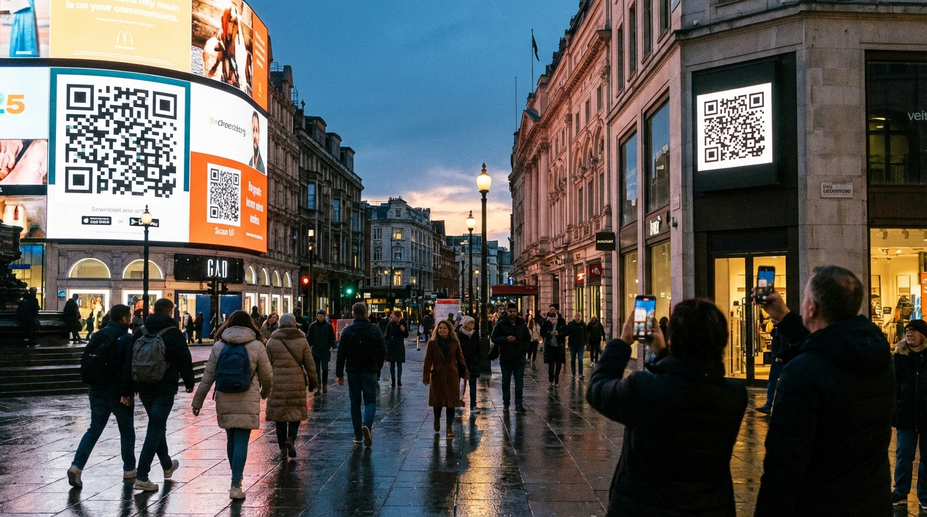
Pedestrian-based formats are particularly well-suited for QR integration. Bus shelters, urban panels, sidewalk kiosks, and storefront posters all place the ad within easy scanning range. These are environments where people are often on foot, with time to engage and a smartphone in hand. A well-placed QR code on a bus shelter, for example, can direct commuters to a brand’s latest campaign video, a product demo, or a time-limited promotion, turning a routine wait into a branded experience.
Transit advertising also benefits from QR codes. Ads inside buses, taxis, and subway cars are prime real estate for QR-driven engagement. Passengers looking for something to do during a ride are more likely to scan a code that leads to entertaining content, a game, or a useful service. Brands like Sunny Herbals have leveraged this by placing QR codes in metro coaches, using contextually relevant placements to drive higher scan rates and more targeted engagement.
Digital out-of-home (DOOH) takes QR integration a step further. High-impact screens in malls, airports, and city centers can combine dynamic creative with QR codes to create timely, relevant experiences. A digital display promoting a summer drink can show real-time weather data and include a QR code that leads to a mobile offer or app download. The immediacy of DOOH, combined with the interactivity of QR codes, creates a powerful conversion engine that traditional static media alone cannot match.
Brands are already proving the effectiveness of this approach. Adidas, for instance, deployed QR-enabled “Run Kiosks” in Stockholm, inviting runners to scan and participate in a city-wide challenge tied to a new shoe launch. The campaign didn’t just promote a product—it created an experience that resonated with its target audience. Similarly, L’Oréal used QR codes in taxis to reach consumers during traffic, linking to product videos and store pages, which contributed to an 80% increase in app downloads.
Even beyond direct response, QR codes are enabling richer storytelling. Tripadvisor’s street art campaign in major U.S. cities used QR codes to unlock augmented reality experiences that brought San Diego’s tourist attractions to life. Burger King leveraged on-screen QR codes during the VMAs to drive app downloads and contest entries, capitalizing on live event momentum. These examples show that QR codes are not just a call to action—they’re a gateway to immersive brand experiences.
For advertisers, the data advantage is equally compelling. Unlike traditional OOH, where measurement often relies on estimated impressions, QR codes provide clear, trackable metrics: scan rates, geographic hotspots, time of engagement, and downstream conversions. This measurability allows brands to optimize campaigns in real time, refine creative, and demonstrate ROI in ways that were previously difficult with OOH alone.
Of course, success depends on thoughtful execution. QR codes must be large enough to scan from a reasonable distance, placed at eye level, and accompanied by a clear value proposition. “Scan me” is no longer enough; the incentive—exclusive content, a discount, an experience—must be compelling and contextually relevant.
As OOH continues to evolve, QR codes are no longer an add-on; they’re a core part of the media strategy. They turn static ads into dynamic entry points, extend campaign lifecycles, and create measurable pathways from the physical world to digital platforms. For brands looking to deepen engagement and prove impact, integrating QR codes into OOH isn’t just smart—it’s essential.