
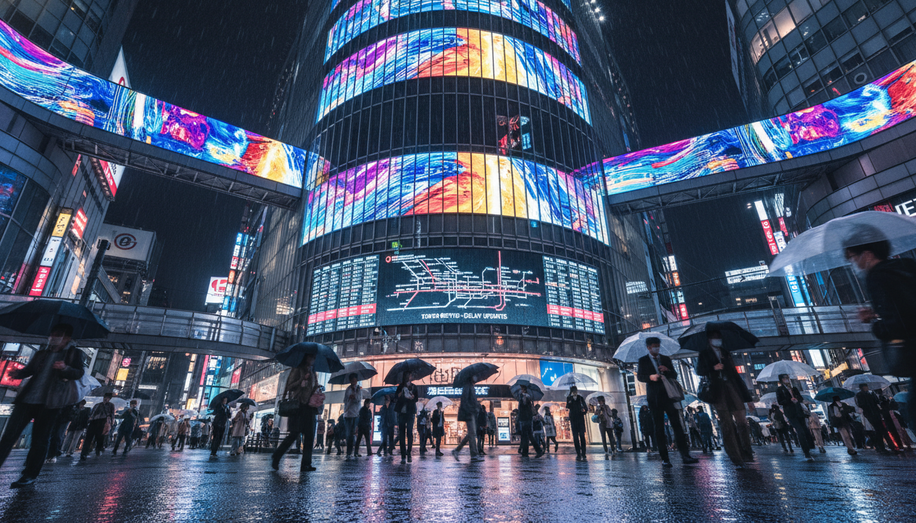

In the pulsating hearts of modern metropolises, digital out-of-home (DOOH) advertising is no longer an afterthought but a foundational element of smart city architecture. As urban planners weave sensors, AI, and high-speed connectivity into the fabric of city life, DOOH screens—perched on bus shelters, metro stations, and arterial roads—have evolved from mere billboards into dynamic hubs that blend commerce, information, and civic engagement. This integration promises not just aesthetic uplift but a symbiotic relationship where advertising funds innovation while enhancing the urban experience.
Smart cities, defined by their use of IoT-enabled infrastructure, real-time data analytics, AI-driven traffic management, and 5G networks, provide the perfect ecosystem for DOOH’s ascent. Traditional static posters fade into obsolescence as digital screens deliver context-aware messaging that adapts to traffic jams, weather shifts, or local events, boosting engagement and recall rates. In Mumbai, for instance, RoshanSpace’s smart OOH installations along key roads demonstrate how these mediums can elevate infrastructure aesthetics while serving advertisers, turning drab thoroughfares into visually coordinated narratives. A joint KPMG-FICCI report underscores this shift, noting that experiential OOH generates 1.7 times higher engagement than static formats through responsive tech and cultural cues.
Programmatic DOOH advertising exemplifies this synergy, allowing brands to purchase inventory automatically via connected urban networks, much like online platforms. Location-based targeting draws on anonymized mobility data—footfall patterns, commuter behaviors, business districts—to reach precise audiences, making campaigns more accountable than ever. Platforms like Desync CMS and Screen Sync Tech enable hyperlocal delivery and seamless coordination across sites, ensuring ads resonate without overwhelming the cityscape. This precision aligns with smart city tenets of efficiency: screens in high-dwell zones like EV charging stations, airports, and smart mobility hubs expose high-intent viewers to extended storytelling.
Beyond commerce, DOOH contributes to urban aesthetics and information dissemination. Energy-efficient screens minimize environmental impact, fitting smart cities’ sustainability mandates. They double as public service tools, flashing weather updates, emergency alerts, or transit info, fostering citizen trust and utility. In this model, advertising revenue could subsidize city-wide tech deployments—from streetlights to parking meters—creating profitable loops for OOH operators. A study by the Outdoor Advertising Association of America (OAAA) highlights how OOH interfaces with smart cities’ core pillars: connecting people with relevant content, optimizing processes for timely delivery, leveraging data for targeting, and integrating sensors into physical assets.
Citizen engagement takes interactivity to new heights with AI and big data. Facial analytics, GPS, and image recognition—deployed ethically with anonymized data—enable personalized content that bridges the urban environment and personal devices. Imagine a screen at a bustling intersection detecting crowd density via sensors, then prompting smartphone interactions for gamified promotions or civic polls, heightening involvement. This “crossing point,” as researchers term it, transforms passive viewers into active participants, blending advertising with the city’s pulse. Gordon Feller of Meeting of the Minds emphasizes that as cities digitize commonplace assets, OOH must pioneer these connections, turning billboards into nodes of urban intelligence.
Yet, success hinges on collaboration. Municipal bodies, advertisers, designers, and technologists must align on compliance, creativity, and data ethics to avoid visual clutter. The OAAA report urges OOH firms to forge partnerships that link ad assets with sensors, generating revenue streams while funding smart initiatives. Globally, from Indian metros to U.S. hubs, evidence mounts: DOOH in smart cities isn’t intrusive but integral, shaping identities through immersive designs that locals “see, feel, and remember.”
Looking ahead, AI-driven trends like advanced targeting and screen proliferation signal DOOH’s standardization by 2030, powering multichannel campaigns in evolving urban landscapes. As cities prioritize people, processes, data, and things, OOH stands ready to illuminate the path—not as a commercial interloper, but as a vital thread in the smart urban tapestry. This fusion redefines city planning, where every glowing screen whispers progress, engagement, and possibility.
To truly realize this vision, platforms like Blindspot become indispensable, offering advanced audience measurement and location intelligence to ensure context-aware messaging and precise targeting aligns with smart city efficiency. By providing robust programmatic DOOH campaign management and ROI measurement, Blindspot empowers brands and municipalities to track performance, demonstrate accountability, and prove how advertising revenue can actively subsidize urban innovation, transforming screens into truly integral and profitable nodes within the smart urban tapestry. Learn more at https://seeblindspot.com/