
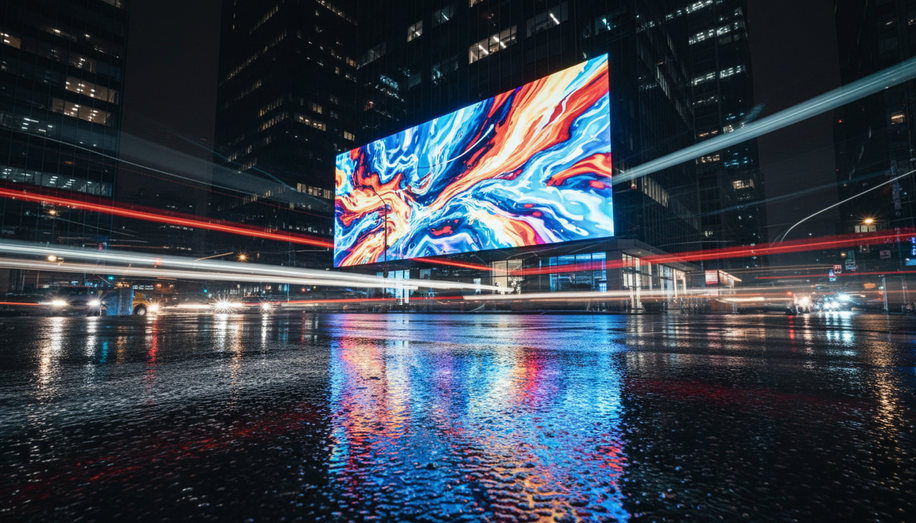

The transformation of urban landscapes through digital billboards represents one of the most contentious developments in modern city planning, presenting a complex interplay between technological innovation, aesthetic concerns, and community engagement. As cities worldwide grapple with how to integrate these luminous displays into their streetscapes, the outcomes reveal both significant opportunities for urban activation and legitimate concerns about visual pollution and environmental impact.
Digital billboards have fundamentally altered how cities approach public spaces and downtown revitalization. Cities like Denver pioneered what planners now call “media districts,” deliberately deploying digital signage in previously underutilized areas to create what advocates describe as “special ambiance and liveliness in the streets and public places.” By conditioning media company access on revenue-sharing arrangements that fund local arts initiatives, these cities have discovered a mechanism to breathe vitality into neglected neighborhoods without direct public expenditure. The strategy has proven influential, with Atlanta, San Antonio, and San Jose adopting similar frameworks to energize their downtown corridors. The additional illumination from these displays can enhance perceived public safety after dark, while the visual dynamism encourages foot traffic and supports local businesses seeking to compete in increasingly challenging retail environments.
However, this revitalization narrative masks significant aesthetic and environmental tensions. Critics argue that digital billboards function as landscape predators, with their proliferation contributing to visual clutter that obscures architectural character and transforms city entrances into commercialized wastelands. When oversized advertising tarpaulins cover building facades or advertising panels masquerade as public information infrastructure, the cumulative effect diminishes urban authenticity. The concern extends beyond mere aesthetics; opponents worry that excessive billboard density can overwhelm pedestrians and distract drivers, creating genuine safety hazards.
The sustainability question compounds these concerns. Large outdoor digital billboards consume substantial energy quantities, raising serious environmental impact questions that the advertising industry increasingly acknowledges. As these displays operate continuously through day and night cycles, they contribute measurably to urban carbon footprints and electricity demand. Manufacturers and advertisers are responding by developing more energy-efficient technologies, yet widespread adoption remains incomplete across existing installations.
Notably, when thoughtfully integrated, digital billboards demonstrate potential to enhance rather than diminish public experience. These displays can serve dual functions beyond pure advertising, providing community value through wayfinding directions, public transportation schedules, and local event information. This multifunctionality transforms billboards from one-dimensional sales tools into community assets. Furthermore, skillfully designed installations that respect local architectural context and comply with thoughtful regulations can blend into urban environments rather than dominating them.
The convergence of slower urban traffic patterns with pedestrian-heavy environments has made cities particularly attractive venues for digital billboard deployment. Unlike interstate billboards where drivers have mere seconds to absorb messaging, urban audiences experience extended dwell time during congestion, red lights, and pedestrian crossings. This extended exposure, combined with additional visibility from foot traffic, cyclists, and public transit users, creates what advertisers term a “captive audience” with superior engagement metrics. Urban billboards additionally enable hyper-local targeting—a lunch special at a nearby restaurant promoted during peak hours exemplifies the contextual relevance that interstates cannot replicate.
Moving forward, successful integration of digital billboards into urban landscapes will require balancing competing interests through strategic regulation and community consultation. Cities must establish clear guidelines addressing size, location, brightness levels, and content parameters to prevent visual cacophony while enabling legitimate economic development. Local authorities should mandate energy efficiency standards and revenue-sharing mechanisms that tie billboard proliferation to genuine public benefits rather than mere commercial interests.
The challenge before urban planners is not whether digital billboards will populate city streets—that outcome appears inevitable—but rather how cities can harness their dynamic potential while rigorously constraining their negative externalities. When regulated thoughtfully and deployed strategically, digital billboards can indeed enhance urban vitality and public engagement. Absent such discipline, they risk becoming precisely what critics fear: glowing testimonies to commercialism’s relentless colonization of shared public space.