
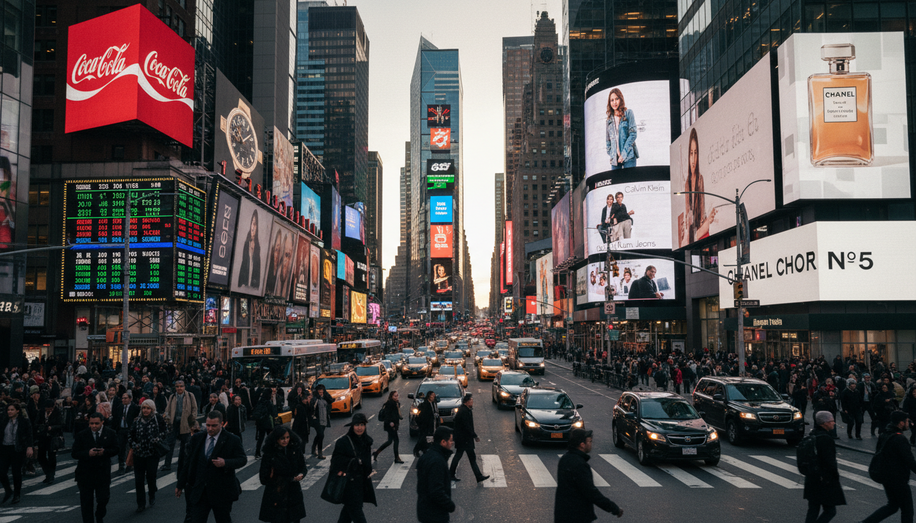

The Future of Programmatic DOOH: AI-Driven Amplification and Intelligent Targeting Set to Dominate in 2026
Discover how AI, data analytics, and multi-channel integration will propel programmatic DOOH into an amplification era, optimizing campaigns for precision, efficiency, and global scale in 2026. (148 characters)
Programmatic digital out-of-home (pDOOH) advertising stands at the cusp of its “amplification era” in 2026, propelled by surging AI capabilities, advanced data analytics, and seamless multi-channel strategies that transform static screens into dynamic engagement engines. Industry leaders forecast this shift will not only boost targeting precision but also multiply campaign performance across ecosystems, with pDOOH spending projected to surpass $1 billion globally as digital formats claim 44% of the $68 billion OOH market by 2029. At its core, this evolution hinges on AI moving beyond mere enhancement to deliver genuine intelligence, enabling self-optimizing campaigns that adapt in real time to audience behaviors, environmental triggers, and performance metrics.
One of the most transformative trends is the maturation of AI from a speed booster to a strategic brain. In 2026, AI will power intelligent campaign planning by weaving together semantic connections—such as linking coffee culture with commuter patterns and complementary locations—that elude human planners. This goes far beyond basic geo-targeting; machine learning algorithms will forecast inventory, shape traffic flows, and implement dynamic pricing, creating ecosystems where campaigns iteratively improve based on cross-channel data. Creative production will see AI generating optimized variations while enforcing compliance and brand safety, but the real leap lies in attribution. Advanced models will integrate device data with third-party audience insights, matching impressions to outcomes for precise, omnichannel accountability. Pepsi Max exemplified this potential with beacon-triggered retargeting in malls, logging participant IDs to fire personalized DOOH ads upon re-entry, blending physical interactions with programmatic precision.
Multi-channel integration emerges as another cornerstone, amplifying pDOOH’s role as a “catalyst” that supercharges adjacent media. Campaigns blending pDOOH with mobile and desktop have delivered six-point uplifts in purchase intent and doubled click-through rates, as seen in Dell’s recent efforts where DOOH primed other channels for heightened engagement. Curated deals, like VIOOH Select, unify campaigns across media owners using a single ID, simplifying audience-led buying and fostering cohesive strategies. By 2026, this will extend to omnichannel orchestration with CTV, social, and display, targeting high-net-worth individuals in premium venues such as airport VIP lounges, luxury malls, and financial districts. Programmatic platforms will leverage audience movement, location, and contextual data to deliver contextually relevant messages, turning OOH into a high-impact multiplier rather than an isolated tactic.
Regulatory shifts and sustainability imperatives will further accelerate adoption. UK legislation enforcing restrictions on less healthy food (LHF) advertising from January 2026 will redirect budgets from TV and online to pDOOH, which boasts over 20 times the carbon efficiency of open-web programmatic due to its broadcast model and streamlined supply chain. This aligns with broader infrastructure resets, where publishers adopt impression-based, outcome-driven servers that tie DOOH tightly to programmatic ecosystems, revaluing inventory for buyers seeking precision.
Dynamic creative optimization (DCO) will evolve into full-fledged dynamic strategy, responding to multifaceted triggers like weather, pollen counts, sports scores, and sales data. Cadbury’s Creme Egg campaign illustrated this by updating messaging in real time with egg-hunt progress and proximity-based adjustments, boosting engagement and recall on a mass scale. In 2026, such “living campaigns” will become standard, supported by consolidated supply-side platforms that make multi-market execution routine—building on 2025’s 37% cross-border revenue share for platforms like VIOOH.
Globally, pDOOH marketplaces will mature, with 95% of executives anticipating market growth beyond $50-55 billion by 2026, driven by 28% of advertisers shifting to fully programmatic DOOH for trigger-based buying, wider reach, and cost efficiencies. Premium brands targeting executives and affluent consumers will dominate airports and elite spaces via AI-driven geo-targeting, while 32% of U.S. advertisers mix programmatic with manual for hybrid flexibility.
These trends signal pDOOH’s ascent as an intelligent, accountable force—unstoppable in its ability to cut through noise with data-fueled relevance. As AI and analytics converge, 2026 will redefine OOH not as a legacy medium, but as the amplification engine powering advertising’s future.