

The Data-Driven Revolution: How Personalization Is Reshaping Out-of-Home Advertising
Meta description: Advanced analytics and AI are transforming OOH from mass messaging into intimate brand experiences, driving engagement rates beyond traditional advertising.
The out-of-home advertising industry is undergoing a fundamental transformation, moving away from the one-size-fits-all approach that has defined the medium for decades. Today, personalization has become the defining characteristic of effective OOH campaigns, enabled by sophisticated data analytics, artificial intelligence, and real-time consumer insights.
The shift toward individualized experiences reflects a broader consumer demand. Research shows that 76% of customers become frustrated when brands fail to deliver personalized marketing, a pressure that has forced the OOH industry to evolve. Unlike traditional static billboards that broadcast identical messages to all passersby, modern campaigns now leverage machine learning and demographic analysis to craft tailored content that resonates with specific audience segments.
This evolution represents more than just technological capability—it signals a fundamental change in how brands interact with consumers in public spaces. The industry is moving toward what experts call “Tête-à-Tête” marketing, a French term meaning head-to-head, which uses AI and machine learning to create feelings of closeness and uniqueness that were previously impossible in outdoor advertising. Digital signage now analyzes demographics, behaviors, and interests in real time, enabling brands to deliver content that speaks directly to individual viewers rather than broad populations.
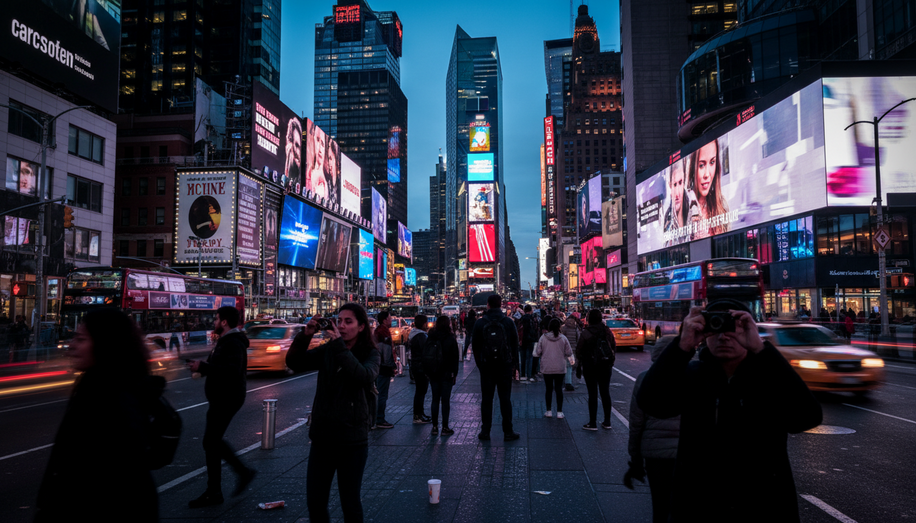
The scale of these personalized experiences is also shifting. While bombastic installations like the Las Vegas Sphere continue to capture attention, 2025 is witnessing a pivot toward smaller, more intimate digital out-of-home installations designed specifically for hyper-personalization. Pop-up experiences and targeted placements in high-traffic areas like airports, malls, and transit stations are becoming increasingly popular, with engagement rates in these locations often exceeding 30%.
Mobile integration has emerged as a critical component of personalized OOH strategies. By combining outdoor advertising with personalized mobile experiences, brands can create seamless, multi-channel interactions that drive significantly higher engagement. QR codes remain essential tools in this ecosystem, enabling audiences to interact with advertisements through their smartphones and creating what experts describe as a sense of control and agency. However, newer technologies are reducing friction further. Markerless augmented reality systems using GPS and visual recognition now activate content without requiring QR code scans, reducing user abandonment that typically accompanies additional activation steps.
The data capabilities powering personalization have become increasingly sophisticated. Modern OOH campaigns now generate comprehensive real-time analytics, including interaction counts, dwell time, shares, and detailed demographic analysis through computer vision systems. This measurement precision enables programmatic DOOH platforms to adjust content dynamically based on current audience demographics, environmental conditions, and performance metrics—with some campaigns achieving 20-40% conversion rate improvements through real-time optimization. Location intelligence has advanced to one-meter accuracy in geofencing, enabling precise foot traffic attribution and competitor analysis with confidence intervals exceeding 90%.
The integration of OOH with digital channels has unlocked unprecedented attribution capabilities. Device ID matching across platforms now allows brands to track unified customer journeys, while cross-platform frequency management prevents message oversaturation and optimizes sequential messaging. Studies demonstrate that OOH can boost foot traffic by 80-120% compared to mobile-only campaigns, with cross-channel attribution revealing its role as a critical driver of both physical and digital engagement.
Augmented reality has accelerated this personalization trend considerably. AR-enhanced campaigns deliver engagement rates exceeding 30% in prime locations, with typical interaction durations reaching 75 seconds compared to the traditional 2-3 second viewing window of static billboards. Premium setups routinely exceed two minutes of engagement, providing brands with extended opportunities for storytelling and immersion.
As programmatic DOOH spending is projected to exceed $1 billion in 2025, with digital OOH now representing 34% of total U.S. advertising spending, the industry is clearly moving decisively toward data-driven, personalized experiences. This shift reflects a broader recognition that consumers expect brands to understand and speak to their individual needs—even in public spaces. The future of out-of-home advertising belongs to those who can harness consumer data and deliver relevant, intimate experiences at scale.