
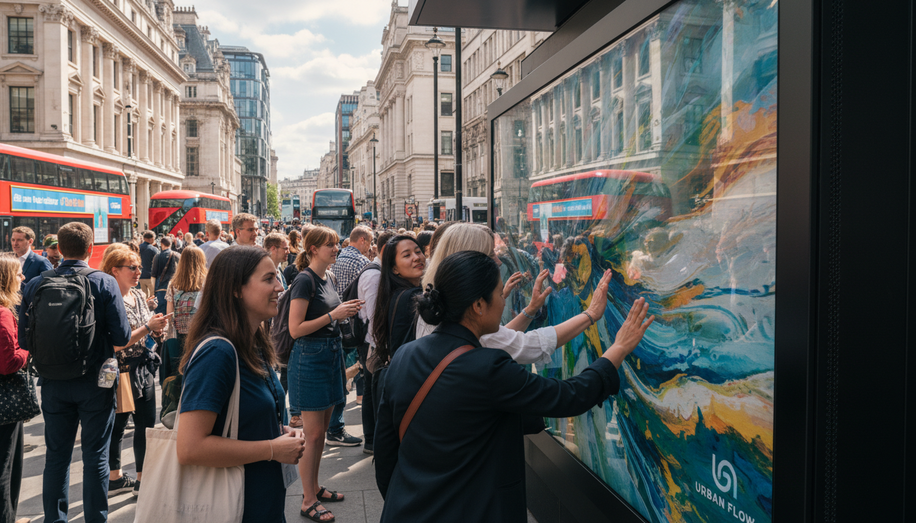

In the bustling heart of urban landscapes, where pedestrians weave through crowds and commuters pause at transit hubs, experiential advertising in out-of-home (OOH) spaces is redefining how brands capture attention. No longer confined to static billboards shouting slogans, these campaigns now invite active participation through interactive installations and live events, forging emotional bonds that linger long after the encounter. This shift toward immersion is propelled by technologies like augmented reality (AR), touch-enabled screens, and real-time data integration, turning passive viewers into engaged participants and amplifying brand recall in ways traditional media cannot match.
Consider the transformation wrought by digital out-of-home (DOOH) innovations. Dynamic LED displays and programmatic platforms allow advertisers to tailor content on the fly—responding to weather, time of day, or audience demographics detected via mobile data. Interactive screens at bus shelters or retail zones equip passersby with motion-sensing capabilities, enabling them to swipe, tap, or gesture for personalized experiences. A global beverage brand’s AR-enabled billboard, for instance, let users scan and unlock interactive storytelling, yielding a 30 percent lift in brand recall. Such installations extend dwell time by 20 to 40 percent, as consumers linger to play gamified challenges or snap selfies, naturally boosting social sharing and organic reach.
Live events take this interactivity further, leveraging high-energy venues like stadiums and city squares for unforgettable activations. During global sporting spectacles, brands deploy LED walls flashing live stats alongside sponsorship tie-ins, but the real magic unfolds in experiential zones. Pop-up installations and flash mobs surprise audiences, blending guerrilla tactics with tech for viral impact. Guerrilla campaigns, including street art projections and AR bus shelter ads, have demonstrated up to 30 percent higher recall rates by cutting through ad fatigue with novelty. At entertainment arenas, gamification elements—such as contests integrated with social media—create communal moments, where fans associate the brand’s thrill with their own excitement, deepening loyalty.
This experiential surge aligns with broader 2026 trends, where OOH evolves into a “global operating system” for liquid audiences moving seamlessly across physical and digital realms. Hyper-local targeting uses location data to deliver contextually relevant messages, such as weather-triggered promotions at high-traffic nodes. Immersive tech blurs boundaries: imagine holograms in public squares or AR overlays on building facades, unlocked via smartphone, transporting users into brand narratives. Brands like those in the outdoor sector are pioneering this, integrating short-form video and VR for experiential shopping previews, where consumers virtually test gear amid adventure simulations.
Yet, the power of these campaigns lies in their ability to foster genuine connections amid consumer skepticism. Studies underscore that interactive OOH boosts engagement by encouraging co-creation—passersby don’t just observe; they contribute, whether scanning a QR for a customized AR filter or joining a live pop-up demo. Retailers have driven foot traffic surges with real-time, location-based offers displayed on kiosks, turning impulse glimpses into store visits. Event-based OOH at trade shows and expos further exemplifies this, with purpose-driven zones featuring bold storytelling and data-driven personalization to draw deeper attendee insights.
Sustainability emerges as a critical pillar, ensuring these experiences resonate ethically. As consumers demand transparency—willing to pay a 9.7 percent premium for eco-conscious brands—OOH activations incorporate regenerative designs, like recyclable pop-ups or carbon-tracked installations. This aligns with value-driven marketing, where outdoor brands emphasize inclusivity and community, blending physical events with virtual access to scale impact globally. A New York pop-up, for example, might host 50 in-person guests while streaming VR participation to 50,000 more, creating shared emotional highs without geographical limits.
Looking ahead, AI and IoT will supercharge this evolution. Predictive analytics optimize creative delivery in real time, while smart city integrations enable seamless, data-rich campaigns. The result? OOH that doesn’t just advertise but immerses, evokes, and endures—transforming fleeting urban moments into lasting brand affinities. In an era craving authenticity, experiential advertising proves that the most memorable connections happen when brands step into the consumer’s world, inviting them to play along. To effectively navigate and maximize the impact of this dynamic OOH evolution, robust platforms like Blindspot offer essential tools. By providing real-time campaign performance tracking, precise audience measurement, and comprehensive ROI attribution, Blindspot empowers brands to optimize their immersive activations for deeper engagement and measurable lasting brand affinities. Learn more at https://seeblindspot.com/