

The Evolution of Airport Advertising: Targeting a Captive Audience
Digital, data-driven, and hyper-contextual, airport advertising is evolving from static posters to personalized, high-impact journeys that follow travelers from curb to gate.
Airports have long promised advertisers a dream scenario: a high-value, time-rich audience with nowhere else to go. What is changing now is how surgically that attention is being used. Powered by programmatic buying, AI and immersive digital canvases, airport media is shifting from prestige backdrop to performance channel.
Post‑pandemic travel recovery has created record passenger volumes and extended dwell times in terminals, lounges and security queues, reinforcing airports as premium out-of-home environments. Brands are responding by redirecting OOH budgets into airport networks that can deliver both scale and precision, particularly among frequent flyers who tend to skew affluent, influential and business-focused.
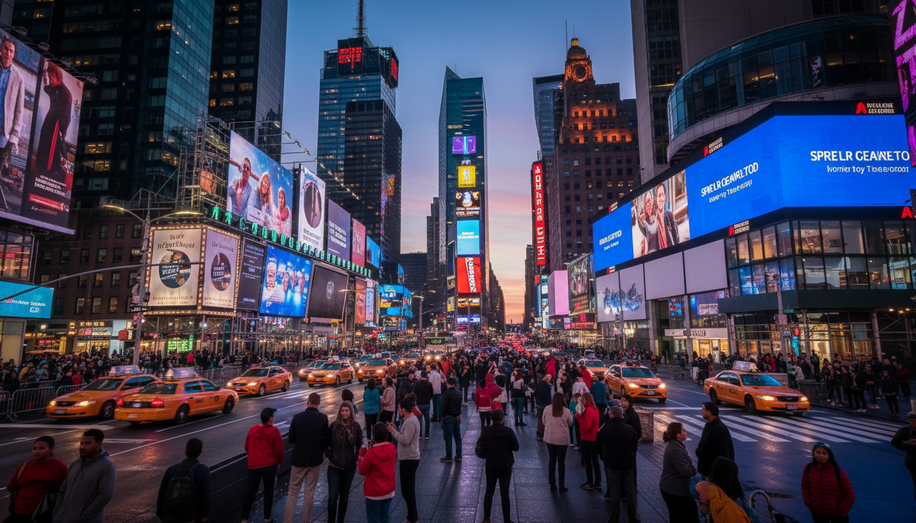
At the heart of this evolution is the rise of high-impact digital inventory. Traditional static lightboxes are steadily giving way to LED spectaculars, 3D digital billboards and large-format video walls positioned at chokepoints such as security, duty free, and main concourses. These screens are no longer just digital posters; they are dynamic surfaces that can daypart, contextualize and even regionalize creative in real time based on flight schedules, weather, and audience mix.
Programmatic trading is the quiet revolution enabling this shift. Instead of fixed-term, fixed-location deals, advertisers are increasingly buying impressions triggered by real-time conditions—passenger volume, destination clusters, seasonality, or even specific flight banks. Resort brands can weight spend toward clusters of leisure departures, while B2B advertisers target early-morning hub banks dominated by corporate travelers. This allows airport OOH to behave more like digital display: responsive, optimized, and backed by live reporting.
Layered on top of this is rapidly advancing personalization. Media owners and agencies are leaning on AI-driven analytics to infer audience profiles from aggregated data such as flight destinations, dayparts and terminal usage patterns. Creative can flex accordingly: family-friendly messaging during school holidays, luxury and financial services in premium-terminal corridors, local tourism pushes near domestic gates. While privacy regulations limit one-to-one targeting on shared screens, contextual relevance has become the norm rather than the exception.
Beyond the screens themselves, the ecosystem now extends into travelers’ hands. Bluetooth beacons, NFC touchpoints and QR codes are being used to bridge physical displays with mobile experiences, enabling offers, downloads or AR activations triggered from an airport billboard or kiosk. Duty free and retail operators are deploying hyperlocal messaging—such as proximity-triggered discounts when passengers pass a store—to convert dwell time into measurable sales.
The “captive audience” proposition is also being quantified more rigorously. A 2025 Nielsen study commissioned by Clear Channel Outdoor found that airport advertising continues to drive action among frequent flyers, who exhibit strong recall and are more likely to engage with brands after exposure. These travelers are disproportionately influential in corporate decision-making, particularly around technology and AI, underscoring airports’ appeal for B2B, finance and premium consumer brands. For media planners under pressure to justify OOH spend, such third-party validation is shifting airport media from “nice-to-have” prestige to proven response driver.
Creative strategy is evolving in parallel. Longer dwell times mean advertisers can tell more complex stories than on roadside OOH—using sequential messaging across a passenger’s journey from check-in to gate, or combining upper-funnel brand films on large-format screens with retail-focused calls-to-action on smaller, point-of-sale displays. Interactive kiosks and touchscreens add another layer, inviting travelers to sample products virtually, play branded games or transact directly from the terminal.
Sustainability has emerged as a competitive differentiator. Airports and media owners are experimenting with solar-powered units, energy-efficient LED, and recycled materials for physical structures to align with broader ESG commitments. For brands courting climate-conscious travelers, the ability to tell a sustainability story in a visibly “greener” media environment is becoming part of the brief.
Looking ahead, the line between airport, inflight and mobile environments is set to blur further. Aviation marketing specialists increasingly design campaigns that follow the traveler from pre-trip planning through terminal, lounge, boarding and inflight entertainment, using unified data and creative frameworks across all touchpoints. Predictive analytics promise even finer targeting—anticipating demand curves for destinations or products and adjusting airport media plans accordingly.
For OOH specialists, the opportunity is to treat airports less as an isolated channel and more as high-value nodes in a connected, data-informed ecosystem. The captive audience is still there; what is new is the ability to reach it with the kind of precision, accountability and creative ambition that once belonged exclusively to online media.