
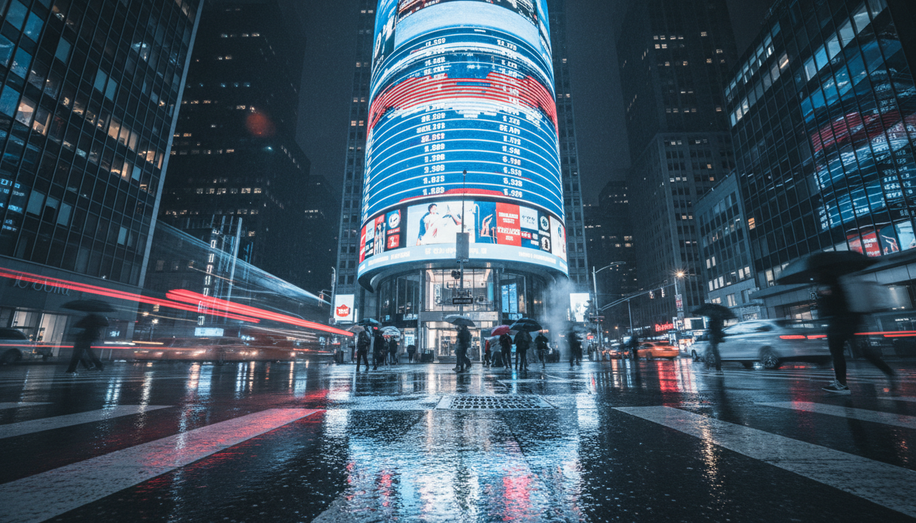

In the heart of a bustling city intersection, a digital billboard flickers to life, its massive screen transforming from a generic product showcase to a vibrant display announcing the latest soccer score, complete with crowd cheers and player stats, all updated in seconds as the match unfolds miles away. This is the essence of real-time content feeds on digital out-of-home (DOOH) screens, where live data streams—weather updates, stock tickers, breaking news, and sports results—automate content refreshes, turning static billboards into dynamic canvases that pulse with the rhythm of the moment.
Once confined to fixed messages printed on vinyl, out-of-home advertising has evolved into a programmable powerhouse. DOOH leverages connected networks of LED screens in high-traffic zones like highways, transit hubs, and urban plazas, pulling from APIs and data feeds to swap creatives instantaneously. Weather sensors detect rain in Manila, and screens nearby pivot to Sunsilk ads touting frizzy-hair solutions, ensuring the message lands when consumers need it most. Similarly, during the 2022 ICC Men’s T20 World Cup, over 2,200 screens across 662 locations worldwide delivered near-live match highlights and scores, generating 2.6 million ad plays with 149 unique creatives that kept audiences hooked through every wicket and boundary.
This automation stems from programmatic DOOH platforms, which integrate trigger-based logic to activate ads based on predefined conditions. If it’s rush hour in a commuter corridor, screens might highlight coffee promotions; a stock surge triggers finance app teasers; or local news of a traffic jam prompts ride-share offers. “Digital out-of-home ad creative can be updated in real-time,” notes industry leaders, allowing swaps without manual intervention and incorporating dynamic elements like live tickers or 3D animations for immersive impact. A Harris Poll for the Out-of-Home Advertising Association of America underscores the payoff: 49% of viewers reported DOOH’s relevance made them more likely to act, bridging the gap between awareness and behavior.
The technology powering this shift combines robust ad servers, demand-side platforms (DSPs), and multi-sensor audience measurement. Platforms like those from Moving Walls use patented sensors—Bluetooth, Wi-Fi, cameras, and geolocation—to track exposure and movement patterns while prioritizing privacy compliance. This data informs sequencing: ads “follow” audiences across a city, building a narrative from mall to subway to office. Programmatic buying adds precision, enabling real-time bidding akin to online media, where location, time of day, demographics, and even weather dictate delivery. Brands achieve 100% share of voice on screens, dayparting content for peak relevance—morning traffic updates yielding to evening sports recaps.
Beyond engagement, DOOH’s real-time feeds deliver measurable results. Attribution tools track brand lift, footfall, and conversions, proving ROI in ways static OOH never could. A JCDecaux UK study found contextually dynamic campaigns boosted viewing time, ad recall, and sales by 16%, as messages felt tailored to the “now.” In fast-paced sectors like finance or retail, stock price integrations on Times Square screens can drive immediate app downloads, while news feeds amplify viral moments. Sunsilk’s weather campaign across the Philippines and India exemplified this, auto-switching creatives during downpours to address real-time hair woes, blending utility with promotion.
Challenges persist, from data latency in remote areas to ensuring content doesn’t overwhelm viewers. Yet advancements in edge computing and AI analytics are smoothing these edges, promising even faster updates and hyper-local personalization. Retailers pair DOOH with indoor screens for seamless indoor-outdoor journeys, showing nearby store directions or inventory levels pulled live from e-commerce backends. Sports leagues sync with fan movement, flashing personalized team scores at stadium approaches.
As DOOH networks expand—now numbering thousands globally—the dynamic canvas redefines public space advertising. No longer interruptive blasts, these screens become conversational partners, weaving brands into daily life with hyper-current relevance. For marketers, the imperative is clear: harness live streams to not just capture eyes, but command actions in the physical world. In an era where consumers crave timeliness, real-time DOOH isn’t innovation—it’s inevitability, painting the urban landscape with messages that matter right now.