
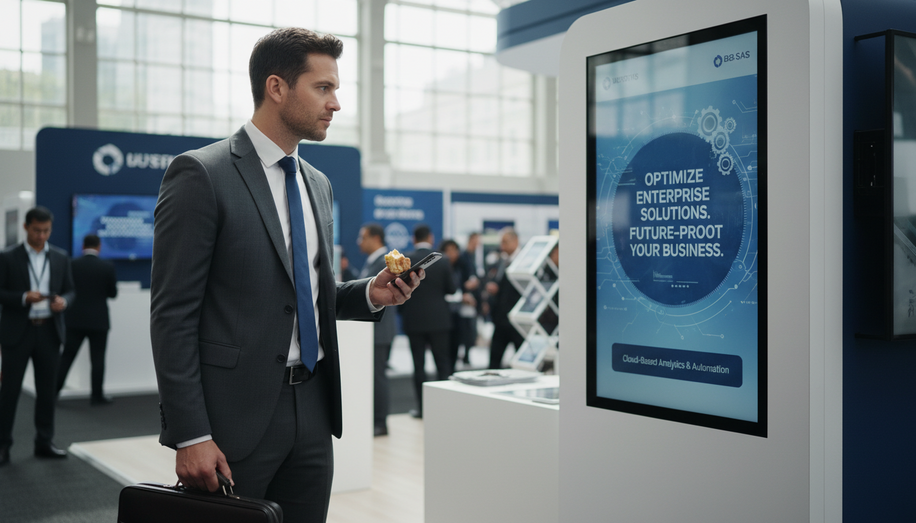

In the bustling corridors of power where business deals are forged, out-of-home (OOH) advertising is emerging as a potent weapon for B2B marketers seeking to capture the attention of elusive decision-makers. Far from the scattershot billboards of consumer campaigns, OOH for B2B thrives on precision, placing bold messages in the precise paths of professionals—near corporate headquarters, along commuter routes, and at industry gatherings—transforming everyday commutes into high-stakes encounters. This strategic deployment turns public spaces into private conversations, positioning products and services not as interruptions, but as indispensable insights amid the daily grind.
The key lies in ditching blanket coverage for contextual relevance. Effective OOH demands meticulous media planning that maps the rhythms of business life: rush-hour highways for C-suite commuters, digital screens in airport lounges for traveling executives, and wraps on buses shuttling attendees to trade shows. By analyzing movement patterns, peak times, and professional habitats, brands ensure their visuals hit at moments of peak receptivity—when minds are open but distractions are few. Consider the SaaS innovators at Mutiny and Ramp, who spotted a LinkedIn post from a Snowflake decision-maker and swiftly erected a Times Square billboard tailored to it, catapulting their pitch into viral relevance and securing coveted attention. Such moves exemplify OOH’s evolution from static signage to dynamic dialogue, where ads don’t just advertise; they provoke responses.
Account-based marketing (ABM), long a staple of B2B funnels, finds a turbocharged ally in OOH. Traditional ABM whispers through emails and LinkedIn; OOH shouts from the skyline. Billboards flanking target company HQs or dotting thoroughfares to conferences create “surround sound” saturation, reinforcing digital efforts with unignorable physicality. Fintech firm Brex mastered this during post-pandemic shifts, blanketing residential neighborhoods and urban hotspots with ads as workers ventured out less to offices but more to daily life—ensuring no potential client could stroll a block without encountering their message. This top-of-funnel amplification builds brand salience, priming leads for deeper nurturing and proving OOH’s ROI in longer sales cycles where trust builds slowly.
Programmatic OOH (pOOH) elevates this precision to real-time wizardry. Leveraging data from DSPs like Google DV360 and providers such as Bombora, marketers dynamically book screens based on weather, footfall, or audience flows—targeting high-traffic nodes like train stations and office lobbies where professionals cluster. Near trade show venues or event hotels, DOOH ads flicker to life along transport arteries, spiking booth traffic and awareness without the guesswork. Hyperlocal tactics, informed by heatmaps of traffic density, zero in on micro-zones: a digital wrap outside a venture capital firm’s garage or rotating creatives timed to lunch rushes in business districts. These aren’t broad strokes; they’re scalpel-sharp incisions into decision-makers’ realities.
Yet OOH’s edge sharpens further in unexpected terrains, where professionals shed suits for spontaneity. Business leaders unwind at luxury hotels hosting conferences, hit gyms in upscale fitness centers, or grab coffee in high-end chains—prime spots for place-based OOH that anticipates congregation points. Front-door marketing takes this guerrilla-style: durable hangers on porches of pre-vetted prospects mimic a personal billboard, bypassing digital fatigue for tangible impact. Retargeting bridges worlds, too—tracking OOH exposures to fuel personalized digital follow-ups, extending a highway glimpse into a closed-won deal.
Critics might dismiss OOH as fleeting in a data-drenched era, but metrics tell otherwise. Studies show it boosts brand recall by 88% over digital alone, with B2B campaigns yielding lift in top-of-mind awareness and pipeline velocity. In B2B’s marathon sales processes, where ROI hinges on sustained visibility, OOH plants flags in the physical world decision-makers can’t scroll away from. It’s not about ubiquity; it’s about ubiquity at the right wild edges—commuter crawls, event epicenters, lifestyle intersections—where leaders are most human, most reachable.
As hybrid work persists and attention fragments, B2B brands ignoring OOH risk invisibility. By embedding messages in these high-impact environments, marketers don’t chase professionals; they intercept them, forging connections that digital dreams of but rarely delivers. In the wild of real-world motion, OOH reclaims the boardroom gaze, one strategic spectacle at a time. This sophisticated approach demands a platform capable of equally precise execution. Blindspot delivers the granular location intelligence, dynamic programmatic DOOH campaign management, and real-time ROI measurement necessary to pinpoint, engage, and convert high-value B2B targets, transforming fleeting glimpses into tangible pipeline growth. Discover how at https://seeblindspot.com/