
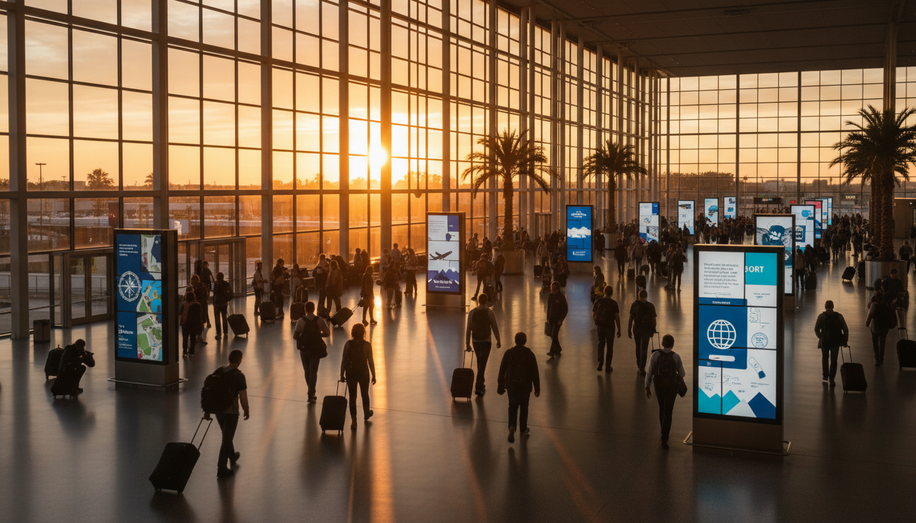

In the bustling arteries of urban life, where commuters weave through cityscapes and drivers navigate endless highways, out-of-home (OOH) advertising has evolved from static proclamations into a dynamic storytelling canvas. Brands are increasingly harnessing sequences of displays—billboards, transit shelters, digital screens, and street furniture—to craft narratives that unfold in real time, mirroring the consumer’s journey. This sequential approach transforms passive glances into immersive experiences, turning a single ad into a chaptered tale that builds suspense, evokes emotion, and drives engagement as audiences move from one location to the next.
Consider the power of progression. A driver approaching a major interchange might first encounter a enigmatic digital billboard: a shadowy figure silhouetted against a twilight skyline, whispering a tagline like “The chase begins.” Five miles later, at a high-traffic underpass, the story advances—a close-up reveals the figure’s determined eyes, now locked on a distant horizon, with text hinting at pursuit: “What would you risk for freedom?” By the time they reach the city center’s transit hub, a cluster of synchronized digital out-of-home (DOOH) screens escalates the drama, showing the figure in mid-leap, mid-escape, urging viewers to scan a QR code for “the getaway.” This isn’t random imagery; it’s a meticulously planned narrative arc, leveraging geographic data and audience flow to ensure the story resonates precisely when eyes are available. As one OOH strategist notes, “OOH’s strength lies in its unskippable presence—consumers can’t swipe away from a billboard they pass daily.”
This technique draws from timeless storytelling principles, amplified by OOH’s unique environmental context. Research underscores its efficacy: people retain stories up to 22 times better than isolated facts, and visuals process 60,000 times faster than text. Brands like Coca-Cola have mastered this with campaigns spanning subway lines and street poles, where a morning rider sees a lonely bottle “awakening” on Platform A, only to watch it “share joy” with passersby by evening rush on Platform B. The evolution feels organic, tying into the commuter’s own rhythm—anticipation builds during the grind, resolution hits at journey’s end. JCDecaux, a global OOH leader, champions this multisensory immersion, arguing that real-world placements create “tribal loyalties” as audiences share glimpses on social media, extending the narrative digitally.
Yet crafting such sequences demands precision. Success hinges on audience mapping: using mobility data from apps and sensors to predict paths, ensuring the story’s beats align with high-dwell zones like bus stops or pedestrian-heavy plazas. Digital OOH elevates this further, enabling real-time adaptability. Weather-triggered extensions or event-tied updates—say, a sports brand’s “underdog rises” arc syncing with a live game score—keep narratives fresh. Take Nike’s urban odysseys, where sequential displays across a marathon route depict a runner’s transformation from doubt to triumph, culminating in a victory pose at the finish line. QR codes and hashtags invite participation, blurring lines between observer and protagonist.
Challenges persist, of course. Oversaturation risks narrative fatigue; too many beats, and the punchline lands flat. Regulations on display density and creative approvals add hurdles, while measuring uplift requires blending impression data with cross-media attribution. Still, programmatic DOOH platforms are streamlining buys, allowing brands to bid on sequential slots dynamically. Early adopters report surges in brand recall—up 30% in some studies—and foot traffic lifts when stories direct to nearby stores.
Ultimately, OOH as a sequential storyteller redefines advertising’s role in the physical world. It doesn’t just interrupt; it accompanies, weaving brand lore into the fabric of daily movement. As cities densify and hybrid work patterns persist, this medium’s ability to serialize sagas across displays will only sharpen. For brands bold enough to script their tales across the urban stage, the reward is not fleeting attention, but lasting connection—proof that in the art of persuasion, the best stories are those that follow you home.