
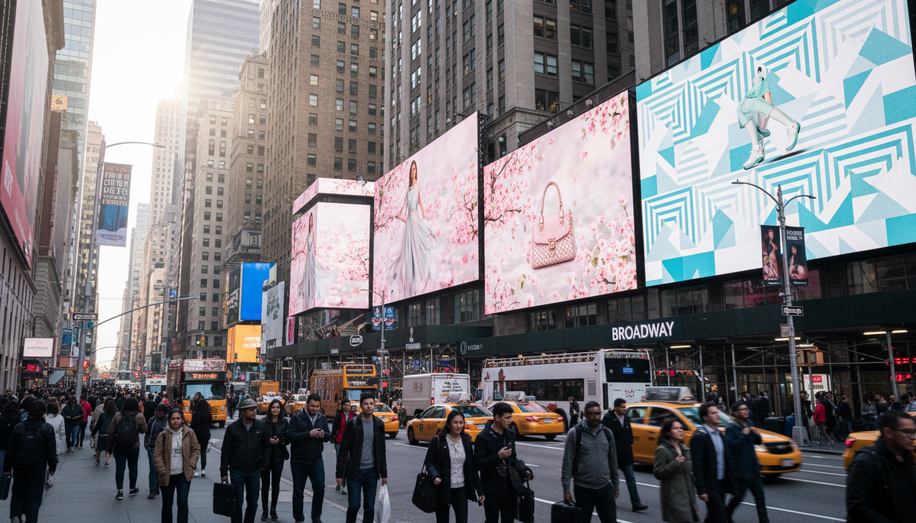

Seasonal Strategies: How Brands Master Year-Round OOH Advertising in 2025
Meta description: Discover how forward-thinking brands leverage seasonal trends and real-time data to maximize out-of-home advertising impact across every quarter.
As the retail landscape continues its rapid evolution, out-of-home advertising has emerged as a critical battleground where brands compete for consumer attention during high-stakes seasonal windows. The 2025 advertising year reveals a fundamental shift in how successful marketers approach OOH campaigns—moving beyond static, one-size-fits-all approaches to dynamic, seasonally-informed strategies that respond to shifting consumer behaviors and emerging technologies.
The holiday season offers a compelling case study in seasonal OOH effectiveness. With 92% of Americans planning to shop this holiday season and over 80% of retail sales taking place in-person, the urgency for strategic OOH placement has never been more acute. Yet the most sophisticated brands recognize that holiday success requires preparation and foresight. Smart marketers are already deploying real-time digital out-of-home formats near retail hubs that showcase inventory availability, flash deals, and payment options at the precise moment consumers are making purchasing decisions.
What distinguishes winning seasonal strategies from mediocre ones is the integration of proximity targeting with audience-based planning. When advertisers combine location-based proximity targeting with demographic and behavioral insights, they capture consumers across the entire customer journey, not just those already in proximity to retail locations. This dual approach proves particularly powerful during seasonal peaks when consumer mobility intensifies and purchasing intent peaks. With 42% of adults reporting that OOH ads influence in-person purchase decisions, the medium’s real-world impact during seasonal shopping periods cannot be overstated.
The technological backbone supporting seasonal OOH strategies has undergone radical transformation. Programmatic digital OOH is projected to exceed $1 billion by 2025, with digital formats now comprising 34% of total U.S. OOH spending and growing at 7.5% annually. This automation enables brands to adjust creative content in real time based on seasonal factors—weather conditions, local events, inventory levels, and even cultural moments. AR-enhanced campaigns are delivering interaction rates exceeding 30% in prime locations, while augmented reality murals can change their messaging seasonally to respond to weather, holidays, and community events.
The convergence of OOH with complementary channels amplifies seasonal impact. Smart brands are now bridging DOOH with connected TV, creating cohesive messaging strategies that reach consumers both at home and in physical spaces. During the holiday season, when consumers retreat into their homes while simultaneously hunting for value in retail environments, this omnichannel approach proves especially effective. The most aggressive retailers—Home Depot increased TV ad impressions by 29% year-over-year, while Kohl’s jumped 22%—understand that seasonal advertising requires synchronized investment across multiple touchpoints.
Mobile integration represents another critical seasonal advantage. QR codes embedded in dynamic billboards drive immediate action by connecting consumers to mobile experiences, bridging the awareness-to-conversion gap precisely when seasonal purchasing intent peaks. This real-time engagement layer transforms OOH from a passive awareness medium into an interactive catalyst for immediate commerce.
Looking beyond the holiday period, forward-thinking brands are developing year-round seasonal calendars that extend OOH investment across all major consumer moments. Spring home improvement seasons, summer travel peaks, back-to-school periods, and winter holiday windows each represent distinct opportunities for tailored creative, targeted placements, and optimized messaging. The brands winning in 2025 recognize that seasonal OOH success requires integrated planning that begins months in advance, leverages AI-driven personalization and real-time data, combines proximity and audience targeting, and synchronizes messaging across both digital and traditional channels.
The out-of-home advertising industry has fundamentally transformed from a medium of static displays to a dynamic, data-driven ecosystem that mirrors the precision of digital marketing while maintaining the authentic power of real-world consumer engagement. For brands willing to embrace sophisticated seasonal strategies, the rewards have never been more substantial.