
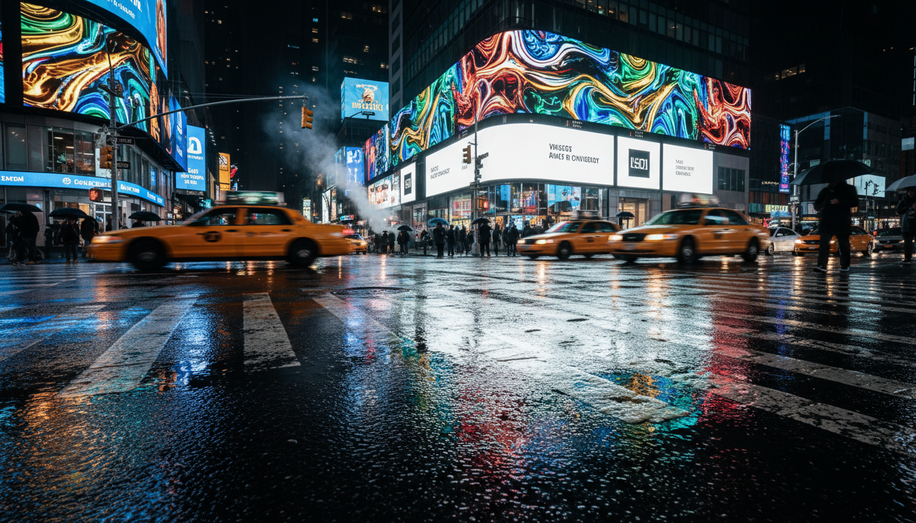

In the high-stakes world of advertising, out-of-home (OOH) campaigns have long been celebrated for their ability to command attention in the physical world, yet proving their value has remained elusive. Traditional metrics like direct sales attribution fall short, leaving marketers grappling with the intangible power of OOH to shift brand perception and spark digital engagement. Enter innovative methodologies such as brand lift studies and web lift analysis, which are transforming how the industry quantifies these unseen impacts.
Brand lift studies stand at the forefront of this measurement revolution, offering a rigorous way to capture changes in consumer attitudes without relying on immediate transactions. These studies typically divide audiences into two groups: one exposed to the OOH campaign based on proximity to screens, and a control group that isn’t. By surveying both, advertisers isolate the campaign’s true effect, revealing lifts in key performance indicators like brand awareness, ad recall, brand consideration, and purchase intent. For instance, ad recall gauges how vividly consumers remember the creative, while brand consideration tracks shifts in purchase likelihood—metrics that directly tie OOH’s real-world visibility to long-term loyalty.
Consider digital out-of-home (DOOH), where dynamic billboards and screens amplify this potency. A flashy digital billboard on a bustling highway doesn’t just display ads; it seizes attention from afar, with 71% of consumers reporting it as highly effective at drawing their gaze. Platforms like Blip Billboards enable precise targeting across 2,000+ high-traffic locations, ensuring ads reach audiences “out and about,” blending the immersive pull of physical spaces with digital precision. This setup proves ideal for brand lift, as DOOH’s bright, compelling visuals bridge offline exposure and online buzz, fostering metrics like social media mentions and brand buzz through tools that monitor post-campaign conversations.
But brand lift doesn’t stop at perception; it extends to digital footprints via web lift measurement, a method that links OOH impressions to surges in online activity. Web lift quantifies the incremental bump in website visits, sign-ups, or purchases attributable to the campaign, comparing exposed audiences against controls while discounting organic traffic. Accuracy can reach error margins as low as 3% with optimized tracking pixels, mobile attribution software, and data synced from DOOH networks to web analytics platforms. Marketers set unique URLs, QR codes, or promo codes on screens to trace the path from roadside glance to digital click, employing attribution models—first-touch, last-touch, or multi-touch—to map OOH’s role in the customer journey.
Real-world execution underscores these techniques’ power. In a holiday campaign for Michael Kors Jewelry, agency MOBSTA used StackAdapt’s DOOH tools to deliver 14 million impressions across Hamburg and Berlin, achieving a verified 13% to 39% lift in brand awareness through integrated brand lift measurement. Similarly, Broadsign’s proximity-based surveys have helped advertisers optimize DOOH by pinpointing lifts in ad clarity and intent, turning anecdotal success into data-driven proof. These approaches demand upfront planning: define goals like site visits or conversions, segment audiences by exposure, and iterate based on performance, doubling down on high-impact placements.
Challenges persist, of course. Isolating OOH’s effect amid multichannel noise requires sophisticated modeling, and not all campaigns yield immediate spikes—some effects simmer in heightened recall or consideration. Yet, combining brand lift with attribution creates a fuller picture: the former illuminates top-of-funnel shifts in perception, while the latter connects them to tangible actions. Market research firms, email questionnaires, and social listening tools further enrich this toolkit, providing multi-angle validation.
For OOH advertisers, these methodologies herald a new era of accountability. No longer dismissed as “pretty screens with logos,” DOOH campaigns now deliver quantifiable proof of their halo effect—elevating brand trust, igniting online engagement, and justifying budgets with precision. As platforms evolve with AI-driven targeting and real-time analytics, the unseen becomes seen, empowering marketers to craft OOH strategies that not only capture eyes but convert them into enduring brand advocates. The result? A medium reborn, its intangible impacts firmly grounded in metrics that matter.
Platforms like Blindspot are critical in this new era, enabling marketers to transform OOH’s ‘unseen’ impacts into tangible results through granular **audience measurement and analytics** that track shifts in perception and digital engagement. With advanced **ROI measurement and attribution** capabilities, Blindspot empowers advertisers to directly link physical impressions to online actions and business outcomes, providing the data-driven proof necessary to justify spend and optimize campaign effectiveness. This comprehensive insight ensures OOH strategies are not just visually compelling but demonstrably contribute to a brand’s growth and bottom line. https://seeblindspot.com/