
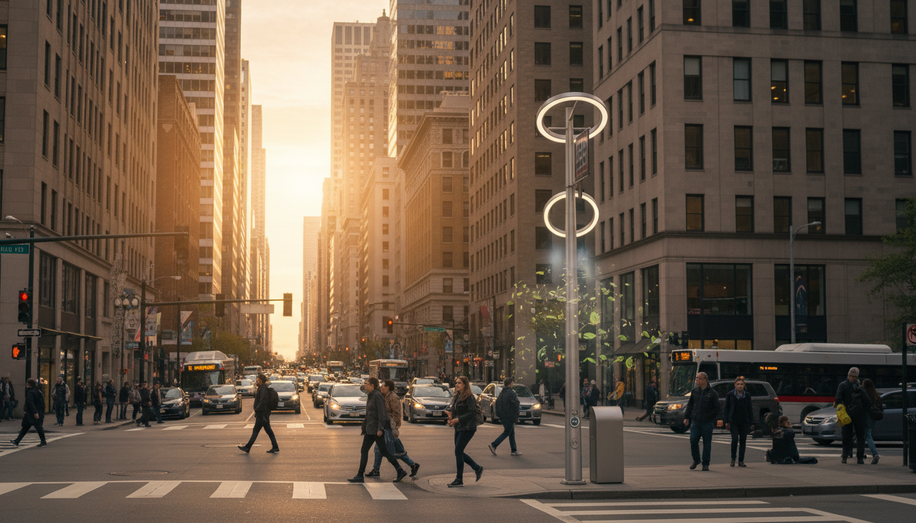

In the bustling corridors of retail stores and transit hubs, a new symphony is emerging, one where brand messages harmonize with ambient soundscapes to capture attention in ways static billboards never could. Programmatic Audio Out-of-Home (AOOH) advertising is transforming public spaces into dynamic auditory environments, leveraging automation and data to deliver personalized audio experiences at the precise moment consumers are most receptive—right at the point of purchase.
This evolution builds on the success of programmatic Digital Out-of-Home (DOOH), which has already revolutionized visual advertising by automating buying, selling, and delivery through real-time bidding and data-driven targeting. Now, that same technology is extending to sound, creating immersive “soundscapes” that blend licensed music playlists, custom promotions, and targeted commercials into the fabric of everyday public interactions. Vistar Media, a leading programmatic DOOH platform, partnered with Vibenomics in a pioneering move to integrate AOOH into its exchange, allowing advertisers to buy audio inventory programmatically for the first time—either via open auctions or private marketplace deals. This means brands can now reach shoppers in thousands of brick-and-mortar locations with tailored auditory messages, influencing impulse buys amid the hum of grocery aisles or mall foot traffic.
The appeal lies in audio’s unique ability to forge emotional connections without demanding visual focus. Unlike screens that compete with distracted glances, sound infiltrates the subconscious, attaching brand narratives to familiar songs or artist endorsements that feel organic rather than intrusive. A MAGNA study found listeners are 35% more receptive to audio ads than visual ones, thanks to this intimate engagement. Programmatic AOOH amplifies this by incorporating real-time data triggers—demographics, time of day, weather, or even local events—to personalize playlists and spots, turning a routine shopping trip into a branded sensory moment. For instance, a coffee chain could cue upbeat morning tunes laced with a limited-time offer as commuters rush through a train station, or a retailer might sync promotions with in-store traffic patterns to boost basket sizes.
What sets programmatic AOOH apart from traditional audio like radio or podcasts is its location-based precision and measurability. While programmatic audio in streaming services automates ad insertion across devices using listener data, AOOH anchors it to physical public spaces, combining geolocation with third-party audience insights for hyper-targeted delivery. Platforms enable dynamic optimization: advertisers monitor performance in real time, adjusting volume, messaging, or frequency based on engagement metrics, much like DOOH’s shift from static prints to video walls that respond to passersby. This agility addresses OOH’s historical pain points—limited targeting and slow execution—offering the speed of digital programmatic with the scale of out-of-home reach.
Retail environments are the epicenter of this rise, where the “window of opportunity” to sway decisions is fleeting but potent. Vibenomics’ in-store audio, now programmatically accessible, enhances customer experiences while enabling revenue shares for venue owners, creating a win-win ecosystem. Early adopters are already reaping rewards; U.S. audio ad spending surged 30% to $1.2 billion in the first half of 2019 alone, per the Interactive Advertising Bureau, signaling momentum that has only accelerated with technological maturation. As programmatic DOOH claims over 30% of DOOH spend and grows 18.8% year-over-year into 2026, AOOH is poised to follow suit, blending into omnichannel strategies that unify online and offline touchpoints.
Yet, the true innovation is in crafting immersive brand moments that transcend mere promotion. Imagine a fitness brand overlaying motivational tracks with gear pitches in gym lobbies, or a beverage company weaving thirst-quenching jingles into summer festival soundscapes—each tailored via machine learning to audience movement and behavior. This sensory integration elevates public spaces, making them extensions of a brand’s universe. Reporting tools provide granular insights, from demographic breakdowns to lift in foot traffic or sales, proving ROI in a medium once dismissed as ambient noise.
Challenges remain, including volume regulations in noise-sensitive areas and ensuring content doesn’t overwhelm rather than enhance. But with standards like the IAB’s Digital Audio Ad Serving Template paving the way for seamless integration—covering pre-rolls, mid-rolls, and companion visuals—industry momentum is undeniable. As Vibenomics’ CEO Brent Oakley noted, no other supply-side platform matches Vistar’s expertise in scaling place-based media, unlocking demand for this auditory frontier.
Programmatic AOOH isn’t just adding sound to OOH; it’s redefining engagement in public spaces, where ears often lead the way. By weaving data-driven narratives into the everyday soundtrack of urban life, brands are not only heard—they’re felt, remembered, and acted upon, heralding a multisensory era for out-of-home advertising.
As brands embrace this multisensory frontier, platforms like Blindspot offer the advanced capabilities needed to bridge the gap between creative ambition and measurable impact. Its location intelligence, real-time campaign performance tracking, and robust ROI measurement tools empower advertisers to not only precisely target audiences in physical spaces but also dynamically optimize their programmatic OOH strategies for tangible business outcomes. Discover more at https://seeblindspot.com/