
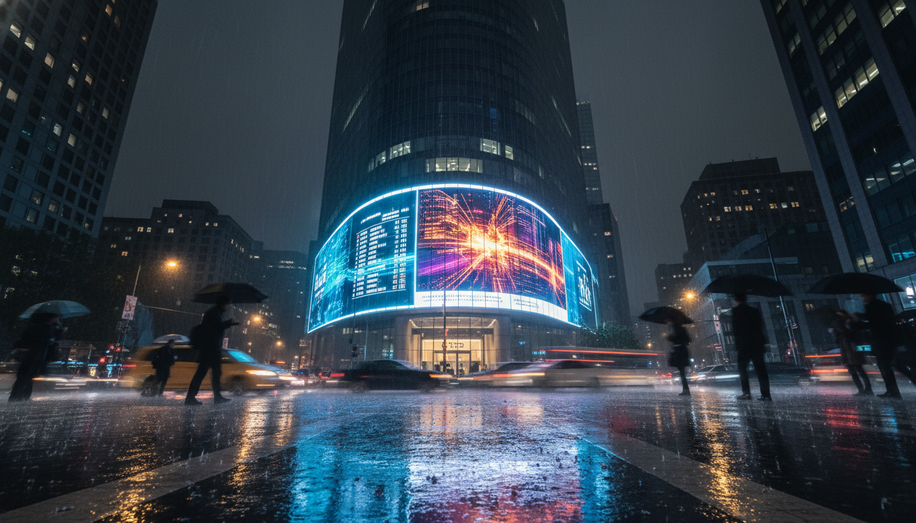

Smart cities are often discussed in terms of sensors, networks and data platforms, but one of the most visible and versatile layers of this urban operating system is the OOH canvas. From interactive billboards on busy arterial roads to smart kiosks on pavements and digital totems in transport hubs, out-of-home is evolving from static poster space into a dynamic interface between the city, its citizens and its commercial ecosystem.
The shift is most obvious in the way digital screens are being embedded into core infrastructure. Street furniture that once hosted simple 6-sheets is becoming multifunctional: Wi‑Fi hotspots, EV charging stations, wayfinding terminals and emergency communication points now frequently incorporate digital displays. These screens deliver a blend of public information and commercial messaging, funded in part or in full by advertising revenue. For cash-strapped municipalities, that business model is not just convenient; it is becoming fundamental to financing smart street upgrades without placing the full burden on taxpayers.
In this model, OOH inventory effectively becomes a utility. Real-time transit updates, air quality readings, flood or heatwave alerts and crowd-control messages can sit alongside, or even dynamically replace, scheduled ad campaigns. Programmatic platforms enable city authorities to push priority messaging instantly across networks of screens, while advertisers benefit from the same infrastructure and data backbone. The result is a shared digital layer in public space that is simultaneously civic and commercial.
Data is the engine driving this integration. Smart city environments generate enormous volumes of information: traffic flows, footfall patterns, public transport usage, event schedules, even aggregated mobility data from mobile devices. When properly anonymised and aggregated, these signals feed into OOH planning tools, allowing advertisers to target screens when and where particular audience profiles are most likely to be present. Morning commuters, weekend shoppers, stadium crowds and tourists each create distinct temporal and spatial patterns, and digital OOH can now respond in real time.
The practical impact is a move from broad, location-based planning to a more nuanced, context-sensitive approach. A screen outside a train station is no longer simply “commuter inventory”; it is a node in a data-rich mobility network. Creative can change with the weather, the score of a nearby sports match, the time left before the next train or the congestion level on surrounding roads. A retailer can promote hot drinks during a cold snap, a ride-hailing app can adjust messaging when public transport is disrupted, and a health authority can trigger prevention campaigns during pollution spikes—all automated, all within the same OOH infrastructure.
Smart kiosks exemplify this convergence of services and advertising. In many cities, these units offer free connectivity, wayfinding maps, local business directories, emergency calling and device charging. The digital displays that wrap them are prime DOOH inventory, and advertisers are increasingly partnering with municipalities to underwrite their deployment. This creates an ecosystem where residents receive tangible benefits, visitors navigate more easily and brands gain a prominent and trusted presence in key locations. When done well, it enhances the perception of OOH from intrusive commercial clutter to helpful public amenity.
The potential extends beyond simple messaging. Interactive and sensor-enabled screens invite citizens to participate. Touch interfaces, gesture recognition, QR codes and NFC can turn a traditional loop of ads into a portfolio of micro-experiences: wayfinding that recommends nearby cultural events, campaigns that gamify recycling, or surveys that feed into urban planning consultations. For brands, this delivers more engagement and richer behavioural data. For cities, it offers a direct dialogue with the public, captured where people live, work and travel rather than in isolated digital channels.
However, this tighter integration raises questions that the OOH industry cannot ignore. Privacy and data governance are central issues in any smart city project. While most OOH planning relies on aggregated, anonymised datasets, public perception often lags behind technical safeguards. If citizens feel that every movement is being watched and profiled, trust in both city authorities and advertisers will erode. Clear communication about what data is collected, how it is used and what is not being tracked is essential, as are robust, independently audited standards.
There is also the matter of equity. Smart city investment often begins in high-traffic commercial districts, which risks exacerbating existing inequalities if neglected neighbourhoods are left with outdated infrastructure. OOH operators and municipal partners have an opportunity to push for broader deployment strategies, ensuring that benefits like free connectivity, real-time information and safety alerts are spread across the city, not just concentrated where media budgets are highest. Framing OOH networks as part of essential civic infrastructure can strengthen the case for more inclusive rollouts.
From a creative standpoint, integrating OOH into the smart city fabric demands a rethink. The most effective campaigns will be those that treat screens as situational interfaces rather than static posters. They will use data to be genuinely useful—offering timely offers near point of purchase, providing relevant local information or aligning with citywide initiatives such as sustainability drives or public health programmes. Advertisers that add discernible value to daily urban life will likely gain more goodwill and attention than those that simply shout louder on brighter screens.
Looking ahead, the OOH canvas in smart cities is poised to become even more layered. Integration with mobility-as-a-service platforms, digital twins of urban environments and AI-driven optimisation could allow campaigns to be planned, bought and adapted in near real time across entire metropolitan regions. As vehicles become more connected and autonomous, roadside inventory may interface directly with in-vehicle experiences, blurring the boundaries between outdoor and in-cabin media.
For the OOH industry, the opportunity is to position itself not at the periphery of smart city planning, but at its core. By demonstrating how advertising-funded digital infrastructure can deliver measurable civic value—safer streets, better information, more engaging public spaces—OOH can secure a long-term role as a foundational layer of urban innovation. The streets of the future will not just be smarter; they will be more communicative, and out-of-home will be the medium through which that conversation unfolds.