
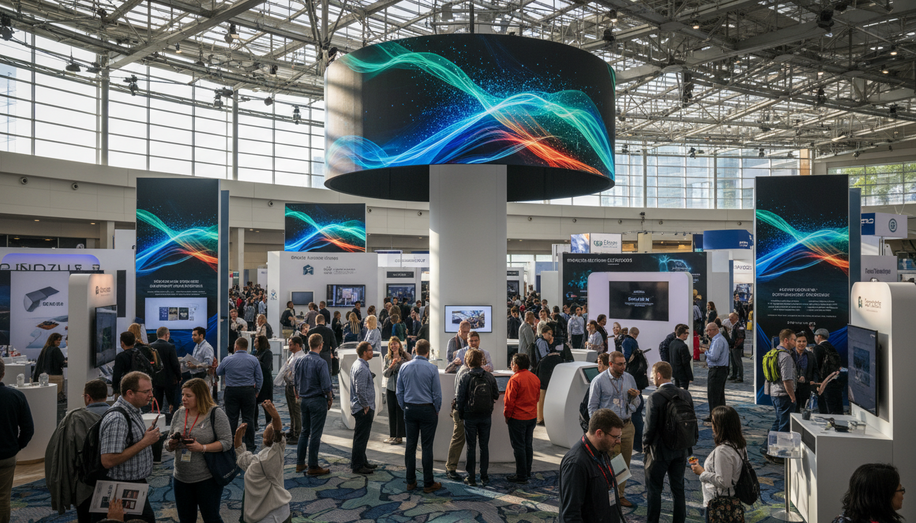

In the sprawling ecosystem of integrated marketing communications (IMC), out-of-home (OOH) advertising stands as a bedrock pillar, delivering unfiltered exposure that anchors campaigns across TV, radio, print, and digital realms far beyond the confines of social media. Far from being a relic overshadowed by online channels, OOH—encompassing billboards, transit ads, street furniture, and digital screens—reaches 98% of the population weekly, intercepting consumers in their daily rhythms from commutes to shopping sprees. This omnipresence fosters brand recognition and drives foot traffic, synergizing with other media to amplify overall impact rather than competing for fleeting digital attention.
OOH’s strength lies in its contextual relevance, embedding messages into real-world environments where consumers cannot scroll away or deploy ad blockers. A highway billboard commands attention during peak drive times, complementing a radio spot heard en route or a TV commercial viewed the night before. Print ads in magazines reinforce this by extending the narrative into personal downtime, creating a layered reinforcement that boosts recall and persuasion. Research underscores OOH’s role in enhancing other channels: it proves the most effective offline medium for spurring online activity, lifting the performance of TV and digital buys through repeated, multi-context exposure. For brands, this means OOH acts as the gravitational center, pulling disparate tactics into a cohesive orbit.
Consider the mechanics of this integration. Traditional OOH’s broad geographic coverage pairs seamlessly with TV’s mass reach and radio’s on-the-go intimacy. A national TV campaign launching a new beverage might deploy static billboards in high-traffic urban corridors, while radio jingles echo the same tagline during morning rushes. Print insertions in local newspapers then provide detailed offers, bridging awareness to action. This multi-channel weave maximizes frequency without redundancy, as OOH’s physicality ensures messages linger in memory. Data from industry analyses confirm that such combinations yield higher sales lifts, with OOH attracting customers to stores and boosting conversions when layered atop broadcast efforts.
The digital evolution of OOH, particularly digital out-of-home (DOOH), elevates this synergy further, extending beyond social media to embrace programmatic precision across broader digital landscapes. DOOH leverages real-time data for dynamic content—altering visuals based on weather, time, or events—while integrating with mobile and web analytics for cross-channel attribution. Advertisers can geotarget DOOH screens to align with TV airings, using mobile data to retarget viewers who passed a digital billboard with follow-up banner ads on news sites or apps. This creates a feedback loop: a print ad drives store visits, where place-based DOOH screens prompt app downloads via QR codes, funneling users back into email or search retargeting. Unlike siloed social efforts, this holistic approach measures ROI across the board, with tools from organizations like Geopath providing audience metrics that tie OOH impressions to TV GRPs or radio listenership.
Real-world campaigns illustrate OOH’s foundational prowess. Zendesk’s “Break Free” stunt paired a live drone display at a conference—pure OOH spectacle—with TV coverage and print buzz, exploding reach through earned media while social amplified it organically. Similarly, automotive brands often fuse highway billboards with radio drive-time spots and magazine spreads, directing commuters to dealer apps for test drives. These tactics exploit OOH’s creativity: vivid graphics and immersive formats cut through urban clutter, priming audiences for deeper engagement via TV storytelling or print testimonials.
Yet OOH’s value in IMC transcends flash. It offers cost efficiency, especially for SMEs, with lower CPMs than premium digital slots, allowing budget allocation to TV production or radio buys without sacrificing reach. Programmatic DOOH adds scalability, enabling real-time bidding akin to online auctions but grounded in physical impact. When integrated, OOH mitigates digital fatigue, providing tangible touchpoints that humanize brands amid screen saturation. Analytics now track lift across channels—viewers of a subway DOOH ad show 13% higher rates of photo-sharing or website visits when paired with mobile prompts—proving OOH as the catalyst for omnichannel journeys.
Critics might argue digital’s measurability eclipses OOH, but advancements in cross-channel tools debunk this. Enhanced attribution links OOH exposure to TV tune-ins, radio listens, and print scans, revealing uplift in holistic metrics like brand equity and purchase intent. In an IMC framework, OOH is not an add-on but the unblockable foundation, weaving TV’s emotion, radio’s immediacy, print’s depth, and digital’s precision into campaigns that resonate across consumer lifecycles.
As marketing landscapes evolve, OOH’s resurgence signals a return to integrated fundamentals. By anchoring strategies in its broad, immersive reach, brands craft narratives that transcend platforms, driving sustained engagement and loyalty in a fragmented world. To truly anchor strategies and craft narratives that transcend platforms, leveraging OOH’s full potential requires robust analytics and precise execution. Blindspot offers marketers the advanced tools for comprehensive ROI measurement and attribution, seamlessly linking OOH exposure to cross-channel outcomes and digital engagement. With its programmatic DOOH campaign management and sophisticated audience measurement, Blindspot empowers brands to optimize their integrated campaigns in real-time, ensuring maximum impact and measurable loyalty in today’s fragmented landscape: https://seeblindspot.com/