
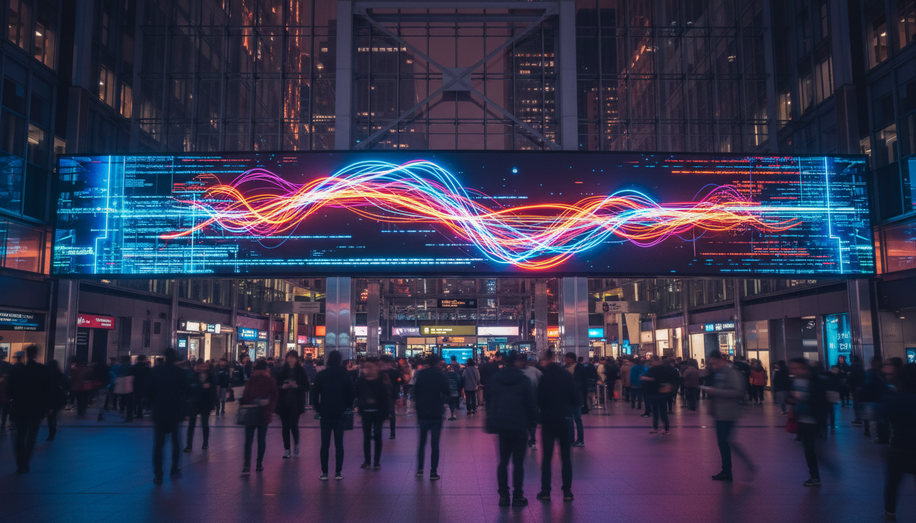

In the bustling streets of urban centers, where commuters glance at billboards amid the rush of daily life, out-of-home (OOH) advertising is reclaiming its role as a vital spark for digital engagement. Far from being a relic of analog marketing, OOH now serves as a powerful bridge to online worlds, channeling offline impressions into measurable digital actions like website visits, social media interactions, and app downloads. This seamless fusion creates an omni-channel experience that captures consumers at the moment of exposure and propels them into virtual spaces, amplifying campaigns in ways that siloed strategies cannot match.
Consider the mechanics of this bridge: a strategically placed billboard not only builds immediate brand awareness but also embeds direct pathways to digital destinations. QR codes, once a novelty, have evolved into standard gateways, instantly linking passersby to landing pages optimized for mobile devices. Brands deploying these in high-traffic areas report swift conversions, as smartphone ubiquity turns passive viewing into active clicks. Promo codes and custom URLs further enhance this handoff; a unique discount like “CHICAGO10” displayed on a city-specific ad drives users to tailored online offers, allowing precise tracking of offline-to-online traffic. In one campaign by a fashion retailer, such tactics paired with geo-targeted digital ads resulted in heightened engagement, proving that OOH primes the pump for digital follow-through.
The true potency emerges in programmatic digital out-of-home (DOOH), where static displays give way to dynamic, data-driven content. Modern DOOH billboards update in real-time based on triggers like weather or time of day, syncing effortlessly with companion digital efforts. For instance, a campaign in Oklahoma City layered DOOH atop connected TV ads, yielding a 100% surge in web traffic during active OOH weeks compared to digital-only periods. Pittsburgh saw a similar 102% lift, underscoring how physical visibility extends digital reach into tangible results. This integration leverages geo-fencing to serve mobile and social ads to those near OOH placements, creating a halo effect that follows audiences from street to screen.
Social media amplifies this synergy, transforming OOH from monologue to conversation. Adidas exemplified this with billboards featuring influencers’ Instagram handles, inviting real-time responses and store visits that spilled over online. Hashtag campaigns encourage user-generated content, while geo-targeted social ads align with OOH locations for a localized feel—think rush-hour billboards prompting Instagram stories from nearby users. Social listening tools then monitor sentiment, enabling brands to pivot dynamically, such as boosting retargeting for positive buzz or addressing concerns instantly. This creates a feedback loop where offline exposure fuels viral digital momentum.
Measurement has demystified OOH’s digital impact, turning it into a accountable powerhouse. Advanced platforms track foot traffic, brand lift, app downloads, and web visits attributable to specific placements, with studies showing OOH boosting website traffic by 20% and sales by 10%. Call tracking attributes inbound queries to OOH creatives, while mobile attribution models link QR scans to downstream purchases. Nonprofits have paired billboards with AR experiences, driving app interactions and donations through immersive tech. For 2025 strategies, experts recommend syncing DOOH with mobile retargeting, ensuring those who glimpse an ad offline encounter tailored digital reminders.
Yet success hinges on unified execution. Campaigns thrive when creatives align across channels— the bold visuals of a transit ad mirrored in Instagram reels, for example—starting with clear objectives like traffic growth or downloads. Location-based targeting tailors messages to local events, while vanity URLs capture branded search spikes post-exposure. Data integration from OOH feeds online analytics, revealing full consumer journeys and optimizing in real-time. Failing to blend these risks fragmented efforts, but when harmonized, they forge immersive experiences that resonate across touchpoints.
Real-world results affirm the approach. Simpli.fi’s DOOH integrations with CTV and mobile not only extended reach but delivered hyperlocal precision in airports and gyms, meeting audiences mid-stride. Retailers using dedicated landing pages for OOH-linked campaigns see reinforced messaging via retargeting, converting initial curiosity into loyalty. Even traditional OOH, enhanced by NFC tags or AR, invites interaction that digital alone struggles to match in scale.
As marketing landscapes evolve, OOH’s offline presence remains indispensable for cutting through digital noise. By driving traffic to websites, social channels, and apps, it crafts omni-channel narratives that feel organic and inescapable. Brands embracing this bridge don’t just advertise—they orchestrate journeys that span the physical and virtual, yielding retention, conversions, and ROI that redefine effectiveness. In an era of fleeting attention, this hybrid model ensures no impression goes to waste.