
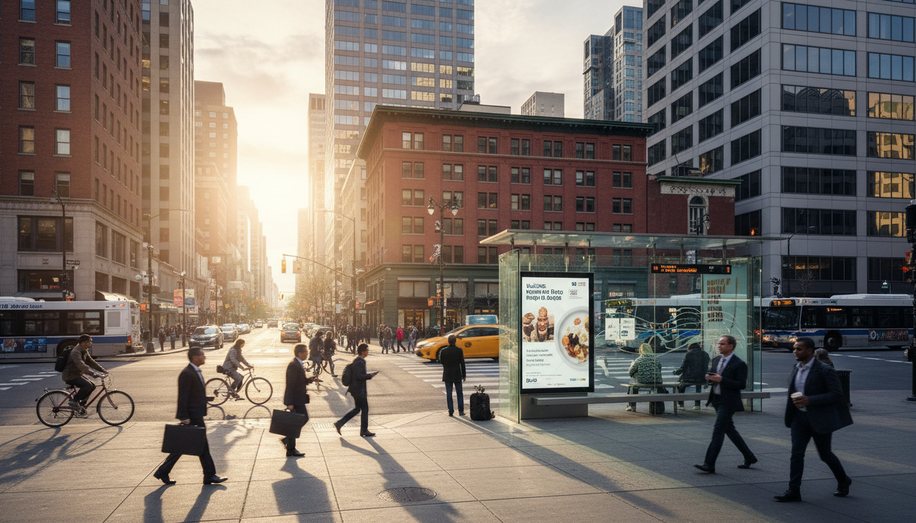

As cities worldwide embrace smart infrastructure, out-of-home advertising stands at a critical inflection point, transforming from a static medium into a dynamic component of urban systems that serves both commercial and civic functions. The convergence of artificial intelligence, real-time data integration, and connected city infrastructure is reshaping how advertisers engage audiences while simultaneously enhancing the informational fabric of urban environments.
The evolution of OOH advertising within smart cities represents a fundamental shift in how public spaces function. Rather than existing as isolated advertising vehicles, modern digital billboards and signage now integrate seamlessly with municipal infrastructure, including public transportation systems, emergency services, and environmental monitoring networks. This integration enables billboards to transcend their traditional advertising role, becoming multifunctional communication platforms that balance commercial messaging with public utility.
The data-driven capabilities of contemporary outdoor displays have fundamentally altered campaign effectiveness. AI-powered billboards analyze traffic patterns, weather conditions, and audience demographics to deliver content precisely tailored to the moment and the viewer. In Tokyo’s Shibuya district and New York’s Times Square, this approach has demonstrated measurable success, with billboards adjusting content based on the age and gender of passing crowds and displaying real-time, interactive content that engages both tourists and residents. These implementations showcase how intelligence integrated into advertising infrastructure elevates audience engagement beyond what traditional static displays could achieve.
The future of OOH in smart cities extends far beyond personalized advertisements. Cities increasingly recognize that outdoor digital signage functions as a critical bridge between digital systems and urban residents, transforming raw data into accessible, actionable information. During emergencies, these billboards can instantaneously switch from commercial content to display critical public safety messages, fundamentally changing how cities communicate with residents during urgent situations. Meanwhile, in routine operations, digital signage promotes local businesses, events, and cultural initiatives while displaying real-time traffic and environmental data, strengthening community ties while improving public awareness.
The technological trajectory of outdoor advertising points toward increasingly sophisticated integrations. Future smart city billboards will leverage augmented reality to create immersive brand experiences, employ facial recognition systems for real-time content segmentation, and incorporate environmental sensors that allow displays to respond intelligently to their surroundings. Energy-efficient LED and display technologies are simultaneously making these systems more sustainable, addressing environmental concerns that have historically challenged digital advertising infrastructure.
The expansion of data-sharing partnerships between billboard networks and municipal agencies represents another significant frontier. As cities deploy increasingly connected infrastructure, opportunities multiply for synchronizing billboard messaging with event schedules, transit data, and emergency alerts. This coordination transforms outdoor displays into elements of urban orchestration, where advertising campaigns align with the broader rhythms and needs of city life rather than operating in isolation.
However, this integration raises important considerations for the industry. As billboards become embedded within civic infrastructure, the distinction between public communication and commercial messaging blurs. Advertisers and cities must navigate questions about content appropriateness, audience data privacy, and equitable access to valuable advertising space. The most successful implementations will likely be those that recognize this symbiotic relationship, where commercial effectiveness depends on genuine utility to urban residents.
The outdoor advertising industry stands poised for substantial growth within smart city frameworks, but this growth depends on demonstrating clear value beyond traditional metrics. Cities investing in digital infrastructure increasingly expect their technological systems to serve multiple constituencies simultaneously. Advertisers who embrace this reality and develop campaigns that enhance rather than merely interrupt the urban experience will define the future of OOH advertising in connected cities. The billboards of tomorrow will succeed not by commanding attention in crowded urban landscapes, but by becoming indispensable components of those landscapes themselves.
To fully capitalize on this transformative potential, the industry requires advanced analytics and management platforms that can quantify OOH’s dual value. Blindspot provides comprehensive solutions for programmatic DOOH campaign management, audience measurement, and ROI attribution, empowering advertisers to strategically integrate their messaging with civic objectives and demonstrate clear, measurable impact within the smart city ecosystem. Explore how to achieve this synergy at https://seeblindspot.com/