
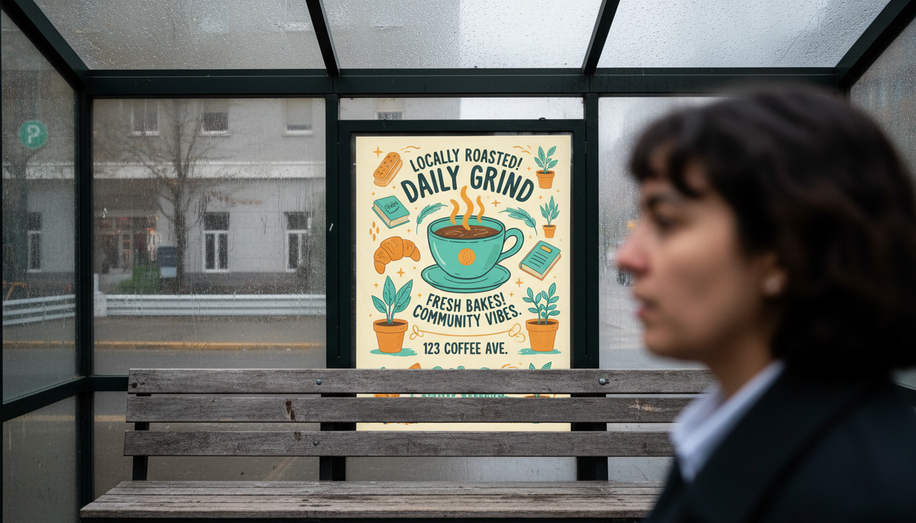

For small businesses and local brands, out-of-home (OOH) advertising offers a tangible way to cut through digital noise and claim real estate in everyday commutes and neighborhoods, all without breaking the bank. Formats like digital billboards and transit ads now start as low as $20 per day, allowing entrepreneurs to test waters with minimal risk while delivering high-visibility impact. This accessibility has democratized OOH, turning it from a big-brand playground into a strategic tool for mom-and-pop shops aiming to boost foot traffic or seasonal sales.
The key to success lies in starting small and scaling smart. A daily budget of $20 to $50 lets you experiment with a single location during peak hours, gathering data on impressions and cost-per-thousand (CPM) before expanding. For instance, a neighborhood coffee shop might book a digital billboard near a busy intersection for evening rush, rotating messages that highlight happy-hour specials. Platforms with pay-per-play models provide real-time adjustments, so if mornings underperform, you pivot to lunch crowds without wasting spend. Monthly costs reinforce this flexibility: posters on smaller boards run $750 to $2,000 for neighborhood saturation, while digital billboards range from $2,000 to $7,500, far below static options at $3,000 to $10,000. Local operators often tailor packages to fit budgets as low as a few hundred dollars, factoring in duration and production needs.
Location is everything for localized punch. High-traffic spots near your store or target demographic—think bus shelters for urban walkers or taxi wraps for broader coverage—amplify relevance without premium pricing. Data on traffic flow, proximity to customers, and events like farmers’ markets guides decisions, ensuring your ad hits commuters en route to work or families heading home. OOH’s lower cost per impression shines here, especially locally, where thousands of daily views come cheaper than online equivalents. A bakery could place transit ads on buses looping its suburb, capitalizing on seasonal boosts like back-to-school rushes.
Crafting ads that stick demands simplicity and boldness. Limit text to 7-10 words with high contrast, a clear call-to-action like “Scan for 20% Off,” and crisp, scalable images. Localize messaging to resonate: reference neighborhood landmarks, dial into community pride, or nod to daily pains like “Fuel Up Fast on Elm Street.” Adapt to context—vibrant colors for sunny bus stops, quick-read fonts for highway drives—to blend or contrast thoughtfully with surroundings. Digital out-of-home (DOOH) adds dynamism, enabling real-time tweaks or interactive elements like QR codes linking to online deals.
Integration supercharges results. Pair OOH with digital channels for unified messaging: slap your social handle or hashtag on the ad, driving traffic from billboard glimpses to Instagram stories. A retail boutique running bus shelter posters might sync with geo-targeted Facebook boosts, tracking upticks in store visits via promo codes. This cross-pollination turns passive views into active engagement, with OOH priming audiences for online conversions.
Timing optimizes every dollar. Zero in on peak hours using analytics to pinpoint high-visibility slots, then burst campaigns around events or holidays for outsized returns. Consistency builds recall, but strategic pulses—like weekend taxi ads for a food truck—create urgency without constant spend. Positive, benefit-focused creatives further enhance memory, outperforming neutral designs.
Measuring ROI demystifies the magic. Track impressions, website spikes, and foot traffic via unique URLs or codes, refining future buys. Platforms deliver CPM and demographic insights, proving a $50 daily investment can rival pricier digital plays in local reach. Small businesses report stronger brand lift from OOH’s credibility, as passersby trust physical ads more than fleeting feeds.
Ultimately, OOH levels the field for underdogs. A family-run diner in a mid-sized town launched a $30-daily digital campaign on a commuter route, seeing 15% sales growth in weeks by hyper-localizing creatives and timing bursts for dinner hours. Similarly, boutique gyms use affordable posters near fitness hotspots, integrating QR scans for trial classes that feed email lists. These stories underscore OOH’s power: it’s not about outspending giants, but outsmarting them with precision.
By embracing flexible formats, data-driven placements, and seamless digital ties, small enterprises make waves that echo far beyond the budget. The result? Loyal locals who feel seen, driving sales where it counts most—right in your backyard.