
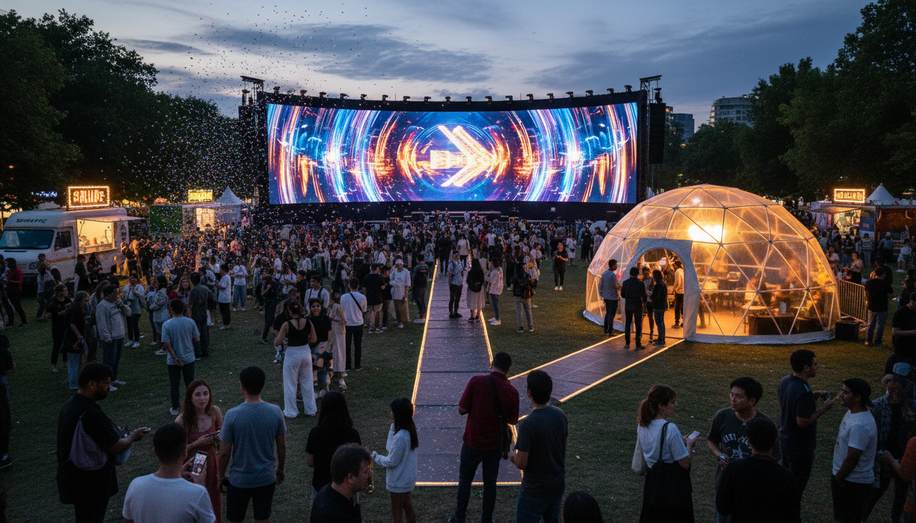

In the bustling streets of urban centers, where fleeting glances meet bold visuals, out-of-home (OOH) advertising has evolved from a standalone medium into a dynamic force multiplier for experiential marketing. Pop-up activations and immersive brand experiences thrive on immediacy and surprise, but their success hinges on drawing crowds and sustaining buzz beyond the event itself. OOH serves as the perfect catalyst, amplifying foot traffic to these ephemeral installations while extending their digital footprint through seamless cross-channel synergy.
Consider a pop-up shop launching in a high-traffic district: a static billboard or digital OOH screen nearby doesn’t just announce the event—it ignites curiosity with provocative visuals, QR codes, or branded hashtags that propel passersby directly to the activation. This offline-to-online bridge transforms passive exposure into active participation. Research shows that integrating OOH with mobile prompts over half of consumers to act on their phones, from scanning codes to redeem offers or visit websites, effectively funneling real-world foot traffic into measurable engagement. In one study, combining digital OOH (DOOH) with mobile extended campaign reach by up to 303% and boosted engagement by 46%, proving the pairing’s potency for experiential drives.
Brands like those leveraging JCDecaux’s cross-media tactics have seen store visits surge by five times when OOH pairs with mobile, outpacing single-channel efforts. For pop-ups, this means OOH doesn’t merely promote; it preconditions the audience. A towering digital screen geo-fenced around the activation serves tailored mobile retargeting ads to those who’ve lingered nearby, nurturing intent into attendance. Elyts Marketing highlights how geolocation data enables precise retargeting of OOH viewers with personalized digital follow-ups, creating layered touchpoints that heighten memorability.
This synergy shines in real-world executions. Imagine a beverage brand’s interactive pop-up in Mexico City’s Reforma avenue: OOH billboards blast mass awareness with event-specific calls-to-action, while digital extensions like QR codes link to AR filters for social sharing. Consistency across channels—unified messaging, visuals, and tone—ensures the brand feels omnipresent, adapting OOH’s broad visibility to digital’s interactive depth. Passersby snap photos of eye-catching creatives, fueling earned media as user-generated content (UGC) proliferates on Instagram and TikTok. Influencers amplify this loop, posing at OOH landmarks tied to the pop-up, turning one-off experiences into viral phenomena.
The data underscores OOH’s role in closing the experiential loop. A Germanwings campaign blending OOH and mobile delivered a 35% uplift in click-through rates alongside heightened brand awareness, illustrating how multichannel tactics maximize reach for time-sensitive activations. Similarly, OAAA and Nielsen research reveals DOOH sparks 48% higher mobile engagement post-exposure, with combined efforts driving store traffic 2.5 times more effectively than isolated channels. For pop-ups, which often last mere days, this acceleration is invaluable—OOH builds the crowd, digital sustains the conversation, and together they measure uplift in footfall, dwell time, and conversions.
Yet, the magic lies in strategic integration. Hashtags emblazoned on transit wraps or interactive DOOH encourage immediate sharing, bridging physical immersion to online amplification. Broadsign notes that such tactics not only refine targeting via OOH data but also unlock comprehensive measurement, from awareness to visitation. In non-profit realms, even cause-driven pop-ups benefit, as outdoor visuals complement digital for broader impact. Mexico’s evolving landscape exemplifies this: billboards on key avenues seed visibility, social ads nurture it, creating a feedback loop where offline sparks online action.
Challenges persist—ensuring creative adaptability across media and leveraging real-time data for DOOH dynamism—but the rewards are clear. As Magna Intelligence reports, OOH has grown steadily over a decade, fueled by digital synergies that position it as the anchor in modern mixes. For experiential marketers, OOH isn’t ancillary; it’s the spark that ignites foot traffic and perpetuates reach.
Take a luxury fashion pop-up: DOOH screens nearby pulse with teaser videos and location pins, mobile alerts notify opted-in users, and post-visit retargeting reinforces the thrill. Engagement metrics soar—30% higher with DOOH-mobile combos per OAAA findings—while organic shares extend the campaign’s life. This isn’t serendipity; it’s engineered synergy, where OOH’s unmissable presence primes experiential magic.
Ultimately, in an attention-scarce world, OOH elevates pop-ups from niche events to cultural moments. By driving throngs to doorsteps and propelling stories across screens, it proves indispensable, blending the tangible allure of real-world encounters with digital perpetuity. Brands ignoring this fusion risk muted impact; those embracing it redefine engagement on their terms. This is where platforms like Blindspot become indispensable, offering the tools to seamlessly integrate OOH into the experiential marketing lifecycle. With robust location intelligence for optimal site selection, programmatic DOOH capabilities for dynamic content delivery, and real-time ROI measurement, Blindspot empowers brands to transform fleeting pop-ups into data-driven success stories, ensuring every campaign maximizes foot traffic, engagement, and measurable impact. Discover how at https://seeblindspot.com/