
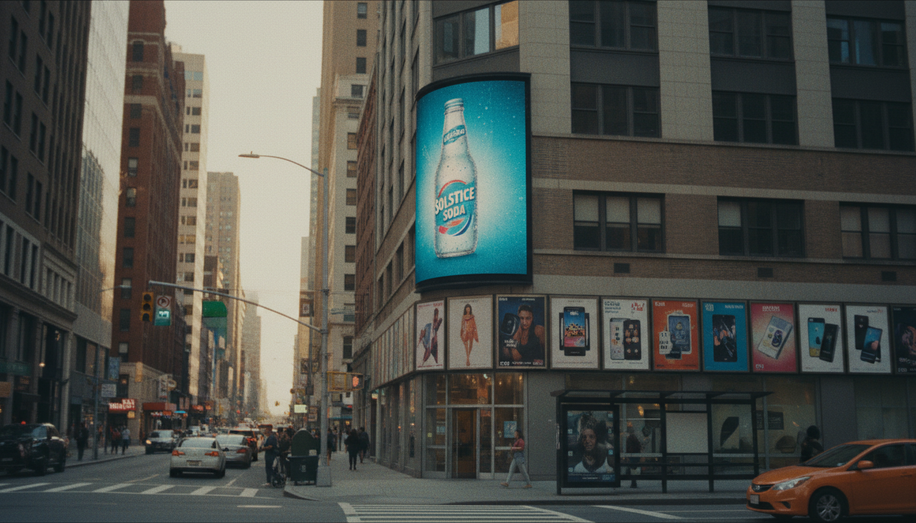

In the high-stakes world of out-of-home (OOH) advertising, where eye-catching billboards and digital displays promise maximum visibility, one misstep in the regulatory maze can lead to crippling fines, forced removals, or lost contracts. Navigating permits, zoning laws, and legalities demands precision, as cities like New York enforce a labyrinth of rules designed to balance commercial expression with public safety, aesthetics, and urban planning. For OOH professionals, understanding this landscape starts with distinguishing between advertising signs—those promoting goods or services off-site—and accessory signs tied directly to on-premise activities, a divide that dictates everything from placement to penalties.
New York City’s Department of Buildings (DOB) holds the reins on most signage, defining advertising signs as those directing attention “to goods or services at a location other than the premises where the sign is located.” These are banned in residential districts, which cover 75% of the city, limiting operators to accessory signage like small “for sale” or “for rent” notices up to 12 square feet, or parking signs no larger than two square feet per entrance. Commercial zones offer more leeway, but only specific districts—C6-5, C6-7, C7, and C8—permit advertising signs outright, while C1 through much of C6 scrutinize whether a sign promotes an on-site business or veers into prohibited off-site promotion. Manufacturing districts relax rules further for suppliers and warehouses, though operators must preserve open spaces and buffers. Property owners eyeing leases for OOH space would be wise to consult a registered architect or engineer first, as illegal setups invite “substantial penalties.”
Beyond zoning, proximity restrictions carve out no-go zones. Billboards cannot sit within 900 feet and in view of designated arterial highways, nor within 200 feet of public parks half an acre or larger—a rule that sidelines advertising near most green spaces in the city. State-level oversight from the New York State Department of Transportation (DOT) adds layers, prohibiting signs within 660 feet of interstates, National Highway System routes, or primary highways, with further limits on size, lighting, and placement beyond that zone in rural areas. Regional DOT offices handle permits, often layering on local rules that prove even stricter.
Operators must register as Outdoor Advertising Companies (OACs) with the DOB if managing signs in these sensitive areas, submitting a detailed inventory of every structure. Affiliates—interrelated firms sharing control or inventory—fall under the same umbrella, as do those holding themselves out to sell ad space on others’ properties. Non-compliance? Fines hit up to $25,000 per day, alongside sign removal, storage fees, and disqualification from city bids. Property owners leasing to unregistered OACs risk entanglement if they hold any operational interest.
Permitting forms the operational backbone. A construction permit from the DOB is mandatory for most installs, exempting only painted signs under six square feet or non-illuminated ones. Electrical connections demand an electrical permit filed by a licensed electrician through borough offices, while any illumination—neon, LED, or otherwise—requires an illuminated sign permit, renewed annually and auto-billed for overhanging signs. Public right-of-way placements, like blade, A-frame, or awning signs, need NYC DOT approval to meet projection and height limits, ensuring no pedestrian hazards. Temporary versus permanent distinctions apply, with variances possible for outliers via public hearings and impact analyses, though processing drags 3-9 months.
Special protections amplify scrutiny near schools and parks, where content must suit family environments, brightness stays low to curb light pollution, and aggressive displays face outright bans. The NYC Sign Code caps sizes, heights, and illumination citywide, mandating post-install inspections for variances. Nationally, patterns echo: state DOTs regulate highways, locals zone districts, and nonconforming uses grandfather in under resolutions like NYC’s sections 32-66, 42-55, and 42-58.
For OOH firms, success hinges on proactive compliance. Digital tools from firms like Milrose or BlinkSigns streamline DOB filings, while zoning maps and park/highway lists guide site selection. Yet the web remains dynamic—evolving codes, court challenges, and tech like digital boards invite flux. In 2026, with urban density rising, regulators tighten grips on visual clutter, underscoring the need for legal counsel early. Mastering this terrain not only dodges pitfalls but unlocks premium placements, turning regulatory savvy into competitive edge.