

Media Executives Share Their Predictions for 2026
Meta description: In 2026, media leaders say LLMs, trust, and human-first storytelling will redefine OOH, rewarding brands that differentiate and build deeper audience ties.
Out-of-home has never been more digital, more data-driven, or more under scrutiny. As 2026 approaches, media executives say the next wave will be defined less by shiny technology and more by how brands use it to earn trust, stand out, and tell human stories in the physical world.
The past two years have reshaped the media economy. Programmatic waste has reached what some describe as “crisis levels,” with only about a third of every programmatic dollar making it to publishers, intensifying calls to treat media quality as a strategic imperative rather than a trading tactic. At the same time, AI has moved from experimental novelty to embedded infrastructure, with agentic systems beginning to plan, buy, and optimize media autonomously. Against that backdrop, media leaders see 2026 as a sorting year for OOH: the channels that can prove trust, differentiation, and genuine audience connection will pull away from the pack.
One clear through-line is that large language models (LLMs) are shifting from discovery to deployment. After a phase of experimentation, executives expect 2026 to be the year AI agents start quietly powering day-to-day OOH workflows: synthesizing location data, generating creative variants, predicting dwell-time, and even proposing hyperlocal content calendars tied to weather, traffic, or cultural moments. The frontier is no longer “Can the tech do it?” but “Can we govern it?” Leaders stress the need for controlled pilots, robust prompting skills, and enterprise-grade tools that safeguard IP and data, rather than an arms race of generic AI outputs.
Yet those same executives are quick to note that AI will only be as valuable as the human vision behind it. Many now talk about AI as an interface to “computational superpower” that still requires strong strategic inputs and clear definitions of what quality looks like. In OOH, that means human-first planning: understanding why a particular community, context, or moment matters and then using AI to scale the idea, not to replace it. Rather than flooding streets with low-cost, auto-generated creative, the winning work will use AI to free up time for better ideas and more nuanced local storytelling.
That emphasis on nuance is part of a wider trust reset sweeping the media industry. In digital channels, advertisers are scrutinizing supply chains, rejecting made-for-advertising environments, and questioning what “premium” really means when connected TV buys can still surface on long-tail apps or questionable content. For OOH, the trust conversation looks different but no less urgent. Brands are asking whether the data that underpins audience guarantees is truly representative, how privacy-safe location targeting really is, and whether sustainability claims around screens and infrastructure can stand up to third-party verification.
Executives say the bar is rising across three dimensions: transparency, suitability, and context. Transparent reporting on impressions, methodology, and energy use will move from nice-to-have to table stakes. Suitability will extend beyond “brand safety” to questions like: Is this message appropriate for this neighborhood, at this time, on this format? And context—long the superpower of OOH—will be scrutinized with fresh intensity. In a world where brands are reconsidering blanket news avoidance and recognizing the importance of funding quality journalism to sustain a healthy ecosystem, OOH will face parallel questions about which environments and community partners it uplifts.
In parallel, media leaders predict audience relationships—not raw reach—will define OOH’s next phase of growth. As more media investment flows into fragmented environments and new retail media networks, OOH is being valued less as a blunt mass-reach tool and more as a connector across journeys: driving store visits after a retail media exposure, reinforcing a brand promise seen in a streaming environment, or anchoring a community activation that lives on social. That shift will reward owners and agencies that can stitch together credible cross-channel measurement, from mobile movement data to brand lift and sales outcomes, while staying on the right side of evolving privacy expectations.
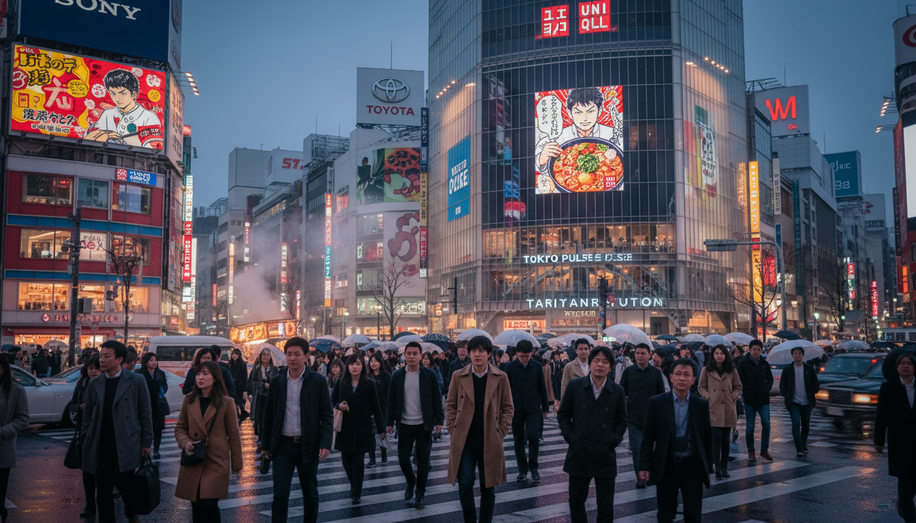
Crucially, differentiation will be harder to fake. With more digital inventory and more automated buying, parity becomes the default. Executives say the OOH players that stand out in 2026 will do so through distinctive creative craft, inventive use of data, and deeper collaboration with cities, venues, and cultural institutions. The most effective campaigns, they predict, will feel less like rented rectangles and more like place-specific stories—using dynamic feeds, participatory formats, and real-world utilities (wayfinding, local alerts, cultural recommendations) to make the ad space feel like part of the neighborhood fabric.
That dovetails with another trend: consolidation and reconfiguration of media partners. Across the broader media and PR landscape, top executives anticipate continued agency consolidation and new alliances formed around AI capabilities and streamlined service models. In OOH, that may translate into tighter integrations between media owners, data providers, and creative partners, with brands demanding fewer handoffs and clearer accountability for outcomes. As agentic AI takes over low-level optimization, human teams will be judged on their ability to orchestrate these ecosystems and bring singular ideas to life, not just fill plans.
Underlying all of this is a sharpening focus on effectiveness. With more money flowing into media but the systems delivering it “no longer operating in familiar ways,” marketers are under pressure to prove impact in a changing landscape. For OOH, that means moving beyond counting faces to articulating how an investment builds brand, shifts behavior, or deepens loyalty over time. Executives expect to see broader adoption of unified measurement frameworks that can compare OOH performance to other channels on common metrics, while still preserving what makes the medium unique: physical presence, shared experience, and cultural relevance.
If 2025 was the year the industry woke up to the limits of blind efficiency, many leaders say 2026 will be the year of deliberate differentiation. LLMs and agentic AI will accelerate workflows, but the brands that win on the street will be those that pair machine intelligence with human judgment, prioritize trust at every step of the supply chain, and use OOH not just to be seen, but to be felt—locally, authentically, and repeatedly.