
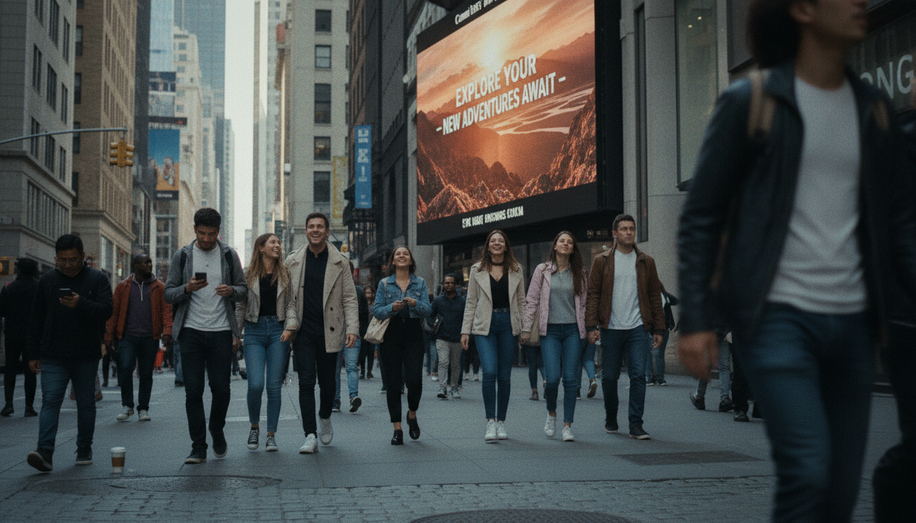

In an era dominated by pixel-perfect digital attribution, traditional out-of-home (OOH) advertising—think static billboards towering over highways and posters lining transit hubs—has long been dismissed as the black box of media planning. Yet, as marketers grapple with ad fatigue and privacy restrictions eroding online tracking, static OOH is staging a comeback, armed with rigorous methodologies that prove its tangible impact on brand lift, footfall, and sales uplift. Far from relying on guesswork, these approaches draw on geo-targeted data, controlled experiments, and econometric modeling to deliver the ROI clarity that stakeholders demand.
At the heart of measuring static OOH’s effectiveness lies brand lift studies, which isolate the campaign’s influence through carefully matched exposed and control groups. Measurement partners define survey zones around billboard locations, then deploy GDPR-compliant mobile and in-app polls to compare ad recall, favorability, and purchase intent between those who report seeing the ad and those who don’t. Demographics like age and gender ensure apples-to-apples comparisons, yielding uplift figures such as 52% higher positive brand sentiment or 109% increased likelihood of store visits. For instance, a billboard campaign in a high-traffic urban corridor might show a 20-30% lift in aided recall, directly tying visibility to top-of-mind awareness without digital cookies. These studies sidestep digital biases by focusing on self-reported exposure, making them ideal for static formats where impressions can’t be programmatically verified.
Footfall attribution takes this a step further, bridging OOH exposure to real-world store traffic using mobile location data and geofencing. Advertisers draw virtual boundaries around billboards or posters, then track anonymized device movements to quantify incremental visits to nearby retailers. A shopping mall billboard, for example, might reveal that 15% of exposed passersby detoured to an adjacent store within an hour, compared to baseline patterns from non-exposed periods. Partners specializing in this analyze pre-, during-, and post-campaign foot traffic, controlling for variables like weather or events to attribute true uplift. This method shines for location-based static OOH, such as transit shelters near retail clusters, where proximity amplifies relevance and measurability.
Sales uplift studies provide the bottom-line proof, correlating OOH exposure with revenue spikes via integrated point-of-sale and e-commerce data. By comparing sales in campaign geographies against control markets—say, billboards saturating New York while Philadelphia serves as a holdout—marketers isolate incremental lift, often finding 10-20% boosts tied directly to the spend. Baseline analysis establishes pre-campaign norms, then overlays geo-fenced exposure data to link billboard views with in-store purchases or online conversions from targeted zip codes. One study highlighted OOH delivering a median incremental return on ad spend (iROAS) of $2.61 standalone, surging to double that when layered with digital, underscoring its efficiency for static buys. Promo codes or QR scans on static creatives offer direct tracking, though they’re best for tactical promotions rather than broad awareness plays.
Impressions form the foundational metric, evolving beyond crude traffic counts to “opportunity to see” (OTS) and “likelihood to see” (LTS) models. Vendors supply daily or weekly “as-delivered” data factoring in foot traffic, dwell time, viewing angles, and site visibility, ensuring static billboards aren’t over- or under-credited. An RFP specifying target audiences—such as 18-49-year-olds near casual dining spots—prompts vendors to index sites accordingly, bridging impressions to outcomes like engagement or sales. While traditional travel surveys offered estimates, modern tools refine this with granular traffic volume and environmental data, providing a scalable baseline for ROI formulas: (Incremental Revenue – Campaign Cost) / Cost.
Building a unified strategy starts with clear goals—brand building versus foot traffic—then layers these pillars into marketing mix models (MMMs). Feed OOH impression data alongside TV or search into MMMs to apportion credit accurately, revealing synergies often overlooked in siloed digital dashboards. Collaborate early with vendors for RFP-driven site selection and real-time reporting, then validate via incrementality tests. Challenges persist: static OOH lacks DOOH’s real-time tweaks, and external factors like seasonality demand robust controls. Still, evidence mounts that these methods deliver accountability on par with digital, with OOH proving 80% more efficient in multi-channel mixes.
For CMOs wary of unproven spends, the playbook is straightforward: prioritize geo-proven sites, deploy lift studies for awareness, geofencing for traffic, and sales integration for revenue. Tools from partners like geofencing platforms and survey firms democratize this, turning static billboards from art into science. As privacy laws further cloud digital attribution, traditional OOH’s physical, unblockable presence—quantified through these battle-tested tactics—positions it not just as viable, but vital for proving marketing impact in 2026 and beyond.