
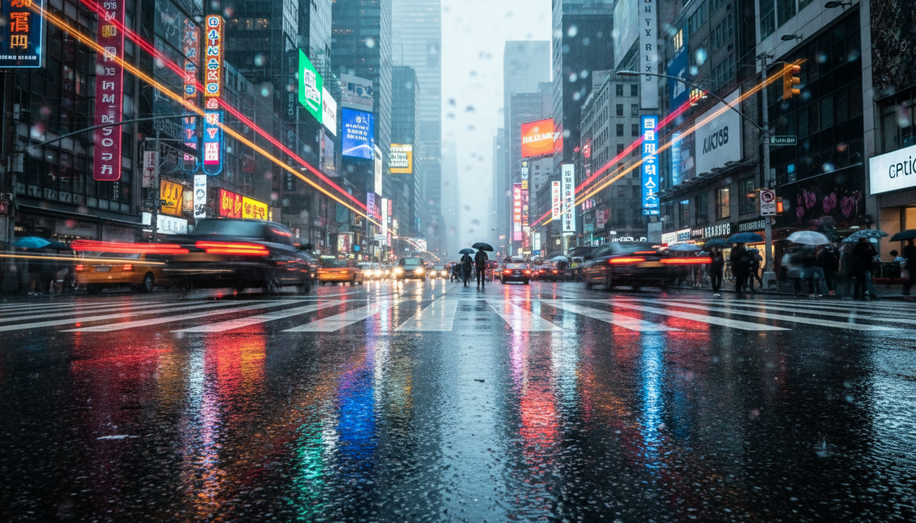

In the fleeting world of out-of-home advertising, where drivers glance at billboards for mere seconds and pedestrians dart past digital screens amid urban chaos, design is not merely aesthetic—it’s survival. Mastering the canvas demands ruthless simplicity, razor-sharp visual hierarchy, and strategies honed for environments from sun-baked highways to rain-slicked transit hubs. Top-performing static ads, for instance, capture up to 50% more attention than their cluttered counterparts by adhering to proven principles that prioritize instant impact over exhaustive detail.
At the heart of effective OOH design lies a dominant visual focal point, the gravitational center that seizes the eye before cognition even kicks in. Designers must establish this anchor—often a striking image commanding over 50% of the space—while carving clear visual zones through strategic splits in the composition. Clutter is the enemy; merciless elimination ensures the message lands amid the blur of motion. This structure drives success across static billboards and dynamic digital displays alike, where viewers process information at speeds up to 60 miles per hour.
Visual hierarchy emerges as the conductor of this orchestra, dictating what registers first, second, and last in those critical five to 15 seconds of exposure. Headlines reign supreme: limit them to seven words maximum, with five or fewer ideal and three optimal for penetration. Position them left-anchored, dwarfing body copy by three to five times in scale and occupying 20-30% of the canvas. Body text? Under 15 words or none at all—data confirms minimal copy amplifies impact by letting imagery lead. Lead with benefits, not problems, framing what’s in it for the audience to spark immediate resonance. On digital screens, where content rotates every few seconds, this hierarchy adapts by pulsing key elements or sequencing reveals, maintaining momentum without overwhelming the viewer.
Contrast and legibility form the unbreakable backbone, especially in diverse OOH terrains. High color contrast boosts recall by 38%, making text pop against backgrounds from twilight skies to midday glare. Stick to two or three dominant colors, drawn faithfully from the brand’s palette—no alternates—and opt for color photography over black and white for visceral punch. Bold sans-serif fonts ensure readability from afar; avoid intricate styles, overly thin weights, or all-caps marathons in favor of mixed-case lettering with generous spacing between letters, words, and lines. Logos belong in bottom corners, consistently placed, reinforcing identity without stealing the show.
Images deserve starring roles, conveying mood, emotion, or narrative in an instant where words falter. They should dominate the full height and width, creating emotional drama or universal appeals like home, family, or comfort—elements that relate to familiar ideas without intimidation. For static billboards, a strong silhouette leverages negative space, rendering the ad recognizable even in outline at high speeds. Dynamic digital formats elevate this with motion: subtle animations draw the eye to the focal point, while playful, lively elements keep engagement alive across loops.
Contextual savvy tailors these principles to the environment, transforming potential distractions into allies. Localize messaging by nodding to nearby landmarks, events, or culture, fostering personal connection and stronger recall. Blend with surroundings—mirroring a pirate’s lair at a bus shelter or astroturf for a sports promo—to make the ad unforgettable. On digital screens in bustling centers, real-time relevance via trending moments or AR integrations heightens interactivity, while highway placements demand silhouettes that cut through speed and distance.
One clear idea per ad is non-negotiable; multiplicity dilutes impact. Design explicitly for the goal—be it a website visit, exit prompt, or brand intrigue—with a single call-to-action spotlighted prominently. Overcrowding with contacts is obsolete; memorable visuals compel mobile follow-up later. Extensions and three-dimensional embellishments break physical boundaries on static formats, adding depth with props or lighting for standout dimensionality.
Testing validates it all: preview at five-second glances for raw attention and 15-second dwells for comprehension, simulating real-world variables like weather or traffic. Combine this with optimal dwell times on digital networks, where extended exposure cements memory without altering the core message.
Ultimately, these principles transcend medium, uniting static and digital OOH under a banner of bold simplicity. Creativity thrives not in excess but in disciplined innovation—vibrant hues, surprising visuals, and emotional narratives that linger. In an era of sensory overload, the canvas that masters quick readability wields high impact, turning passive passersby into active advocates.