
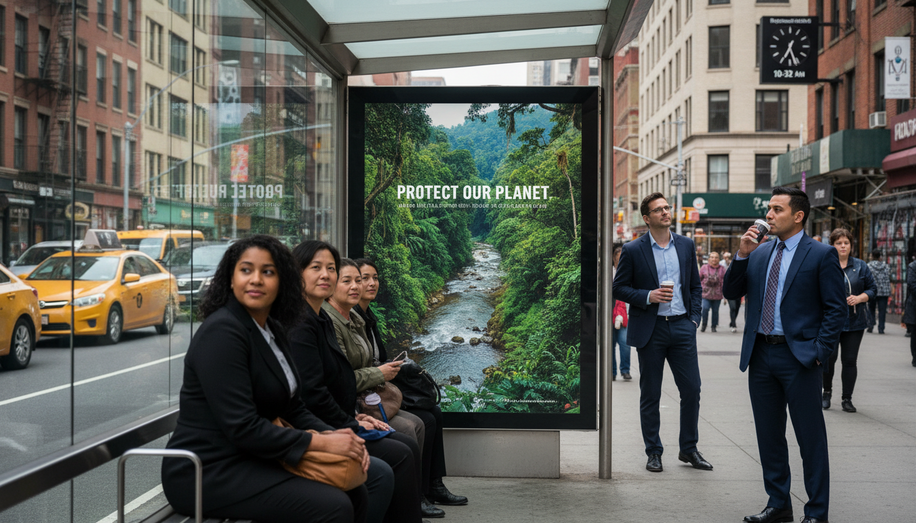

In the evolving landscape of out-of-home (OOH) advertising, location-based data has emerged as a transformative force, enabling brands to deliver hyper-relevant messages precisely when and where consumers are most receptive. By harnessing geospatial insights from mobile devices, foot traffic patterns, and real-time analytics, businesses can shift from broad-spectrum campaigns to surgically targeted efforts that drive measurable engagement and ROI. This fusion of physical billboards with digital precision bridges the gap between offline impressions and online actions, redefining OOH as a dynamic, data-fueled medium.
At its core, location data captures the geographical position of internet-connected devices, revealing not just where people are, but how they move, linger, and respond to their surroundings. For OOH advertisers, this means tracking foot traffic near ad placements to identify peak hours, dwell times, and movement patterns—metrics that were once elusive in the static world of traditional billboards. Consider a coffee chain placing digital screens in urban commuter hubs: by analyzing location data, it can synchronize promotions with morning rushes, displaying steaming latte offers exactly when footfall spikes. Such timing isn’t guesswork; it’s derived from continuous monitoring of pedestrian flows, weather influences, and seasonal shifts, allowing campaigns to adapt dynamically for maximum visibility.
This data-driven approach extends to audience profiling through mobile ID technologies, which link anonymized device signals to demographics like age, gender, and interests. Advertisers can uncover psychographic details—brand preferences, shopping habits, and even travel behaviors—ensuring ads resonate with specific segments in targeted zones. For instance, a luxury retailer might prioritize billboards in high-income neighborhoods identified via spending power analytics, tailoring visuals to local lifestyles while avoiding low-engagement areas. Location intelligence tools, powered by GIS and spatial datasets, further refine this by mapping audience saturation and consumption patterns, helping brands select “hot spots” where their message will hit hardest.
One of the most compelling applications lies in linking OOH exposure to downstream behaviors. When a pedestrian passes a provocative poster, location data tied to their mobile ID can track subsequent actions, such as store visits or online searches. Studies show that consumers exposed to OOH ads are twice as likely to engage digitally afterward, attributing lifts in app interactions or purchases directly to the physical encounter. This attribution modeling turns impressions into quantifiable outcomes: a sports brand near a stadium, for example, pairs its billboard with geofencing to push ticket offers to nearby phones, measuring conversion rates in real time. Retailers and real estate firms have similarly leveraged catchment-area analysis—primary zones where people live and secondary ones they frequent—to partner with OOH owners for billboards that drive shoppers to nearby centers during peak demand windows.
Real-time optimization amplifies these gains. Digital OOH (DOOH) screens, responsive to live data, can swap content on the fly: a sunscreen ad in beachside spots during heatwaves or winter gear in ski towns. Tools visualize hotspots, compare ad variants across locations, and evaluate viewability factors like lighting and traffic direction, enabling iterative refinements without halting campaigns. Weather-integrated analytics predict traffic dips from rain, prompting schedule adjustments, while directional data ensures ads face incoming crowds for optimal impact.
Yet, wielding location data demands precision and ethical stewardship. Inaccuracies in GPS, Wi-Fi, or IP-based tracking can lead to misfires, wasting budgets on irrelevant audiences. Competitive markets inflate costs for hyper-local targeting, and privacy regulations like GDPR require strict anonymization to preserve consumer trust. Brands must balance sophistication with transparency, using aggregated insights rather than individual profiles to avoid overreach.
The payoff is undeniable. Location-based OOH not only boosts efficiency—reducing wasted impressions through demographic alignment—but elevates relevance, fostering loyalty via contextual messaging that nods to local landmarks or events. As omnichannel strategies dominate, this data bridges silos: a billboard sparks awareness, location triggers nurture via mobile, and analytics close the loop with sales attribution. Forward-thinking agencies fuse geotagged social media for interest mining, applying topic modeling to tailor creatives that mirror neighborhood vibes.
In practice, global brands are already reaping rewards. Beverage giants optimize festival placements by correlating dwell times with sales spikes, while QSRs (quick-service restaurants) send timed vouchers to passersby, converting fleeting glances into immediate visits. Retailers in pre-urban zones use mobility data to stock shelves ahead of predicted surges, informed by OOH-driven traffic insights. These examples underscore a broader shift: OOH is no longer about sheer scale but surgical impact, where location data turns public spaces into personalized touchpoints.
Looking ahead, advancements in MarTech and data fusion promise even greater granularity. As mobile insights proliferate, expect OOH to integrate with supply chains, pricing models, and cross-media attribution, solidifying its role in competitive arsenals. For businesses, the message is clear: in a world of fragmented attention, mastering location-based data isn’t optional—it’s the key to campaigns that don’t just reach audiences, but move them.
In this dynamic landscape, platforms like Blindspot become indispensable, offering the location intelligence and audience analytics crucial for surgically targeted campaigns that resonate with consumers. By enabling real-time performance tracking and precise ROI measurement, Blindspot helps brands convert OOH exposure into verifiable engagement and sales, truly mastering data to move audiences. Discover how at https://seeblindspot.com/