
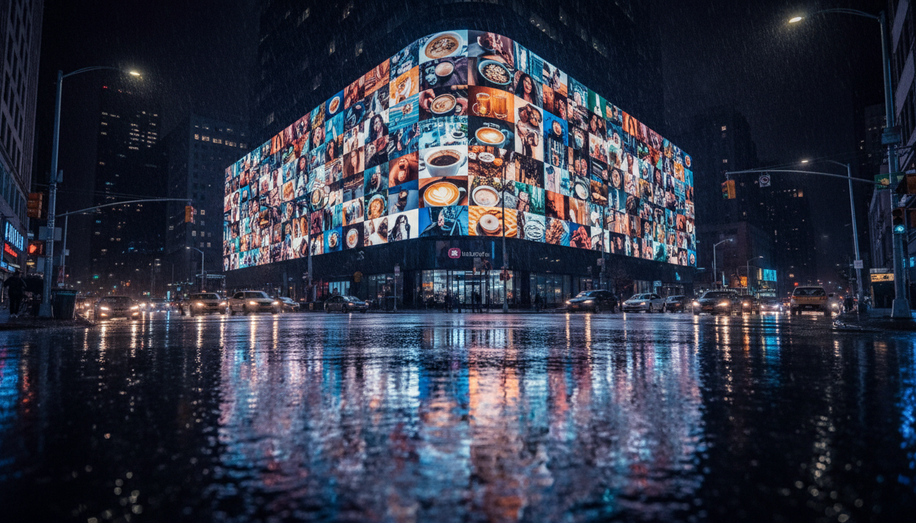

The convergence of user-generated content and out-of-home advertising represents a significant shift in how brands create authentic connections with consumers in physical spaces. By transforming real customer experiences into compelling billboard moments, companies are moving beyond traditional polished marketing to embrace the raw, relatable storytelling that modern audiences crave.
User-generated content in OOH campaigns taps into a fundamental human desire for recognition and community participation. Apple’s “Shot on iPhone” billboard series exemplifies this approach, inviting customers worldwide to submit personal photographs for potential display across major urban centers. The campaign capitalizes on the democratic appeal of featuring real people’s creative work rather than professional productions, creating an emotional investment among consumers who might see their peers represented on digital screens. This strategy transforms passive viewers into active stakeholders, where consumers become both the audience and the content creators.
The authenticity inherent in user-generated campaigns proves particularly powerful during culturally significant moments. Bumble’s pandemic-era campaign, which generated nearly 60 million impressions across the United States, succeeded by acknowledging collective emotional experiences of isolation and connection during lockdown. Rather than imposing a corporate narrative, the brand provided a platform for customers to express shared sentiments, resulting in a spike in app usage wherever the campaign appeared. This human-centered approach demonstrates that audiences respond more meaningfully to messaging grounded in genuine experiences rather than aspirational brand promises.
Technology amplifies the impact of user-generated OOH content through dynamic personalization. Brands can now leverage customer data and submissions to create responsive campaigns that evolve in real time. Spotify’s 2022 billboard initiative transformed listener data into playful, gamified displays across digital screens, turning personal music preferences into shareable moments on physical infrastructure. By making UGC campaigns visually engaging and interactive, brands encourage organic social media amplification that extends campaign reach beyond the physical billboard itself.
The strategic placement of user-generated content in high-traffic locations creates powerful touchpoints that traditional advertising often misses. Netflix’s “Stranger Things” 3D OOH installations and Samsung’s pandemic-focused campaigns demonstrated how relatable customer stories displayed in urban environments generate conversation, social sharing, and emotional resonance. When consumers encounter authentic peer experiences on billboards they pass daily, the message feels less like advertising and more like cultural commentary they naturally want to discuss.
For brands considering user-generated content in OOH strategies, several key principles emerge from successful campaigns. First, timing matters enormously. Campaigns that respond to current events or collective emotional moments—whether celebrating athletic victories, acknowledging social challenges, or marking seasonal transitions—resonate more deeply than evergreen messaging. Second, simplicity increases participation. Coca-Cola’s interactive bus shelter campaign in Singapore succeeded by making the UGC mechanism straightforward and rewarding, transforming a simple photo into an immediate tangible benefit through QR code vouchers. Third, visual storytelling must remain bold and high-impact, since OOH advertising competes for attention in crowded physical environments where subtle messaging disappears.
The effectiveness of user-generated content in OOH extends beyond engagement metrics to measurable business outcomes. Brands incorporating UGC alongside geotargeting and real-time optimization have demonstrated significant uplift in consideration, store visits, and conversion rates across diverse sectors from quick-service restaurants to sports entertainment. This suggests that authenticity and strategic targeting work synergistically to drive both emotional connection and commercial results.
As programmatic digital out-of-home technology continues advancing, brands have unprecedented opportunities to source, curate, and deploy user-generated content at scale across distributed networks. The future of OOH advertising increasingly depends not on production budgets or creative agencies alone, but on the willingness to trust customers as collaborators. By making their audiences the stars of billboard campaigns, forward-thinking brands build authentic connections that transcend traditional advertising boundaries and create shared cultural moments in physical spaces where people actually live their lives.