

Leveraging Retail Media Networks for OOH Advertising Success
Retailers are fusing in-store promotions with out-of-home campaigns via media networks to boost foot traffic and brand visibility, delivering measurable sales lifts through targeted, omnichannel strategies. (148 chars)
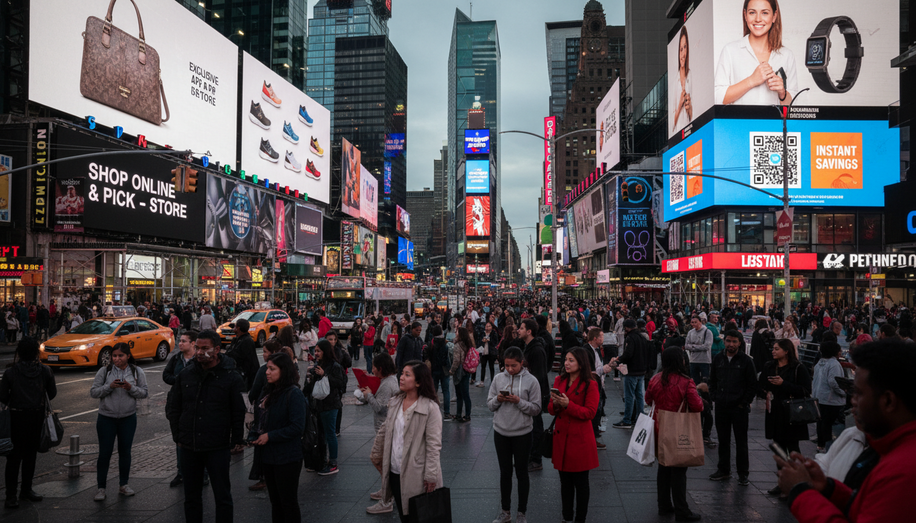
Retail media networks (RMNs) are reshaping out-of-home (OOH) advertising by bridging the gap between digital screens in public spaces and in-store shopper experiences. Retail giants like Walmart are at the forefront, leveraging vast customer data to create seamless campaigns that drive consumers from billboards and street furniture straight into stores. Walmart Connect, for instance, integrates off-site OOH with in-store digital signage and connected TV (CTV), allowing advertisers to target shoppers based on purchase history and measure real-world impact. This convergence turns passive OOH impressions into active foot traffic generators, with closed-loop attribution proving sales lifts that traditional advertising struggles to quantify.
The power lies in RMNs’ ability to monetize retailer-owned assets—both physical and digital—across onsite, in-store, and off-platform channels. Onsite includes sponsored search and video on retailer websites and apps, while in-store deploys digital screens, kiosks, and even radio to engage high-intent shoppers at the point of decision. Off-platform extends to DOOH on retail centers, billboards, and street furniture, plus online display, social, and CTV. Retailers like Kroger use digital shelf screens, and 7-Eleven activates checkout displays, creating an omnipresent ecosystem where a brand can retarget the same shopper from a programmatic DOOH billboard to an in-store kiosk.
Walmart exemplifies this integration through its Walmart Connect platform, which has evolved from performance-based ads to full-funnel solutions. Reaching 150 million weekly customers via stores, apps, and same-day delivery to 95% of U.S. households, Walmart pairs OOH-like CTV reach—bolstered by its Vizio acquisition—with in-store media. The Vizio deal, now a year old, drove over 50% growth in Walmart’s global ad business last quarter, attracting non-endemic advertisers in automotive and finance. Advertisers can now target Walmart shoppers on Vizio home screens using shopping data, then track sales lift across in-app, off-site, and physical stores. Bundles combining Vizio and Walmart app screens enable concurrent messaging, while upcoming Onn TV integrations could cover 25-30% of U.S. households.
Measurement is the linchpin, with RMNs offering closed-loop attribution that ties OOH exposures to purchases. Walmart provides incremental return on ad spend (iROAS) for search, display, video, and CTV, extending to partners like TikTok, Meta, and Disney. Consistent metrics across surfaces—whether in-store screens or external DOOH—give brands confidence in efficiency. A Catalina and GSTV study underscores this: a DOOH campaign at gas station pumps for a major ice cream brand yielded a 17% sales lift in nearby groceries, with $5.37 ROAS and 46% new buyers, verified via mobile location data. Programmatic DOOH platforms like Vistar Media further enable real-time buying, merging with retail data for precise targeting.
In-store retail media elevates beyond basic DOOH by prioritizing context. Walmart ensures bakery screens show food-relevant ads, not tools, fostering customer-first experiences while measuring brand and sales lift. This mirrors broader trends where RMNs integrate programmatic partners for flexible planning and buying of in-store campaigns alongside OOH. Digital OOH (DOOH) creates feedback loops: QR codes and NFC on screens drive immediate actions like offers or retargeting, boosting store visits by up to 127% when paired with mobile. AI enhances this, powering Walmart’s adtech for personalization and soon to be showcased at CES, while cross-channel attribution via mobile IDs links OOH impressions to in-store conversions.
Non-endemic brands are flocking to these networks for their scale. Walmart courts automotive and QSR advertisers with CTV and off-site options, while Home Depot does the same. Retailers act as both publishers and networks, blending online/offline for omnipresence: a Pampers ad on Walmart’s site retargets via DOOH, culminating in an in-store display purchase—all attributed back to the initial exposure.
Challenges persist, particularly in scaling U.S. in-store media, which has lagged due to hardware and adtech hurdles. Yet investments in contextual relevance and AI are accelerating adoption. Programmatic DOOH’s rise, with partnerships like Vistar and TikTok’s Out of Phone, adapts social content for outdoor screens, extending engagement.
For OOH advertisers, RMNs unlock high-intent moments near stores, amplifying retail media buys. DOOH acts as a path-to-purchase accelerator, surrounding shoppers en route. Integrated campaigns—OOH to in-store to digital—deliver cohesive messaging from awareness to conversion, with studies confirming superior reach and visitation.
As retail media surges, its OOH synergy positions brands for success. Walmart’s growth, Catalina’s proven ROAS, and programmatic integrations signal a future where retailers dictate the full customer journey, turning every screen into a sales driver. Advertisers ignoring this fusion risk missing the foot traffic and visibility goldmine.