
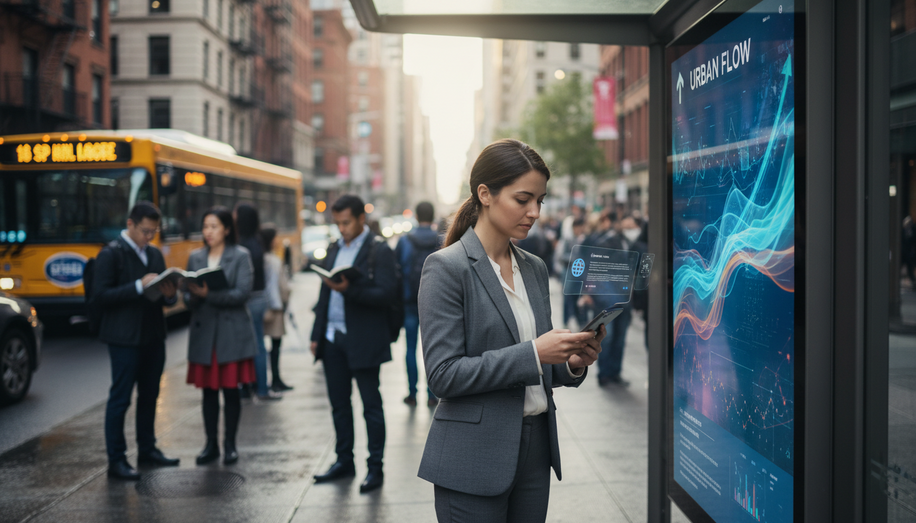

In the bustling heart of a modern city, a pedestrian pauses before a towering digital billboard, smartphone in hand. As they scan a QR code, augmented reality overlays transform the static ad into an interactive game, blending the physical streetscape with a digital adventure that prompts instant social sharing. This seamless fusion of outdoor advertising and digital realms is no longer futuristic—it’s the vanguard of interactive out-of-home (OOH) in 2026, bridging gaps between physical spaces and online ecosystems to forge unforgettable brand encounters.
Interactive OOH has evolved rapidly, propelled by digital out-of-home (DOOH) technologies that replace passive billboards with dynamic, responsive canvases. Touchscreens and motion-sensing displays at bus shelters or high-traffic plazas invite passersby to engage directly, whether swiping for product demos or triggering personalized messages based on time, weather, or demographics. Programmatic DOOH amplifies this by automating ad buys for precise targeting, ensuring content refreshes in real time to match audience flows in urban environments. Industry data underscores the impact: interactive formats boost dwell time by 20 to 40 percent, turning fleeting glances into prolonged interactions that deepen brand recall.
The true power lies in connectivity. Geo-fencing and Bluetooth beacons link OOH displays to mobile devices, retargeting users who interact with a screen moments later via app notifications or tailored social feeds. QR codes, once simple gateways, now unlock AR filters for selfies or exclusive offers, propelling user-generated content across platforms like Instagram and TikTok. This cross-channel synergy creates a feedback loop: a holographic 3D display at an airport doesn’t just captivate; it prompts immediate shares, extending reach exponentially while capturing data to refine future campaigns. Brands like IKEA have mastered this with weather-responsive bus shelter ads in Stockholm, addressing local unpredictability to drive relevance and loyalty through clever, shareable experiences.
Emerging technologies are accelerating the blur between physical and digital. Holographic and 3D anamorphic displays at premium spots like transit hubs create “stop-and-stare” moments, where illusions leap from screens into real space, enhanced by gesture controls or AR overlays viewed via phone cameras. Imagine a city square alive with lifelike holograms or building facades animated by AR storytelling—passersby become participants, their actions influencing the narrative in real time. Artificial intelligence takes it further, optimizing content dynamically: an ad might shift from a sunny promotion to rain gear during a downpour, using IoT sensors integrated into smart city infrastructure for hyper-local precision.
This integration extends to experiential guerrilla tactics, where pop-up installations or AR-powered projections surprise audiences, fostering organic virality. Motion-responsive walls in malls or digital corridors in urban hubs respond to crowds, gamifying encounters with contests that reward social posts. Sustainability adds another layer, with energy-efficient LED screens and solar-powered signage aligning interactive OOH with eco-conscious mandates, ensuring these immersive setups resonate ethically.
Yet challenges persist in scaling this bridge. Privacy concerns demand “helpful, not intrusive” approaches—dynamic, location-aware ads that enhance without overstepping, as 55 percent of audiences already perceive OOH as relevant. Data silos between physical assets and digital platforms must unify, treating billboards and place-based screens as a cohesive network powered by intention-based planning. Programmatic advancements and real-time analytics are closing this gap, enabling agencies to track conversions from street to screen with unprecedented accuracy.
Looking ahead, interactive OOH heralds a new era where physical spaces become extensions of digital universes. Metaverse tie-ins could link outdoor holograms to virtual worlds, while smart city data feeds make every display a node in a global operating system. For advertisers, the imperative is clear: invest in interactivity not as a gimmick, but as the core strategy for relevance. In 2026, the most successful campaigns won’t shout from afar—they’ll invite audiences to step inside, merging the tangible thrill of the street with the boundless potential of the digital, creating experiences that linger long after the walk away.
Yet, scaling this sophisticated integration and proving its return on investment remains a crucial challenge for advertisers. Blindspot offers the precise tools to unify physical and digital OOH, providing comprehensive programmatic DOOH campaign management alongside real-time performance tracking and robust ROI measurement. This enables brands to transform fleeting interactions into measurable conversions, ensuring their interactive OOH strategies are not just innovative, but demonstrably effective in the dynamic landscape of 2026 and beyond. https://seeblindspot.com/