
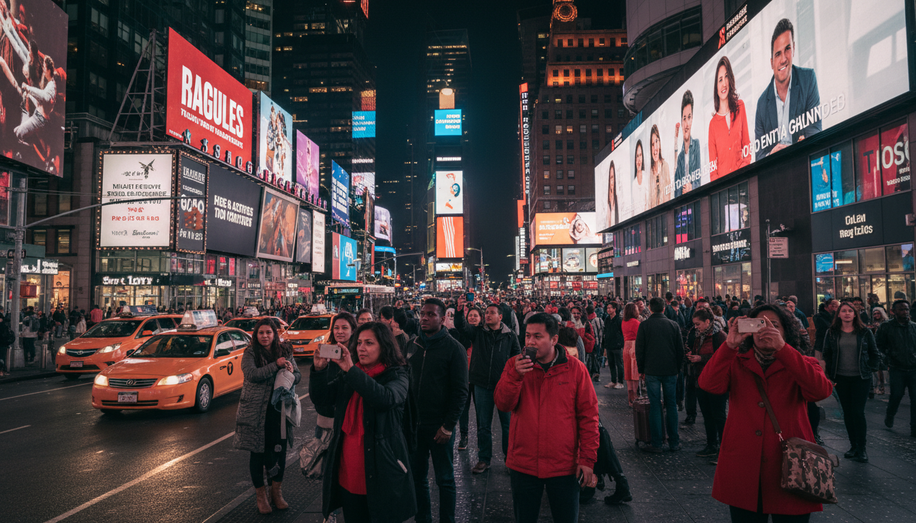

QR Codes Resurge in OOH: Bridging Billboards to Instant Engagement
Meta description: QR codes are revitalizing out-of-home advertising in 2025, driving consumer interaction through scannable links to discounts, AR experiences, and trackable campaigns that boost awareness by up to 200%.[140 chars]
The humble QR code, once dismissed as a pandemic relic, is staging a powerful comeback in out-of-home (OOH) advertising. Once scanned by billions during contactless ordering sprees, these matrix barcodes are now embedded in billboards, transit ads, and digital displays, transforming static visuals into dynamic portals for consumer engagement. In 2025, as outdoor advertising evolves with digital out-of-home (DOOH) and mobile integration, QR codes serve as the seamless bridge between physical spaces and digital worlds, enabling real-time actions like accessing discounts, AR try-ons, or social media shares.
This resurgence aligns with broader OOH trends emphasizing interactivity over passive viewing. Traditional billboards capture just 2-3 seconds of attention, but QR-enabled campaigns extend dwell time dramatically—up to 75 seconds or more when paired with augmented reality (AR). Marketers report QR codes excel in “in-the-moment marketing,” intercepting audiences at events (43% usage), in-store displays (40%), and print ads (40%), allowing users to capture URLs for later use at home. The technology’s low barrier—free to generate and instantly scannable via smartphones—makes it ideal for high-traffic zones like transit stops and malls, where engagement rates can exceed 30%.
At the heart of this revival is enhanced consumer engagement. QR codes make OOH actionable, addressing a core limitation of outdoor ads: the inability to drive immediate response. Statistics show combining OOH with QR codes can boost ad awareness by up to 200%, while providing trackable metrics on scans, conversions, and foot traffic lifts of 80-120% over mobile-only efforts. Integration with marketing tools is key—86% of marketers deem it critical, with 68% saying better connectivity would amplify QR value. Plans include fusing QR with AI (84% interest), AR/VR (57-61%), and connected packaging, creating layered experiences. For instance, dynamic DOOH screens trigger QR codes based on time, weather, or demographics, directing users to personalized content like hot coffee promotions on chilly mornings.
Successful campaigns illustrate this potential vividly. Aktion Baum’s 2025 DOOH series in Germany featured billboards with prominent QR codes urging viewers to donate, plant trees, or join reforestation programs. Clear calls-to-action (CTAs) drove scans to interactive platforms, blending environmental messaging with measurable impact. Beauty brands have leveraged QR-linked AR mirrors for virtual try-ons, achieving 25% CTA scan rates by letting users scan full-body models for clothing and accessories, complete with data-rich insights. Transit ads exemplify mobility: commuters scan codes for exclusive discounts or AR product demos, extending reach from street to screen. Another trendsetter: digital signage QR codes linking to WiFi, apps, or social media, capitalizing on touch-free preferences post-pandemic.
These integrations thrive amid 2025’s tech stack. With 5G enabling gigabyte-scale AR content—think detailed hair rendering in virtual environments—QR codes act as entry points without app downloads, using markerless tech that activates via GPS or visual recognition. Programmatic DOOH pairs QR with AI-driven targeting, optimizing placements via 1-meter geofencing and cross-channel attribution for 90%+ confidence in ROI. Sustainability bolsters appeal: solar-powered displays with QR codes minimize energy use (OOH is just 3.3% of ad power consumption), aligning with eco-conscious consumers.
Challenges persist, but solutions are advancing. Early QR fatigue stemmed from clunky scans, yet modern cameras and dynamic codes mitigate this, with participation dropping only 20% per extra step—now often eliminated. Visibility is paramount: campaigns succeed with large, contrasting codes and simple CTAs, as in Scanova’s guide emphasizing trackable, updatable OOH creatives. Viant highlights QR for “immediate engagement” via exclusive content, while Penneco predicts deeper ties to social media and AR.
Looking ahead, QR codes are no longer optional in OOH—they’re essential for relevance. As DOOH grows at 10.7% CAGR through 2030, blending with NFC and experiential installs, these codes ensure brands connect meaningfully. From boosting foot traffic to fostering loyalty, QR-driven campaigns prove OOH’s evolution: not just seen, but scanned, shared, and converted. Advertisers ignoring this risk fading into the background noise of a hyper-connected world.