
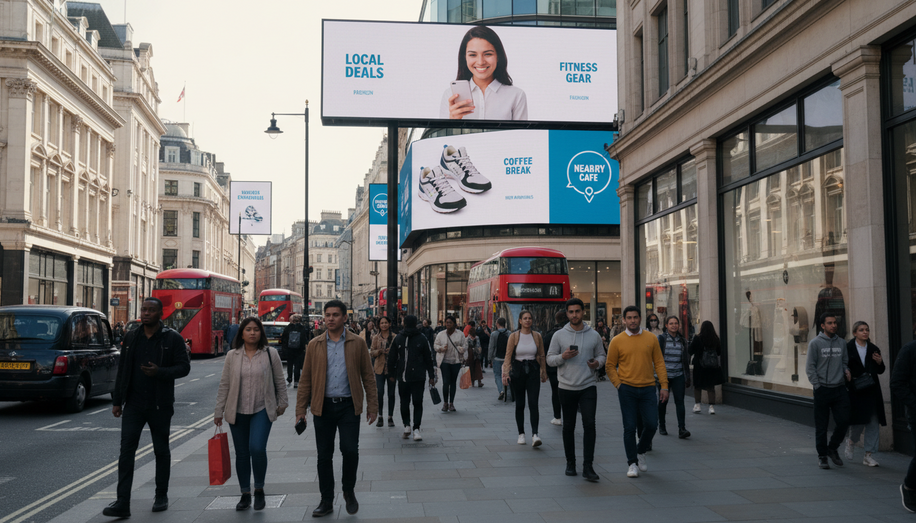

Hyperlocal Targeting: How Geolocation Is Rewiring OOH Campaigns
Hyperlocal targeting is turning static OOH inventory into a dynamic, data‑driven channel, as brands use geolocation to align messages with the exact streets, moments and audiences that matter most.
For decades, out‑of‑home’s strength was reach. Now, its edge is increasingly *relevance*. Hyperlocal targeting – using precise location data to plan, activate and measure campaigns at the level of blocks, venues or even store catchments – is reshaping how media owners and brands think about every panel in the network.
At its core, hyperlocal targeting moves OOH beyond city, DMA or ZIP‑code buys into much tighter geographic definitions: a few hundred meters around a transit hub, a cluster of blocks in a nightlife district, or a ring of streets feeding a specific retailer. Behind that shift is a stack of geolocation technologies—GPS, Wi‑Fi, mobile app SDKs, IP data and, in some cases, beacons—that can pinpoint devices in real time and aggregate those observations into anonymized audience profiles.
For OOH, the real power is less about serving ads to individual phones and more about using this same data to understand *who* passes a location, *when*, and *why*. Mobility patterns reveal commuter corridors versus leisure zones, lunchtime versus late‑night hotspots, and the real‑world overlap between brand customers and specific screens. That insight feeds smarter placement, creative strategy and measurement.
Geofencing has become a foundational tool in this process. By drawing virtual perimeters around places—stores, competitors, stadiums, campuses, festivals—planners can see how many devices enter these zones, how long they dwell, and which other locations they visit before and after. When mapped against an OOH network, that data highlights which panels sit on the natural “path to purchase” and which are better suited for awareness, conquesting or brand loyalty plays.
Beacons and proximity tech add an even tighter lens in select environments. Bluetooth beacons or Wi‑Fi‑based systems can ping opted‑in devices within a short range, enabling real‑time engagement and granular footfall analysis inside malls, transit hubs or event venues. While consumer privacy frameworks now limit how aggressively these tools can be used, they still support a richer understanding of how audiences move through OOH environments when deployed transparently and compliantly.
For brands, the immediate benefit of hyperlocal OOH is sharper targeting without sacrificing scale. Retailers can weight spend toward panels within walking distance of priority stores, then tailor creatives to local context—referencing neighborhood landmarks, local teams or even weather triggers to drive immediacy. QSR chains can rotate lunch and dinner messages based on daypart and proximity, while entertainment brands can focus on districts that over‑index for culturally active audiences.
Event‑based campaigns are another fast‑growing use case. By geofencing stadiums, arenas, festivals or convention centers, marketers can identify high‑value audience clusters and surrounding OOH that will deliver maximum impact on event days. Panels along key ingress and egress routes become premium canvases for time‑sensitive messaging—sponsors pushing last‑minute ticket upgrades, ride‑share brands managing post‑event demand, or beverage brands aiming to own the walk to the venue.
Hyperlocal targeting is also helping reconcile OOH with performance marketing expectations. When advertisers geofence both the OOH locations and desired conversion zones—stores, dealerships, pop‑ups—they can compare device movement patterns between exposed and control areas, building credible attribution models for foot traffic uplift. While it is not a perfect one‑to‑one analogue to digital click‑throughs, it brings OOH firmly into the same measurement conversation.
All of this hinges on data quality and privacy. Location data must be accurate enough to distinguish one side of the street from another, but also aggregated and anonymized so no individual is identifiable. Reputable providers filter out low‑precision signals, apply strict consent standards and comply with regional regulations, from GDPR to CCPA. For OOH stakeholders, due diligence on data partners is no longer optional; it is fundamental to maintaining trust with both brands and consumers.
The creative implications are significant. As dynamic and programmatic OOH capabilities expand, geolocation signals are increasingly used as triggers. A campaign can switch to language‑specific creatives in neighborhoods with high concentrations of certain language speakers, or push exclusive offers only within a tightly defined radius of a new store. Contextual relevance—what is happening *here* and *now*—becomes the main creative brief.
For media owners, hyperlocal capabilities are changing how inventory is packaged and sold. Networks that can surface granular audience insights around each location—and plug seamlessly into programmatic buying platforms—are better positioned to capture spend from brands used to digital’s precision. Panels once sold on sheer circulation can now be framed around the specific behavioral and demographic patterns they reach, priced accordingly, and bundled into “neighborhood graphs” that tell richer stories.
The opportunity is clear: by marrying geolocation data with the physical power of OOH, the industry can deliver campaigns that feel less like broadcast wallpaper and more like relevant, place‑aware communications. Hyperlocal targeting does not replace the big brand moment; it sharpens it—ensuring that message, moment and map finally line up on the street.