
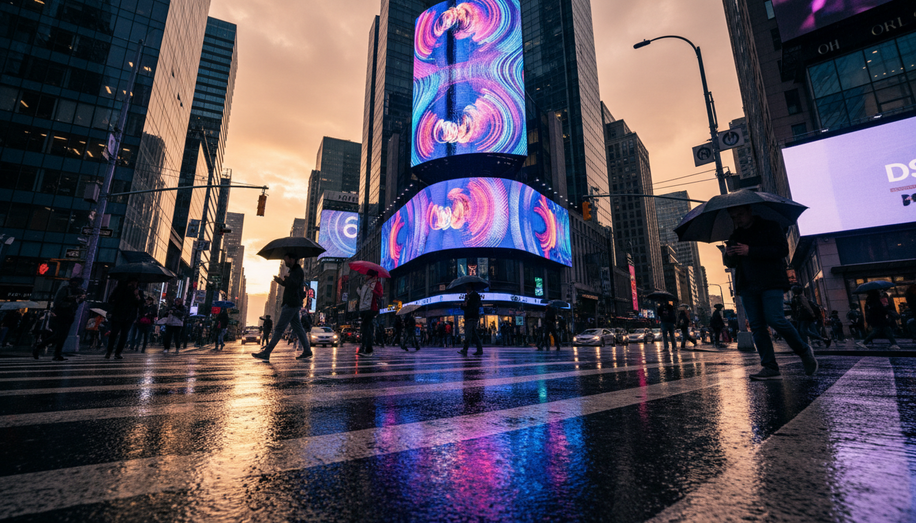

In the bustling streets of urban centers, where towering billboards and transit ads capture fleeting glances, a new layer of marketing precision is emerging: hyper-local activation through geofencing. This technology draws virtual boundaries around out-of-home (OOH) advertising sites, triggering seamless mobile engagements that transform passive exposure into active interaction, bridging the physical and digital realms with unprecedented accuracy.
Geofencing operates by leveraging GPS, Wi-Fi, and cellular data from smartphones to monitor user locations in real time. Advertisers map these virtual perimeters—ranging from a single storefront to an entire neighborhood—using latitude and longitude coordinates. When a device crosses into the zone near an OOH asset, such as a digital billboard or bus shelter, it activates predefined actions: a push notification, targeted mobile ad, or immersive app experience. This creates a closed-loop system where the OOH ad serves as the spark, igniting digital follow-through that feels intuitive and immediate.
Consider a commuter passing a vibrant billboard promoting a new coffee chain. As their phone detects proximity to the ad, a geofenced notification pings: “Saw our billboard? Get 20% off your latte at the location 0.2 miles ahead.” This proximity-based prompt capitalizes on the moment of awareness, driving foot traffic with relevance that static OOH alone cannot achieve. Research underscores the potency: consumers are 71% more likely to purchase with location-relevant offers, and geofence retargeting delivers click-through rates up to 10 times higher than standard display ads.
The synergy extends beyond simple discounts. Brands like car dealerships have geofenced billboards to retarget passersby with detailed mobile ads featuring the same vehicle model, complete with virtual tours or test-drive bookings. Exposure to the OOH creative primes the audience—studies show consumers are 48% more likely to click mobile ads after seeing them on out-of-home first—while geofencing tracks the journey to attribution. For restaurants, a transit shelter ad might trigger an app-based AR filter letting users “try on” menu items, blending entertainment with conversion.
This hyper-local loop yields measurable gains across key metrics. Engagement rates soar as users interact with real-time content, from swiping coupons to sharing social proof. Conversion tracking reveals how OOH impressions correlate with store visits, with foot traffic attribution quantifying uplift—essential for proving ROI in an omnichannel world. Nearly 90% of marketers report boosted sales and deeper audience insights from location-based tactics, with geofencing-compatible smartphones covering 92% of the market. In a landscape where people check their phones 58 times daily and expect personalization, this approach meets consumers where they are, literally.
Implementation demands strategic finesse. Advertisers segment audiences by demographics and behaviors, crafting mobile content that’s one-tap simple: QR-code linked coupons, store locators, or gamified challenges. Real-time monitoring allows tweaks—refining geofence radius if engagement dips or expanding to competitors’ zones for conquesting. Privacy considerations are paramount; opt-in via apps ensures compliance, turning data into a trust-building asset rather than a liability.
Real-world campaigns illuminate the potential. EMC Outdoor paired geofencing with transit ads, prompting app interactions that spiked immediate engagement. OUTFRONT Media’s network geofences dealership vicinities post-billboard exposure, blending OOH branding with mobile connectivity for amplified reach—one plus one equaling three in impact. Retailers geofence malls around promotional billboards, retargeting with personalized offers that lift visits by double-digit percentages.
Yet challenges persist. Battery drain from constant location tracking can deter users, and urban signal interference demands robust tech stacks. Signal loss in dense areas underscores the need for hybrid triggers like Wi-Fi triangulation. Still, as 82% of consumers engage with location-based ads, the tide favors adoption.
Hyper-local activation redefines OOH as a dynamic catalyst, not a standalone shout. By geofencing audiences, brands forge a marketing loop where physical visibility fuels digital action, turning every glance into a potential transaction. In an era of fragmented attention, this seamless fusion doesn’t just engage—it converts, proving that the most powerful ads are those that follow you home.