

How OOH Advertising Can Turn Passing Glances into Store Visits
Meta description: Digital OOH is no longer just an awareness play. With data, proximity and smart creative, it’s becoming a powerful engine for in-store retail traffic.
Out-of-home was once treated as a broad-brush branding channel. In retail, it is fast becoming something very different: a hard-working, data-enhanced driver of store visits, basket size and incremental sales.
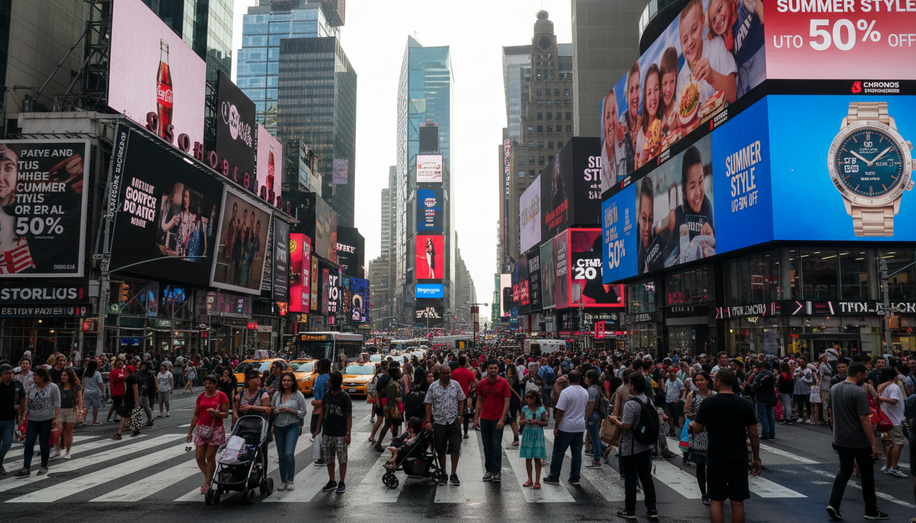
As digital OOH screens proliferate in high-traffic urban corridors, transit hubs and mall environments, retailers are learning how to connect those fleeting exposures to very real footfall. Research from Talon Outdoor shows 59% of shoppers are likely to buy within 30 minutes of seeing an OOH ad, underlining the medium’s “last-mile” power near points of purchase. In parallel, a global study cited by Broadsign found 56% of shoppers purchased an item featured in a DOOH display, with 65% of those buys unplanned. For brick-and-mortar operators, that is not just awareness; it is shelf-level influence.
The real shift lies in how DOOH is now engineered into omnichannel retail plans. OOH still builds reach among consumers during commutes, errands and social activities, but screens are increasingly bought with proximity and intent in mind. Location and audience data allow brands to put messages on panels within a short walk or drive of specific stores, timed to peak shopping windows and real-world triggers such as lunch breaks, school pick-up or paydays. For price-sensitive shoppers, those messages often highlight limited-time in-store promotions or exclusive offers, tapping into the 62% of purchases that are driven by impulse in physical retail.
That interplay between context and creative is critical. The most effective DOOH for retail places store information and calls-to-action front and center: distance-to-store countdowns, maps, or “turn left in 300 meters” cues, often paired with current deals or real-time stock indicators. In long-dwell environments such as transit hubs, advertisers can go further, building out richer narratives, QR-powered lookbooks or dynamic content that changes by time of day. Once shoppers are inside, OOH doesn’t disappear; research from OAAA and Morning Consult indicates that 75% of consumers continue to notice OOH ads in-store, extending the same message from sidewalk to shelf.
The strongest results emerge when DOOH is fused with mobile and other digital signals. Screenverse cites data showing that using DOOH and mobile ads together drives 69% more store traffic than DOOH alone, as exposed consumers receive reinforcing messages and directions on their phones. After an initial impression on a large format, many shoppers turn to search: 65% of consumers search online after seeing an OOH ad and 40% visit a website or search a brand within minutes of exposure, according to OOH statistics aggregated by MarketingLTB. For retailers, synchronising search, social and app creative with DOOH flights closes the loop, ensuring that curious passersby can immediately locate the nearest outlet, check inventory or redeem an offer.
What once held OOH back from serious performance budgets was measurement. That barrier is rapidly eroding. Mobile location data and probabilistic modeling now allow media owners and measurement firms to track “exposed” devices and compare store visitation rates against carefully matched control groups. Attribution providers such as ABCS describe tying OOH exposure not only to footfall but to time-stamped point-of-sale receipts, allowing them to isolate incremental sales driven by specific placements, creatives or flight dates. Their research indicates that 68% of consumers report purchasing after seeing a billboard, especially where a clear digital call to action is present.
For marketers, that kind of transparency is shifting OOH from a nice-to-have to a performance lever. Clear Channel Outdoor’s automotive case study found that dealerships running OOH campaigns saw an 83% increase in visits versus control, with 36% of exposed consumers visiting a dealership within one week. While that study sits in the auto vertical, the underlying mechanics—location-optimized inventory, mobile data attribution and creative tuned to immediate action—translate cleanly to retail categories ranging from grocery to fashion.
Retailers have taken note. Precedence Research reports that retail is the single largest vertical in the digital out-of-home market, accounting for roughly 30% of DOOH spend in 2024. Analysts credit that dominance to the format’s ability to update content in real time, personalize by demographic or neighborhood profile, and align messages with local shopping patterns and peak hours, all of which increase engagement and drive store visits.
Seasonality adds another layer of opportunity. During high-intent periods such as back-to-school or holidays, DOOH gives retailers a way to intercept shoppers in motion with time-sensitive messaging—“2 hours left in today’s doorbusters” or “Tonight only, 30% off in-store.” These campaigns can be pulsed by daypart, weather or inventory levels, turning digital screens into extensions of the merchandising and pricing strategies happening inside the store.
The emerging playbook is clear. Successful brick-and-mortar brands are treating OOH as an addressable, measurable bridge between the digital and physical worlds. They lean on data to decide where and when to speak, on creative discipline to make that speech unmistakably actionable, and on attribution tools to prove that glances on the street translate into footsteps in the aisle. In an era when 82% of purchases still happen in-store, the retailers that master that bridge are likely to own not just attention, but conversion.