
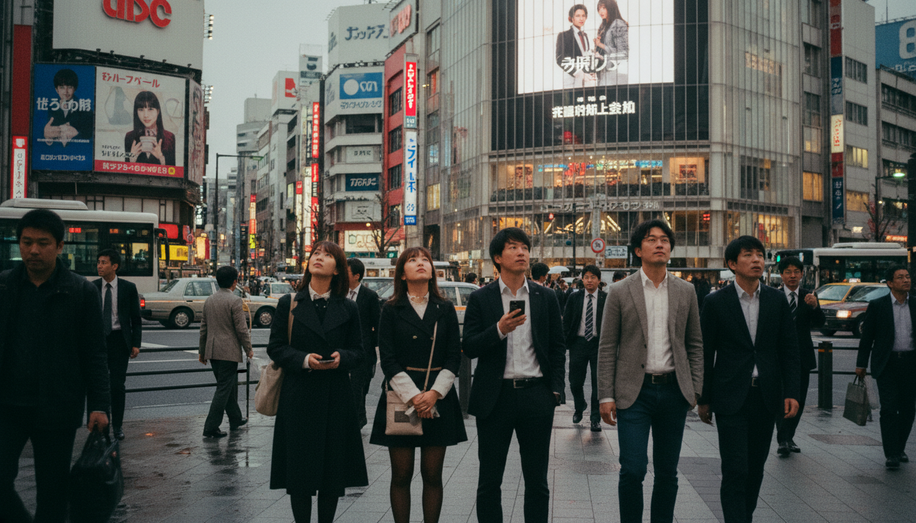

Harnessing Augmented Reality for Immersive OOH Experiences
Augmented reality is revolutionizing out-of-home advertising by turning static billboards into interactive portals, boosting engagement through campaigns like Verizon’s murals and Burger King’s viral stunts. (148 chars)
Out-of-home (OOH) advertising has long relied on bold visuals to capture fleeting attention in public spaces, but augmented reality (AR) is rewriting the rules. By overlaying digital elements onto the physical world via smartphones, AR transforms passive billboards and murals into dynamic, participatory experiences. Passersby no longer just glance—they scan, interact, and share, forging deeper connections with brands. This fusion of OOH’s massive reach and AR’s interactivity promises unprecedented consumer engagement, as evidenced by a slew of innovative campaigns.
Verizon’s 2024 AR Mural Storefronts in Miami stand as a pinnacle of this evolution. Partnering with BrandXR during Art Basel, the telecom giant unveiled three murals in Midtown Miami, Coconut Grove, and Hialeah. Each artwork, when scanned via Snapchat’s WebAR, burst into life: Midtown’s skyscrapers flickered with lights and traffic, symbolizing Verizon’s connective power; Coconut Grove’s greenery merged with neon circuits, blending nature and tech; Hialeah’s cultural portraits evolved into 3D futurism, celebrating community ties. The campaign lit up social media with user-generated content, amplifying Verizon’s presence amid Art Basel’s global spotlight and proving AR’s knack for turning public art into viral brand moments.
Similarly, Electrifly Detroit turned metro streets into an AR treasure hunt with 15 murals unlocked via a dedicated app. Collaborations between artists and developers layered animations, audio narratives, and 360-degree 3D explorations onto static paintings. Residents crisscrossed neighborhoods to hunt experiences, spiking foot traffic for local businesses and elevating Detroit’s creative profile. This community-driven activation showcased AR’s power to gamify urban spaces, fostering exploration and sustained buzz.
Burger King’s “Burn That Ad” campaign in Brazil took a cheekier tack, hijacking rival billboards with AR mischief. Users pointed the BK app at competitors’ posters to virtually torch them, revealing Whopper coupons in the ashes. The stunt drove 1 million app downloads in a month and a 56.4% sales surge, crowning it the brand’s most-downloaded app worldwide. By weaponizing humor and rivalry, Burger King demonstrated AR’s disruptive edge in OOH, converting competitors’ inventory into promotional gold.
Financial services got in on the act with Ally Bank’s Monopoly-themed treasure hunt across six U.S. cities. Thirty-six physical game-board squares, scanned with WebAR, summoned Mr. Monopoly to dispense points and cash prizes. The campaign notched 100,000 plays, with 86% of participants completing the board— a testament to AR’s gamification pulling users through entire experiences. Meanwhile, Jackson Family Wines’ Siduri campaign used in-store billboards and bottles for holographic WebAR chats with founder Adam Lee, blending retail OOH with personal storytelling via Microsoft Mixed Reality tech.
Vodafone’s AR billboards further illustrate scalability, deploying interactive portals nationwide that surprise with 3D graphics, mini-games, and tech demos. Real-time analytics track scans, dwell time, and interactions, while calls-to-action unlock coupons to drive store visits. A mobile telecom’s Chicago street furniture campaign, measured via media partners, lifted in-store visits by 86%, peaking on weekends—quantifiable proof of AR-OOH synergy.
These cases highlight AR’s core strengths: active participation over passive viewing, storytelling that resonates emotionally, and data-driven optimization. Platforms like BrandXR make deployment accessible, allowing updates for longevity and broad scalability. Gamified elements, such as NHS’s blood donation sim or car customization at bus stops, create instant feedback loops, embedding brands in users’ moments and spurring purchases.
Yet, success hinges on context. High-dwell zones like malls, train stations, or vibrant strips—think Orchard Road or Chinatown—maximize interaction time. AR also bridges OOH with mobile, as OUTFRONT Media’s nationwide activations show, awakening static and digital media alike.
Looking ahead, AR-OOH sets a new benchmark. It merges offline scale with personalized digital layers, turning cities into canvases of immersion. Brands that harness this—through murals, hijacks, or hunts—don’t just advertise; they invite consumers into the story, yielding higher recall, ROI, and loyalty. As urban spaces digitize, the potential is boundless: every billboard a gateway, every scan a connection.
(Word count: 712)