
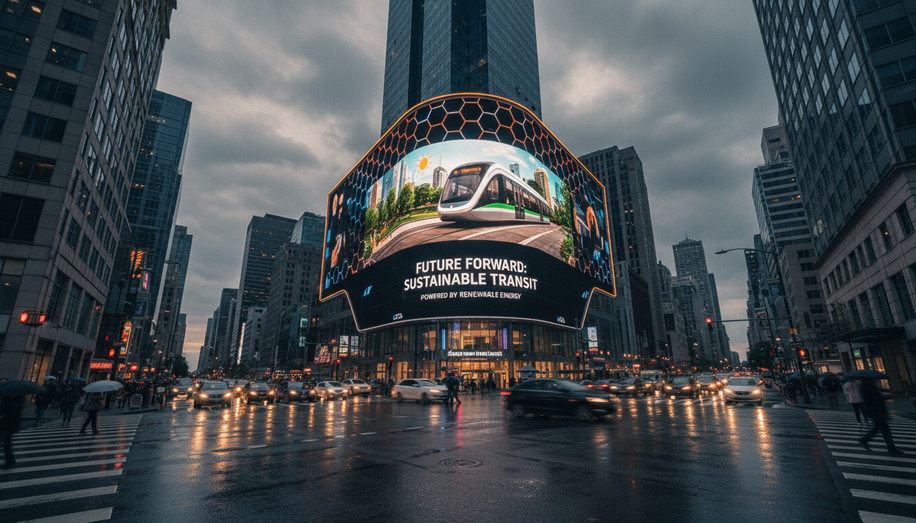

In the bustling urban landscapes where advertisements vie for attention, the out-of-home (OOH) industry is undergoing a profound transformation toward sustainability. Once criticized for its environmental toll, OOH is now pioneering eco-friendly practices that power digital billboards with renewable energy, craft static displays from sustainable materials, and slash carbon footprints across operations. This shift not only aligns with global climate goals but also positions brands as responsible stewards in an era of heightened environmental awareness.
Renewable energy sources are revolutionizing the powering of digital billboards, making them viable even in remote or high-traffic locations. Solar-powered lighting and advanced LED technologies are at the forefront, dramatically cutting reliance on fossil fuels. Companies like Outdoorlink have deployed smart controllers and monitoring systems that optimize energy use by adjusting lighting schedules based on darkness and location, yielding measurable cost savings and improved uptime. In parking garages and other enclosed spaces, firms such as A Lot Media leverage energy-efficient LED displays that consume far less power than traditional setups, reducing emissions while delivering vibrant visuals. These innovations extend to broader digital out-of-home (DOOH) networks, where LED tubes are replacing older lighting, as seen in initiatives by major players like JCDecaux, ensuring high-quality displays with lower electricity demands. The result is a resilient infrastructure that future-proofs assets against rising energy prices and regulatory pressures.
For static advertising, the move away from conventional materials marks a tangible leap in sustainability. Traditional vinyl billboards, often made from non-biodegradable PVC, generate significant waste through production, transportation, and frequent replacements, contributing to landfill overload and energy-intensive manufacturing. Industry leaders are countering this with recyclable alternatives like recycled aluminum, responsibly sourced wood, fabric, reclaimed materials, and even biodegradable paper posters. Circle Graphics’ Eco-Flexx 3.0, for instance, offers 100% recyclable billboards with 60% less carbon footprint than standard PVC, enhanced by special coatings that purify air pollutants. Eco-friendly inks, such as water- or soy-based varieties, further minimize toxic chemical use in printing. Real-world examples abound: McDonald’s in Sweden transformed billboards into bee habitats in 2019, integrating advertising with biodiversity, while Coca-Cola in the Philippines crafted displays from recycled PET bottles, promoting recycling and slashing plastic waste. These materials not only reduce print waste—eliminated entirely in DOOH—but also signal brand commitment to environmental responsibility.
Carbon footprint reduction strategies permeate the entire OOH ecosystem, leveraging OOH’s inherent efficiencies over other media. Remarkably, OOH emits just 0.25 grams of CO₂e per impression in the UK, outperforming digital ads (1.00–1.08 grams), radio (0.83–1.09 grams), and TV (1.99–2.62 grams). Globally, billboards prove 188% more efficient than programmatic display, 246% more than programmatic video, and 336% more than connected TV video, thanks to low power consumption, long asset lifespans, and the ability to deliver thousands of impressions simultaneously without proportional energy spikes. Programmatic DOOH amplifies this by targeting audiences precisely, avoiding wasteful ad delivery and physical printing or shipping. Transit advertising and digital alternatives further lessen impacts by utilizing existing infrastructure and curbing paper use.
OOH operators wield unique control over their supply chains, enabling direct interventions like waste monitoring, recycling of paper and plastic, and data-driven efficiency tools. Cloud-based analytics and automated systems track consumption, paving the way for ambitious targets: zero waste, full energy transparency, and 100% recyclable resources. In the UK, OOH accounts for only 3.3% of total ad power use, underscoring its lean profile. These practices yield business benefits too—enhanced reputations among eco-conscious consumers, government incentives, and competitive edges in a greening market.
As the industry evolves, sustainability is transitioning from niche to norm. Brands adopting these “green screens” not only mitigate climate risks but also forge deeper consumer trust. With innovations like multi-use habitats and recycled constructs setting precedents, OOH is redefining itself as a low-impact powerhouse. Forward-thinking networks are investing in professional planning to scale these changes, ensuring enduring viability. In an advertising world under scrutiny, the message is clear: eco-friendly OOH isn’t just viable—it’s the illuminated path ahead.