

From Highways to High Rises: The Growth of Urban Transit Advertising
Meta description: Urban transit advertising is surging as brands discover the power of mobile, high-frequency messaging on buses, subways, and trams in congested cities.
The billboard may have dominated the outdoor advertising landscape for decades, but a quieter revolution is unfolding on city streets. Transit advertising—once considered a supporting player in the broader out-of-home ecosystem—is now emerging as one of the fastest-growing segments of the advertising industry, driven by urbanization, digital innovation, and a fundamental shift in how brands reach fragmented audiences.
The numbers tell a compelling story. The transit advertising market stood at approximately $12.90 billion in 2024 and is forecasted to reach $19.17 billion by 2033, growing at a compound annual growth rate of 5 percent. More dramatically, transit advertising led all out-of-home categories with a 10.6 percent increase in 2024, outpacing traditional billboards and street furniture. This acceleration reflects a broader recognition among marketers that public transportation offers unparalleled access to diverse, captive audiences in high-density urban environments.
The catalyst for this growth is straightforward: cities are becoming more congested, and commuters are spending more time on buses, subways, and trams. With over 55 percent of the global population now residing in urban areas, public transportation ridership continues climbing. For advertisers, this concentration represents an extraordinary opportunity. A single bus traveling fixed routes through marketplaces, residential neighborhoods, and business districts can deliver thousands of daily impressions at a fraction of the cost of static billboards or digital screens.
What distinguishes transit advertising in 2026 is not merely scale but sophistication. The rise of digital out-of-home technology has transformed how brands engage commuters. Electronic billboards and interactive displays in transit stations enable real-time message customization, allowing advertisers to adjust campaigns based on time of day, weather, or current events. This technological evolution represents a fundamental shift from passive observation to dynamic engagement, creating opportunities for brands to deliver increasingly relevant messaging to specific audience segments.
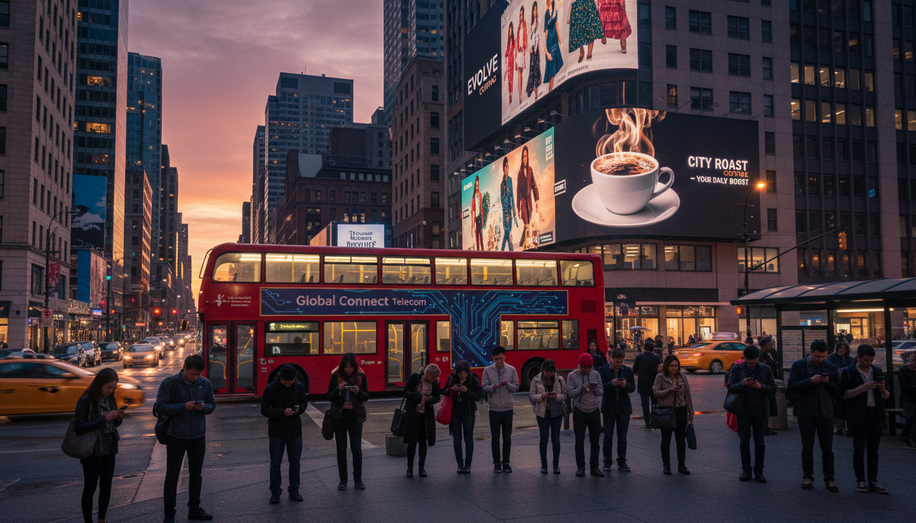
Bus advertising exemplifies this trend. Full-body LED-lit wraps, QR code integrations, and minimalist designs optimized for roadside viewing have transformed buses into moving billboards capable of capturing consumer attention even amid urban visual clutter. The repetition inherent in fixed transit routes builds brand recall in ways that compete with digital platforms, which increasingly suffer from algorithm fatigue and banner blindness. For consumer packaged goods, retail, healthcare, and education sectors, this repetition-based strategy has proven particularly effective.
The creative possibilities are expanding as well. Augmented reality and virtual reality experiences are beginning to materialize in transit environments, offering brands opportunities to create immersive advertising experiences that transcend traditional formats. These innovations signal a maturation of the transit advertising category, moving beyond simple brand awareness to genuine consumer engagement.
Yet challenges persist. Regulatory fragmentation across municipalities creates compliance burdens for national campaigns, as different cities impose varying restrictions on transit advertising. The ongoing remote work trend continues to suppress commuting volumes in some markets, creating unpredictability for advertisers planning campaigns. Competition from digital and social media platforms, which offer measurable performance metrics and sophisticated targeting capabilities, remains formidable.
Despite these headwinds, the trajectory is clear. As cities worldwide invest in public transportation infrastructure to address congestion and environmental concerns, the platforms available for transit advertising will only expand. Brands that master the creative and strategic nuances of mobile advertising—combining the reach of highways with the targeting precision of high-rise digital networks—will find themselves well-positioned in an increasingly urban world.
The future of out-of-home advertising is not stationary. It moves through the city on wheels.