
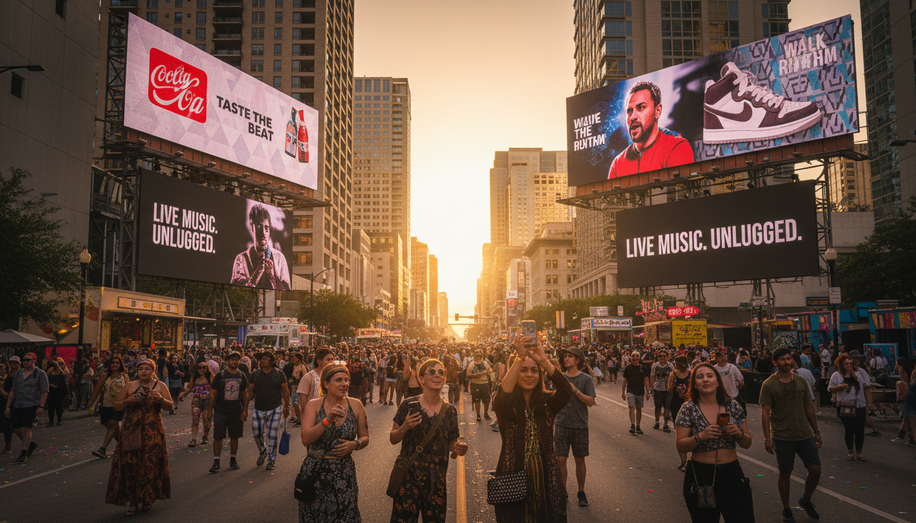

Elevating Events: How OOH Advertising Transforms Brand Presence into Unforgettable Experiences
Out-of-home advertising at major events and festivals boosts brand visibility through interactive, immersive installations that drive engagement, social sharing, and lasting recall—turning passive spectators into active participants.
In the high-energy world of major events and festivals, where crowds surge and attention spans flicker, out-of-home (OOH) advertising has emerged as a powerhouse for brands seeking to forge deep connections. Far beyond static billboards, modern OOH leverages digital screens, interactive installations, and real-time triggers to create immersive experiences that amplify brand presence and captivate audiences. At venues like stadiums, music festivals, and urban festivals, these activations don’t just advertise—they transform environments, blending advertising seamlessly into the event’s pulse.
Consider the electric atmosphere of a packed stadium like SoFi Stadium, where Samsung’s Infinity Display reigns as the largest digital sports signage in outdoor media. This colossal setup doesn’t merely showcase Samsung products; it immerses fans in a visual spectacle that promotes the brand while offering ad space to partners. Eyes glued to the action, attendees encounter unavoidable, high-impact messaging that ties directly into the live excitement, proving OOH’s prowess in high-traffic event zones. Brands replicating this at festivals can generate similar buzz, as the continuous visibility drives online activity and memorable impressions.
Interactive elements take this further, turning viewers into participants. Coca-Cola’s 2016 “Taste the Feeling” campaign at Singapore bus shelters—adaptable to festival transit hubs—let passersby pose for photos with Coke filters, generating GIFs and unlocking QR code vouchers for free drinks. The result? Surging social media engagement and high redemption rates, as users shared their fun, extending the brand’s reach organically. At events, such touchpoints via motion sensors, AR filters, or QR codes encourage real-time interaction, making the brand a festival highlight rather than background noise.
Large-scale events demand bold creativity, and 3D installations deliver. Nike’s Air Max campaign in Tokyo featured a digital billboard with a shoebox that periodically opened to reveal new designs, building suspense amid throngs of onlookers. The viral effect turned a local activation into a global phenomenon, with crowds snapping photos and sharing online—perfect for festivals where shareability amplifies exposure. Similarly, a Star Trek-themed 3D billboard in Times Square docked the Enterprise, drawing Trekkies for a social-ready event that boosted awareness by 7%, consideration by 25%, and tune-in intent by 25%. These guerrilla-style OOH tactics disrupt festival pathways, integrating into surroundings while sparking surprise and conversation.
Real-time adaptability elevates OOH at dynamic events. New Balance celebrated Dutch athlete Femke Bol’s Budapest victory with DOOH screens that shifted from motivational pre-race messaging to triumphant post-win creatives, fostering national pride and timeliness. Aperol Spritz activated ads only above 66°F near social hubs, linking the drink to ideal summer festival vibes and maximizing relevance. Weather-triggered, data-driven displays like these—paired with programmatic targeting—ensure ads hit audiences when they’re most receptive, whether craving a cold beverage mid-festival or hyped for a sports showdown.
Stadiums and festivals also benefit from place-based precision. At SoFi, Samsung’s display capitalizes on captive audiences; Jack in the Box used proximity targeting within 2 miles of locations, blending static and video OOH to lure 1.3 million customers with sizzling burger visuals at event-adjacent venues. Church’s Texas Chicken generated 19.6 million impressions and 2.4 million store visits via location-based targeting and mobile retargeting, achieving a 12.2% conversion rate—ideal for food brands at music festivals or tailgates. Mad Mex drove a 9% sales lift by timing ads to sales data, tailoring messages to taste, health, or value at peak hunger moments.
McDonald’s exemplifies event-tied innovation with “walk-thru” billboards in London, doubling as food trucks for instant McFlurry purchases during social distancing—easily scaled to festival queues. Bumble’s empathetic digital billboards during 2020’s isolation tied into shared experiences with humor, making the brand relatable amid event-like gatherings. Apple’s “Shot on iPhone” billboards, featuring user-submitted photos, invite global participation, mirroring festival photo booths that evolve OOH into community-driven storytelling.
These examples underscore OOH’s strengths at events: broader reach in high-traffic zones, strong visual impact from large formats, and interactivity via digital tools like AR and sensors. Shareability turns installations into user-generated content, while metrics like foot traffic lifts and awareness gains prove ROI. For festivals, mobile billboards, wallscapes, and street furniture extend reach beyond main stages.
Challenges remain—crowd flow, weather, and integration—but programmatic DOOH mitigates them with agile, triggered content. As 2025’s campaigns highlight, from Broadsign’s favorites to Superside’s inspirations, OOH at events builds cultural impact. Brands investing here don’t just advertise; they co-create the event narrative, leaving audiences with experiences that linger long after the final applause.
Achieving this level of sophisticated, data-driven OOH integration, especially across diverse event environments, requires robust management and optimization tools. Blindspot offers an advanced platform that helps companies precisely manage and maximize their out-of-home advertising campaigns with data-driven insights, ensuring brands can consistently deliver impactful, unforgettable event experiences. Explore their solutions at https://seeblindspot.com/