
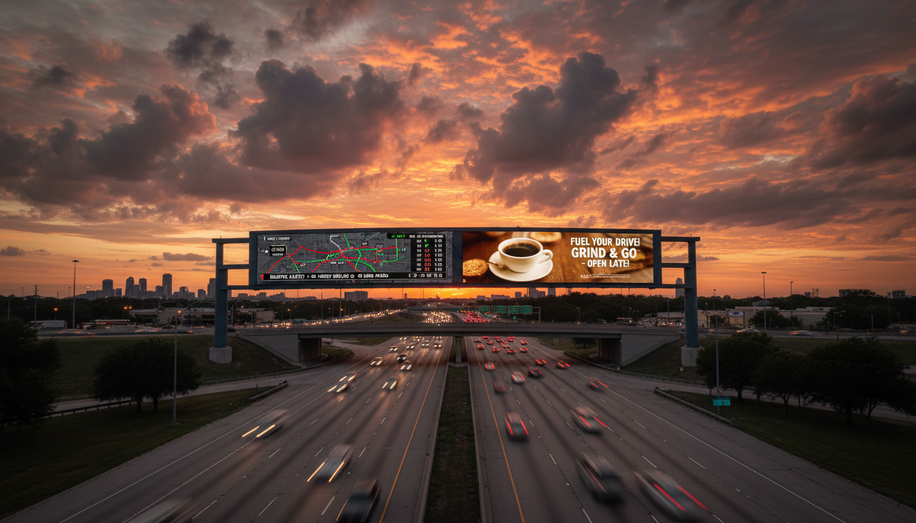

In the bustling heart of a city, a digital billboard flickers to life, its message shifting seamlessly from a sunny promotion for patio furniture to a rainy-day pitch for windshield wipers. This is dynamic content in out-of-home (OOH) advertising, where real-time data feeds transform static displays into responsive storytellers, capturing attention when it matters most. By integrating weather APIs, traffic monitors, news streams, and temporal triggers, brands are elevating OOH from mere visibility to hyper-relevant engagement, proving that timeliness can turn passersby into customers.
Weather data stands as one of the most potent drivers of this evolution. Retailer B&Q pioneered a straightforward yet powerful approach in 2017, deploying digital billboards that swapped creative based on local forecasts: barbecues and garden tools under blue skies, indoor projects when clouds gathered. This tactic, long a staple in pay-per-click advertising, found new life outdoors, ensuring messages aligned with immediate consumer needs. Rain-X took it further, timing ads for their water-repellent products to coincide precisely with downpours, positioning screens near retailers to spur impulse buys amid the storm. Aperol Spritz, meanwhile, activated campaigns only when temperatures climbed above 66°F, blanketing social hubs with cocktail invitations during peak summer thirst. These examples illustrate how weather triggers create “bullseye targeting,” blending atmospheric relevance with proximity to points of purchase for measurable foot traffic lifts.
Traffic and location data add another layer of precision, turning OOH into a personal navigator. Skoda’s “Do Something Different” campaign harnessed live traffic feeds to inform London commuters how many minutes stood between them and idyllic UK escapes like the Lake District, dynamically updating travel times on digital billboards. Though some critiqued its clarity, the concept underscored OOH’s ability to inject utility into persuasion. At Heathrow’s Terminal 5, The Financial Times tapped flight APIs to customize ads for transatlantic passengers, displaying city-specific headlines for travelers bound to New York or Los Angeles—sold by passenger volume for razor-sharp targeting. Guinness elevated this during rugby’s RBS 6 Nations, directing fans via London screens to nearby pubs with match kickoff times and walking distances; sensors in venues even rerouted crowds from overflowing spots to emptier ones, optimizing real-time flow.
News and events provide the spark for opportunistic dynamism, allowing brands to insert themselves into cultural moments. New Balance celebrated Dutch sprinter Femke Bol’s Budapest victory by pre-loading motivational creatives that flipped to triumphant ones post-win, syncing across urban screens for a national pride boost. Oreo’s legendary Super Bowl blackout response—”You Can Still Dunk in the Dark”—exemplified rapid news hijacking, though not fully programmatic, it foreshadowed how DOOH now ingests live feeds for instant adaptation. Even time-of-day cues amplify relevance: screens might tout coffee at dawn or nightlife at dusk, matching the urban rhythm to consumer rhythms.
Behind these feats lies sophisticated technology. Programmatic platforms like those from Vistar Media enable data ingestion from APIs—weather from services like OpenWeatherMap, traffic from Google or TomTom, news via RSS or social signals—triggering content swaps in seconds. Digital OOH (DOOH) networks, dominated by players like JCDecaux, equip billboards with cloud-connected CMS for seamless updates, often extending to multichannel extensions like geofenced digital radio. O2 demonstrated this hybrid power, logging Bluetooth device IDs near OOH sites to retarget Samsung S8 ads on streaming platforms within 500 meters, bridging physical exposure to digital action.
The results speak volumes. Dynamic campaigns don’t just impress; they deliver. Rain-X and Aperol reported heightened engagement through contextual timing, while Guinness saw pubs fill efficiently without chaos. Measuring success has advanced too: footfall sensors, device tracking, and attribution tools link impressions to store visits or sales, moving OOH beyond CPM metrics to ROI. Challenges persist—data privacy under GDPR demands opt-ins, and creative misfires like Skoda’s ambiguous timings highlight the need for intuitive design—but the upside is undeniable.
As urban screens proliferate, dynamic OOH is redefining relevance in a fragmented media world. FMCG brands pulled off April Fools’ pranks at ASDA on one irreplaceable morning, proving ephemerality’s charm. Interactive evolutions, from QR-linked surprises to weather-synced animations, invite participation, turning billboards into experiences. For advertisers, the message is clear: in an era of ad fatigue, real-time adaptation isn’t a gimmick—it’s the gold standard for cutting through the noise, ensuring every glance converts to connection. Brands that master these feeds will not only maximize engagement but own the moments that matter.
For advertisers seeking to harness this new frontier, platforms like Blindspot offer the essential infrastructure. By enabling programmatic DOOH campaign management with real-time data integration for dynamic content, and providing robust ROI measurement and attribution, Blindspot empowers brands to not only achieve hyper-relevant engagement but also demonstrably prove the impact of their timely messaging on foot traffic and sales. Explore how to master these moments at https://seeblindspot.com/