
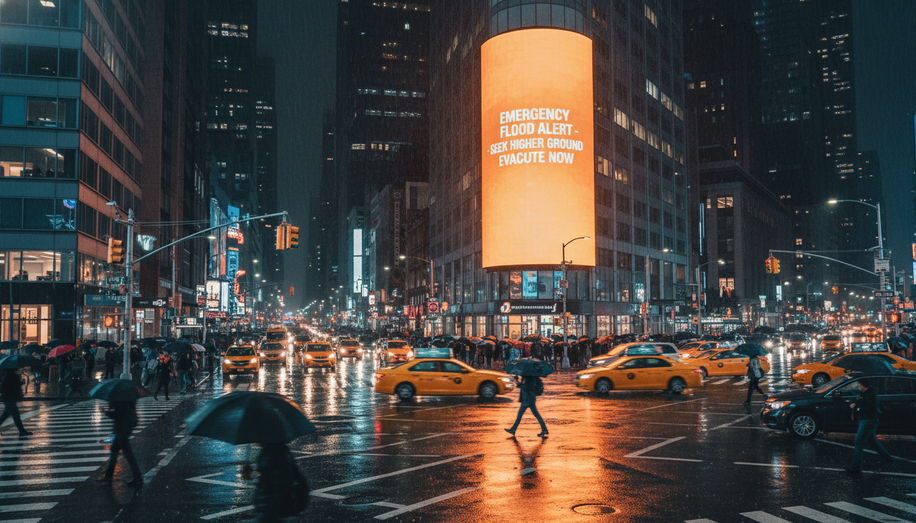

In the heart of a bustling city, a digital billboard flickers to life not with a commercial pitch, but with urgent amber text: “Flash flood warning—avoid low-lying areas.” Moments later, as the threat passes, the same screen shifts seamlessly to announce a nearby street festival, complete with live music schedules and vendor maps. This is digital out-of-home (DOOH) media in action, evolving from static advertising into a vital public utility for real-time information on local events and emergencies.
Once confined to promoting brands, DOOH screens—found on billboards, bus shelters, mall displays, and stadium facades—are now harnessing their dynamic capabilities to serve communities. Unlike traditional out-of-home (OOH) formats, which rely on printed posters requiring costly manual updates, DOOH operates through centralized content management systems, ad servers, and demand-side platforms. These tools enable instantaneous content swaps, triggered by live data feeds on weather, traffic, location, or even breaking news. Programmatic DOOH takes this further, adjusting displays based on audience movement, time of day, or environmental shifts, much like digital ads on web or mobile.
For local events, this responsiveness turns public screens into interactive hubs. At entertainment venues or sports stadiums, DOOH can broadcast live scores, upcoming schedules, and promotions tied to the action unfolding nearby. Imagine a screen outside a concert hall cycling through setlists, artist interviews, and shuttle directions as fans arrive, or a mall display updating flash sales and event lineups in real time to capture shoppers at the point of decision. In high-traffic urban spots like Times Square or San Francisco’s transit hubs, these screens daypart content around commute patterns, festivals, or store hours, rotating creatives to test what resonates most. The result is not just visibility, but engagement—QR codes and geofencing invite passersby to scan for tickets or details, bridging physical spaces with digital experiences.
Nowhere is DOOH’s potential more critical than in emergencies. With remote content updates, screens can push alerts faster than traditional broadcasts, reaching thousands in strategic locations where people gather or pass daily. During a sports event, a display might interrupt ads to relay safety instructions or evacuation routes; in severe weather, it could promote umbrellas one minute and flood warnings the next. Local governments are catching on, relaxing regulations to deploy LED video walls—from billboard scale to massive installations—for public service messaging. This shift positions DOOH as a first line of communication, complementing apps and sirens with unavoidable, large-format visuals that demand attention.
The technology powering this transformation is robust and scalable. Real-time triggers integrate external data—temperature sensors for heat advisories, traffic cams for jam alerts, or event APIs for schedules—ensuring relevance without human intervention. Remote monitoring minimizes downtime, keeping screens operational during crises when reliability matters most. Interactive elements, like touchless QR engagement on kiosks or video walls, add layers of utility, allowing users to access maps or resources without stopping their stride.
Yet, realizing DOOH’s full civic role requires collaboration. Media owners, city planners, and tech providers must prioritize public interest slots amid commercial demands. Ad spending in DOOH is surging—projected to hit $17.28 billion globally by 2024—driven by its flexibility, but dedicating bandwidth to non-revenue content could amplify societal impact. Pilot programs already show promise: screens relaying festival updates have boosted attendance, while emergency tests have improved response times in test cities.
Critics might argue that repurposing ad space dilutes revenue, but the evidence suggests otherwise. Contextually intelligent DOOH fosters goodwill, enhancing brand trust when screens toggle between alerts and ads. A weather-tied campaign for beverages, for instance, only activates on hot days, proving that timely relevance drives results—benefits that extend to public service. As infrastructure expands, with digital replacing static billboards worldwide, DOOH stands ready to redefine public spaces.
Ultimately, digital OOH transcends marketing to become a dynamic information channel, pulsing with the rhythm of city life. Whether guiding crowds to a pop-up market or sounding the alarm on a hazard, these screens deliver information where it’s most needed: in plain sight, in real time. As technology advances, their role in weaving communities together—alert, informed, and connected—will only grow.