
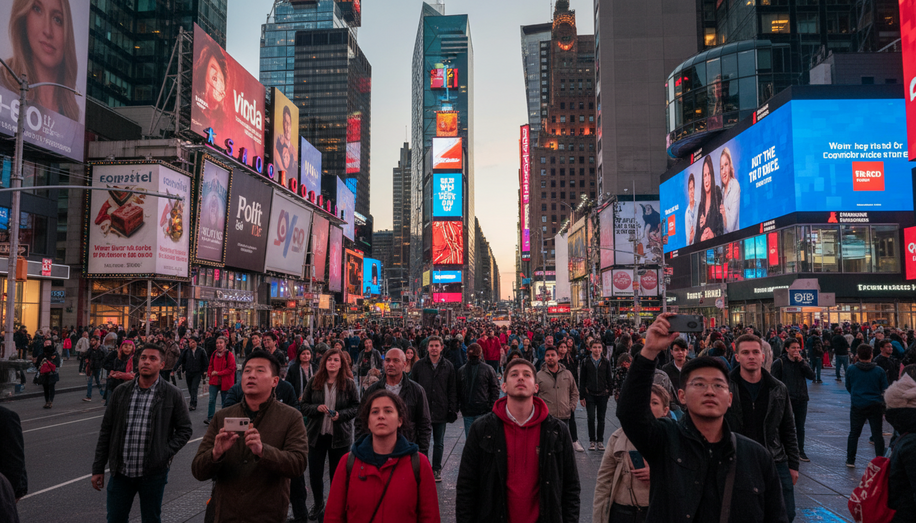

The Evolution of Digital Out-of-Home Metrics: Beyond Impressions
Digital out-of-home (DOOH) advertising is transcending traditional impression counts, embracing engagement metrics, brand recall, and ROI analysis to prove its value in 2026’s data-driven landscape. (148 chars)
As advertisers grapple with fragmented digital channels plagued by privacy restrictions and declining trust, digital out-of-home (DOOH) has surged forward, projected to exceed $33 billion in global ad spend by 2026. This growth, fueled by programmatic buying and AI integration, demands more than vanity metrics like impressions. Industry leaders are shifting focus to sophisticated measures—engagement rates, brand recall lifts, and attributable ROI—that tie physical ads to tangible business outcomes.
The old guard of OOH measurement relied heavily on traffic counts and estimated views, treating billboards as blunt instruments for mass awareness. But 2026 marks a pivotal evolution. Platforms now leverage mobility data, geofencing, and real-time analytics to quantify how DOOH sparks action. For instance, modern DOOH systems track audience demographics, foot traffic spikes, and even sales funnel acceleration, transforming static displays into dynamic performance channels. OneScreen.ai exemplifies this by mapping Ideal Customer Profiles (ICPs) to high-density real-world locations, enabling agencies to pitch OOH as targeted Account-Based Marketing rather than scattershot reach.
Engagement metrics lead this charge, moving beyond passive exposure. QR codes, unique URLs, and calls-to-action (CTAs) embedded in DOOH creatives now serve as “conversion mechanics,” bridging the physical-digital divide. Campaigns deploy sequential messaging across transit hubs, elevators, and street furniture, fostering narrative continuity that culminates in measurable digital interactions. Programmatic DOOH, forecasted to hit $1.35 billion globally, amplifies this with real-time bidding and audience targeting, yielding higher engagement rates when integrated into omnichannel strategies. The Interactive Advertising Bureau’s (IAB) new Measurement Guide standardizes these metrics, ensuring cross-channel comparability for impressions, dwell time, and interaction rates—critical as programmatic DOOH nears $1.25 billion in the U.S. alone.
Brand recall has emerged as a cornerstone metric, validated through targeted surveys and geographic lift studies. Post-campaign assessments in OOH-exposed markets reveal penetration rates and memory retention far superior to digital silos, unhindered by cookies or ad blockers. Whistler Billboards highlights OOH’s role as a “signal generator,” where mobility patterns and visit data inform broader media planning, enhancing recall across search and social. This offline context enriches online performance, positioning DOOH as the backbone of stable, platform-agnostic strategies amid 2026’s budget scrutiny.
ROI analysis cements DOOH’s maturity, with attribution models linking exposures to revenue. A real-world case saw a $120,000 OOH investment paired with $30,000 in digital follow-up generate 5.8 million impressions, a 22% foot traffic increase, and $450,000 in incremental revenue—delivering a 3:1 direct ROI, or 5:1 including brand lift. Tools now correlate OOH with web traffic spikes, branded search volume, pipeline velocity, and retail visits, proving efficiency in reducing Customer Acquisition Costs (CAC). Geographic website analysis and unique promo codes provide direct attribution, while geofenced mobile retargeting nurtures longer sales cycles.
This evolution isn’t hype; it’s backed by 18 quarters of OOH growth into 2025, with DOOH driving resilience. Vendors like Talon and Reach Media Network foresee programmatic, AI, and sustainability as accelerators, making DOOH an “amplification engine” for every channel. Yet challenges persist: sources often stem from industry players, underscoring the need for independent validation. The IAB’s guide addresses this, fostering trust through unified standards.
For agencies and brands, the playbook is clear: start with business objectives, not impressions. Architect campaigns that lower CAC by priming digital funnels, optimize via data intelligence, and prove ROI with rigor matching search or programmatic buys. In 2026, DOOH isn’t just visible—it’s verifiable, delivering undeniable impact in a crowded media world.
Platforms like Blindspot are pivotal in this data-driven evolution, offering granular ROI measurement and attribution to directly link DOOH exposures to revenue and reduced Customer Acquisition Costs. By leveraging real-time campaign performance tracking and advanced audience analytics, Blindspot empowers advertisers to move decisively beyond impression counts, optimize programmatic DOOH strategies, and prove verifiable business impact with the rigor demanded in 2026’s media landscape. Learn more at https://seeblindspot.com/